
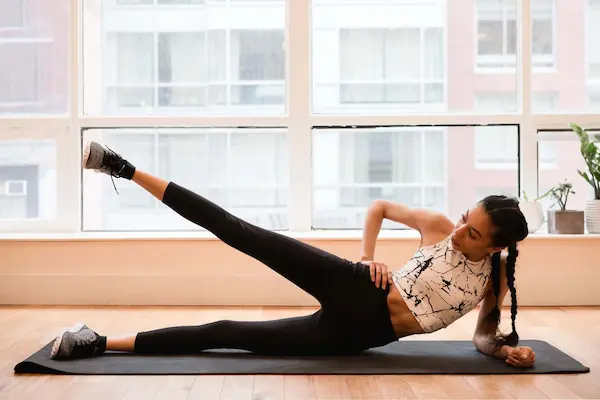
Busy days have a sneaky way of making fitness feel like an “all or nothing” decision, especially when your schedule is full and your brain insists that anything short of a full session “doesn’t count.”
This guide gives you a realistic, energetic 10 minute no equipment workout that fits into real life, while still feeling like efficient exercise you can repeat often enough to matter.
Why a 10 minute no equipment workout can still change your week
Ten minutes sounds small until it becomes the moment your day pivots from “I’m too busy” to “I kept a promise to myself,” because consistency is built through repeatable wins rather than occasional heroic efforts.
Real progress tends to follow patterns you can sustain, and a short home workout is often the most sustainable option when your calendar is crowded, your energy is unpredictable, and your motivation depends on simplicity.
Momentum grows when the barrier to starting is low, which is exactly why a quick bodyweight routine can be the difference between doing something today and doing nothing for weeks.
More time can absolutely be helpful, yet time is not the only variable that matters, because focus, effort, and smart exercise choices can make a small session feel surprisingly effective.
Small sessions also protect the habit loop, since your brain learns that exercise is something you do even when life is messy, not something you only do when life is perfect.
A helpful mindset shift for busy schedule fitness
Instead of asking, “Do I have time for a full workout,” a more useful question is, “Do I have time to move for ten minutes and feel better afterward,” because that question invites action instead of debate.
Confidence builds when you keep showing up, and showing up is easier when the plan is short, clear, and already decided before your day gets loud.
What this 10-minute routine is designed to do
- This circuit builds full-body strength and conditioning using simple, repeatable movement patterns that work well for beginners and busy adults.
- This plan supports consistency by keeping the structure predictable, so you spend your minutes moving instead of choosing.
- This session offers scalable intensity, which means the same workout can be gentle on tired days and challenging on high-energy days.
- This approach reinforces the idea that movement is a tool for health and function, not a punishment you must earn time for.
How to use this short home workout safely, even when you’re rushing
Safety matters because getting hurt steals time, and injuries tend to happen when speed and distraction replace control and attention.
Good form does not need to look perfect, yet it should feel stable, smooth, and pain-free, because discomfort that feels sharp or “wrong” is your body asking for a different option.
Breathing should stay possible throughout the circuit, since a workout that forces breath-holding often pushes intensity beyond what your joints and technique can support.
Space is part of safety, so clearing an arm’s length around you can prevent awkward twists, clipped toes, or rushed movements that pull you off balance.
Intensity is a dial, not a switch, and adjusting that dial is how efficient exercise stays productive rather than punishing.
Quick safety checklist before you start the timer
- Comfortable shoes or bare feet on a non-slip surface can reduce slipping, especially if you plan to include lateral steps or faster footwork.
- A water bottle nearby helps you avoid unnecessary breaks, which keeps the session flowing without feeling frantic.
- A simple timer or interval app is useful, although counting breaths can also work if you prefer a low-tech approach.
- Any sharp pain, dizziness, numbness, or unusual symptoms should prompt a stop, and professional guidance is the smart next step when symptoms persist.
Effort guidelines that keep the routine realistic
Aim for a “challenging but controllable” effort, where you feel your heart rate rise and your muscles work, while you still feel capable of maintaining clean movement.
Most people do well with an effort around 6 to 8 out of 10 for the work intervals, while the rest intervals are truly restful so your next round stays strong.
Beginners often benefit from starting at 5 to 6 out of 10, because learning the pattern with calmer intensity creates better consistency and fewer aches the next day.
Warm-up suggestions that take 60 to 90 seconds
A warm-up is not a complicated ritual, because the goal is simply to raise your temperature, wake up your joints, and practice a few patterns before you speed up.
Even one minute helps your first set feel smoother, which often makes the workout feel easier than it “should,” in the best possible way.
One-minute warm-up option
- March in place with tall posture for 20 seconds, swinging your arms gently while your breathing stays comfortable.
- Hip hinge “good mornings” for 20 seconds, sliding your hips back as your chest stays proud and your knees stay soft.
- Reach overhead and then pull elbows down for 20 seconds, letting your ribs stay relaxed instead of flaring upward.
Ninety-second warm-up option for stiffer days
- Easy step jacks or side steps for 30 seconds, keeping impact low while your heart rate wakes up.
- Bodyweight squats to a comfortable depth for 30 seconds, moving slowly enough that your knees feel steady.
- Incline plank hold on a wall or countertop for 30 seconds, pressing the surface away to activate your shoulders and core.
The 10 minute no equipment workout circuit for busy days
This circuit is built as ten one-minute blocks, and each block uses 40 seconds of work with 20 seconds of rest, because that rhythm creates intensity without turning the session into chaos.
One round is enough for a busy day, while a second round is optional on days when time and energy allow, because the best routine is the one you can repeat consistently.
Form stays the priority, so moving a little slower with better control is always a win, especially when you are learning or returning after time off.
How to run the timer
- Set your interval timer for 10 rounds of 40 seconds work and 20 seconds rest.
- Move to the next exercise during the rest, using that time to reset posture and breathe.
- Choose a modification immediately if technique slips, because adjusting is a skill, not a failure.
Timed circuit overview
- Squat to Chair or Air Squat
- Incline Push-Up or Knee Push-Up
- Reverse Lunge or Split-Squat Hold
- Plank Shoulder Tap or High Plank Hold
- Glute Bridge or Glute Bridge March
- Fast March or Low-Impact Mountain Climber
- Hip Hinge “Good Morning” or Bodyweight RDL Reach
- Side Plank on Knees or Side Plank Hold
- Step Jacks or Jumping Jacks
- Dead Bug or Hollow Hold Variation
Exercise details and modifications for the quick bodyweight routine
Clear cues reduce decision fatigue, so each movement below includes a simple “how to,” a gentler option, and a spicier option for days when you want more challenge.
Choose the version that lets you move well, because efficient exercise is mostly about quality repeated over time.
1) Squat to Chair or Air Squat
Squats train legs and hips in a way that supports daily life, because standing up, sitting down, lifting, and climbing are all squat-adjacent patterns.
- How to: Stand tall, send hips back and down, keep your chest open, and push the floor away to stand.
- Make it easier: Tap a chair lightly and stand again, using the chair as a depth guide rather than collapsing onto it.
- Make it harder: Add a slow three-second lower, then stand with control, keeping knees tracking comfortably over the toes.
- Form check: Keep weight balanced through the whole foot, because tipping forward often turns squats into a lower-back move.
2) Incline Push-Up or Knee Push-Up
Push-ups build upper-body strength and core stiffness, and incline versions are a smart way to keep your shoulders happy while you build capacity.
- How to: Place hands on a sturdy surface, walk feet back, keep a straight line from head to heels, and lower with control.
- Make it easier: Use a higher surface like a wall, or drop to knees while keeping the core braced and the neck long.
- Make it harder: Use a lower surface, or slow the lowering phase to increase time under tension without rushing.
- Form check: Aim elbows at a gentle angle from the body, because flared elbows can irritate shoulders for some people.
3) Reverse Lunge or Split-Squat Hold
Lunges challenge balance and leg strength, which is why they feel intense quickly, even with no equipment.
- How to: Step one foot back, lower straight down, keep front foot rooted, then push through the front leg to stand.
- Make it easier: Hold onto a wall lightly for balance, or choose a split-squat hold with small pulses instead of full steps.
- Make it harder: Add a knee drive at the top, staying controlled so you feel athletic rather than frantic.
- Form check: Keep your torso tall and your front knee comfortable, because pain in the knee often means your stance needs adjustment.
4) Plank Shoulder Tap or High Plank Hold
Plank work trains your core to resist twisting, which translates nicely to carrying bags, moving furniture, and staying stable when life pulls you off-center.
- How to: Set a high plank with hands under shoulders, squeeze glutes lightly, and tap one shoulder at a time without rocking.
- Make it easier: Hold the plank without taps, or do taps from knees while focusing on a steady ribcage.
- Make it harder: Widen feet slightly less, or slow down taps to increase control and time under tension.
- Form check: Keep hips level, because rocking side to side often signals you should choose a simpler variation today.
5) Glute Bridge or Glute Bridge March
Glute bridges strengthen hips and support the lower back, which makes them a great inclusion when you sit often or feel your back doing too much work.
- How to: Lie on your back with knees bent, press through heels, lift hips until you form a long line, then lower slowly.
- Make it easier: Hold the top position and breathe, keeping ribs relaxed rather than flaring upward.
- Make it harder: March by lifting one foot slightly while hips stay level, then switch with soft control.
- Form check: Stop the lift before you feel your low back arching, because the goal is hips and core, not spinal compression.
6) Fast March or Low-Impact Mountain Climber
This block boosts heart rate for conditioning, and choosing low impact still counts as real training when the pace is honest.
- How to: March powerfully with high knees and active arms, or place hands on a wall and drive knees in a “climber” rhythm.
- Make it easier: Keep steps smaller and focus on steady breathing, because consistency beats burnout.
- Make it harder: Use a floor high plank mountain climber, keeping hips low and movement quick but controlled.
- Form check: Stay tall during marching, because collapsing posture can make breathing feel harder than it needs to be.
7) Hip Hinge “Good Morning” or Bodyweight RDL Reach
Hip hinges strengthen the backside of your body, and that matters because many daily movements require safe bending and lifting patterns.
- How to: Keep a soft bend in knees, push hips back, keep spine long, then stand by driving hips forward gently.
- Make it easier: Reduce range of motion, focusing on feeling hamstrings load rather than trying to touch the floor.
- Make it harder: Reach hands toward the floor while maintaining a flat back, then return slowly for a stronger eccentric challenge.
- Form check: Keep weight in the mid-foot and heel, because shifting into toes often reduces hip engagement.
8) Side Plank on Knees or Side Plank Hold
Side planks train lateral core support, which helps posture and reduces the “wobbly” feeling that can show up during walking, running, or carrying.
- How to: Set forearm under shoulder, lift hips, and hold a straight line from head to knees or feet while breathing steadily.
- Make it easier: Keep knees bent, hold for smaller chunks, and reset often, because frequent clean holds beat one shaky hold.
- Make it harder: Straighten legs fully, or add a slow top-leg lift if control stays strong and hips stay stacked.
- Form check: Press the floor away, because shoulder stability makes the entire hold feel safer.
9) Step Jacks or Jumping Jacks
Jacks add a cardio pop, and step jacks are a joint-friendly option that still elevates heart rate when you move with purpose.
- How to: Step one foot out as arms lift overhead, then switch sides rhythmically while staying light on your feet.
- Make it easier: Keep arms lower and step narrower, especially if shoulders or hips prefer a calmer range.
- Make it harder: Jump the feet and keep tempo crisp, landing softly so the movement feels springy rather than heavy.
- Form check: Stay tall and relaxed through the shoulders, because tension steals efficiency and makes breathing tighter.
10) Dead Bug or Hollow Hold Variation
The final block trains core control, which is the kind of strength that supports your spine during everything else you do.
- How to: Do dead bugs by moving opposite arm and leg slowly while your low back stays neutral and your breathing stays calm.
- Make it easier: Keep knees bent and tap one heel down at a time, reducing range until control feels steady.
- Make it harder: Try a hollow hold with knees bent, focusing on ribs down and smooth breathing rather than shaking.
- Form check: Stop before the low back arches, because arching usually means the lever is too long for today.
Cool-down suggestions that take 2 to 3 minutes
A cool-down helps your nervous system shift gears, which can make the rest of your day feel calmer and can reduce the “wired but tired” feeling after fast circuits.
Gentle breathing and a few slow stretches are enough, because recovery does not need to become another workout.
Two-minute cool-down option
- Walk slowly around the room for 45 seconds while your breathing returns to normal.
- Standing chest opener for 30 seconds, gently lifting the sternum without flaring ribs.
- Hip flexor stretch or couch-supported lunge stretch for 30 seconds per side, keeping posture tall and intensity mild.
Three-minute cool-down option for tight backs or hips
- Child’s pose or a comfortable kneeling reach for 45 seconds, breathing into the sides of your ribs.
- Figure-four glute stretch on your back for 45 seconds per side, staying in a range that feels relieving rather than aggressive.
- Supported forward fold with soft knees for 45 seconds, letting your neck relax and your shoulders drop.
Modification menu for beginners, low-impact needs, and “spicy” days
Options keep you consistent, because the best plan is the one that adapts to your body and your day instead of demanding the same performance every time.
Beginner-friendly adjustments that still feel like a real workout
- Use a 30 seconds work and 30 seconds rest timer, because equal rest keeps quality high while you learn.
- Choose chair squats, incline push-ups, and split-squat holds, because stable patterns build confidence quickly.
- Replace planks with wall planks when wrists are sensitive, because wrist comfort improves adherence.
- Swap jumping jacks for step jacks, because impact is optional and effort is the real driver.
Low-impact choices for joints that prefer kindness
- March instead of mountain climbers, using strong arm swings to keep the heart rate honest.
- Step back into lunges more slowly, keeping the range smaller if knees feel cranky.
- Hold planks for shorter chunks, repeating multiple times, because controlled volume beats one long grind.
Advanced add-ons for days you want more challenge without equipment
- Slow the lowering phase on squats, lunges, and push-ups, because eccentric control increases intensity without needing jumps.
- Add a pause at the bottom of a squat or the bottom of a lunge, because pausing builds strength and focus fast.
- Turn step jacks into full jumping jacks, or increase tempo while staying light and quiet on your feet.
- Repeat the full circuit twice if time allows, because doubling volume is the simplest progression.
How to make this efficient exercise routine a habit on a busy schedule
Habit beats hype when life is full, because motivation fluctuates while routines keep showing up even when you feel tired or distracted.
Planning removes friction, and removing friction is the secret ingredient that helps busy schedule fitness feel doable instead of stressful.
Simple habit strategies that work when time is tight
- Pick a consistent trigger, like “after coffee” or “before shower,” because triggers reduce decision-making.
- Keep the workout space ready, even if it’s just a cleared corner, because setup time can quietly kill momentum.
- Decide your modification ahead of time, because knowing your “easy version” prevents all-or-nothing thinking.
- Track completions, not perfection, because a checkmark teaches your brain that you are reliable.
- Attach the session to a realistic frequency, like three days per week, because realistic plans survive real life.
Micro-schedule ideas that fit different kinds of days
- A morning version works well when you want the “I already did it” feeling before the day gets complicated.
- A lunch-break version works well when you need an energy reset and you can tolerate a little sweat.
- An evening version works well when movement helps you decompress, especially if you keep intensity moderate.
Progress ideas for four weeks of short home workout consistency
Progress does not require dramatic changes, because small adjustments create a clear upward trend when you repeat them with patience.
Quality should lead the way, so increasing difficulty makes sense only when technique stays stable and recovery feels manageable.
Week-by-week progression plan
- Week 1: Run the circuit once, keep intensity moderate, and focus on learning smooth transitions between exercises.
- Week 2: Increase work effort slightly during two blocks, like squats and marching, while keeping the rest of the circuit controlled.
- Week 3: Choose one upgrade per movement, like a lower push-up incline or deeper squats, while keeping breathing steady.
- Week 4: Add a second round once that week if time allows, or change the timer to 45 seconds work and 15 seconds rest for a stronger challenge.
Simple progress markers that don’t require numbers
- Breathing recovers faster between blocks, which suggests improved conditioning.
- Form stays cleaner near the end of the circuit, which suggests improved muscular endurance.
- Transitions feel calmer and less frantic, which suggests improved confidence and routine familiarity.
- Daily life feels easier, like stairs and carrying bags, which suggests improved functional strength.
Frequently asked questions about a 10-minute quick bodyweight routine
Does a 10-minute workout really count?
Countable workouts are the ones you actually do, and ten minutes done consistently can beat an hour that happens once every three weeks.
Improvement comes from repeated exposure to effort, which means small sessions can absolutely support strength, fitness, and mood when they become part of your routine.
Should the warm-up be skipped when time is short?
Skipping is not ideal, yet a one-minute warm-up is usually enough, and that minute can reduce discomfort and make the whole workout feel more efficient.
Choosing a shorter warm-up is often wiser than skipping entirely, because your first interval becomes smoother and your joints feel more prepared.
Can this be done every day?
Daily movement is fine for many people, while daily high-intensity circuits can become too much, especially if sleep, stress, or soreness are already high.
Alternating harder days with easier days keeps the habit alive without turning recovery into a problem, so using modifications on tired days is a smart approach.
What if soreness shows up the next day?
Mild soreness is normal when you are new or returning, and gentle movement like walking often helps you feel looser.
Sharp pain, swelling, numbness, or symptoms that worsen should prompt rest and professional input, because pushing through warning signs is rarely the fast path to progress.
What if wrists, knees, or back feel sensitive?
Joint sensitivity is a reason to scale, not a reason to quit, because small changes like incline planks, smaller lunges, and slower tempo can keep training safe.
Professional guidance is appropriate when pain persists, because individualized advice can help you move confidently and avoid long breaks.
Reminders that keep busy schedule fitness realistic and encouraging
Some days will still feel chaotic, and the goal is not to win every day, because the real win is staying connected to the habit even when life is loud.
Choosing ten minutes is not “settling,” because ten minutes is often the exact dose that keeps you consistent while protecting your time, your energy, and your motivation.
Effort can be honest without being extreme, so pushing hard for forty seconds and then resting fully is a perfectly valid way to train on a packed day.
Flexibility is part of discipline, and swapping to lower-impact options is how long-term exercisers stay in the game for years.
Final encouragement for your next 10 minute no equipment workout
Progress starts when you stop waiting for perfect conditions and start using the small windows you actually have, because those windows are where real-life fitness is built.
Ten minutes today can be the spark that makes tomorrow easier, especially when you treat the workout as a repeatable practice rather than a performance.
Notice: this content is independent and has no affiliation, sponsorship, or control over any apps, brands, platforms, or third parties mentioned in general terms.