
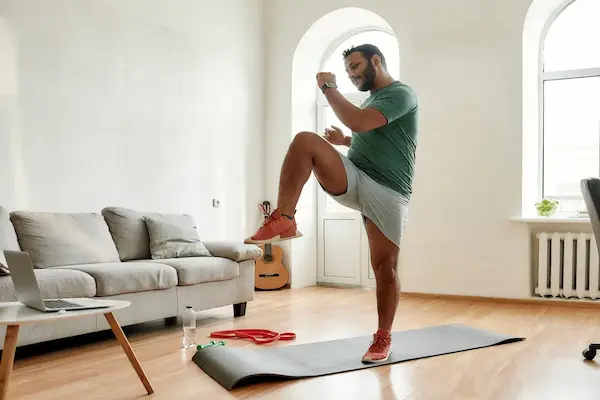
Living room cardio workout no jumping is the easiest way to get your heart working without turning your apartment into a noise complaint.
Because neighbors downstairs deserve peace and your joints deserve kindness, this guide focuses on quiet, low-impact movement that still feels like real cardio.
Small spaces can absolutely support a sweaty session, as long as the plan is built around controlled steps, soft landings, and smart pacing instead of bouncing and stomping.
You will get a practical sequence, time targets you can actually follow, breathing and intensity cues that keep you safe, and playlist ideas that stay at a reasonable volume.
Living room cardio workout no jumping: the neighbor-friendly mindset
Quiet cardio is not “less than” loud cardio, because heart rate responds to rhythm, consistency, and muscle involvement rather than to how hard your feet hit the floor.
Apartment-friendly progress happens when you treat noise like a form cue, since quieter steps usually mean better control, better joint alignment, and fewer accidental spikes in intensity.
Most people think cardio equals impact, yet low impact home cardio can be challenging when you keep moving continuously, use your arms on purpose, and change directions smoothly.
Confidence grows fastest when the routine feels repeatable, which is why this living room cardio workout no jumping is designed to be done often without worrying about neighbors or recovery.
What “no jumping” really means in a quiet cardio routine
- One foot stays close to the floor almost all the time, because air time usually becomes sound time when you land.
- Steps stay light and deliberate, because rushing often creates stomping even when you are not technically jumping.
- Knees stay softly bent, because locked legs send impact straight into your joints and straight through your floor.
- Breathing stays steady, because breath control helps you keep tempo without turning frantic.
What you can expect to feel after a week of apartment friendly workouts
- Improved stamina during daily tasks, because consistent low impact home cardio trains your heart even at moderate intensity.
- Less stiffness in hips and ankles, because controlled stepping moves joints through useful ranges repeatedly.
- More confidence about “getting it done,” because short, quiet sessions lower the barrier to starting.
Quiet setup for an apartment friendly workout in a small space
A quiet cardio routine starts before the first step, because the wrong surface or footwear can make even gentle movement sound like a drumline.
Supportive setup also reduces joint irritation, which matters because discomfort is one of the fastest ways to stop being consistent.
Noise-reduction checklist you can do in two minutes
- Choose the softest stable spot you have, because carpet, a rug, or a mat can absorb sound and reduce vibration.
- Clear one “lane” for stepping, because bumping furniture creates sudden loud moments and interrupts rhythm.
- Keep water nearby, because dry mouth often makes breathing feel harder than it should.
- Set your timer in advance, because fiddling with settings mid-session kills flow and increases frustration.
Footwear and surface tips for low impact home cardio
- Socks with grip can be great on a yoga mat, because they reduce slipping without adding heavy shoe noise.
- Light trainers can help if you need cushioning, because some feet and knees feel better with a stable sole.
- Going barefoot can work on a clean, non-slippery surface, because barefoot stepping encourages lighter contact for many people.
- Thin, hard soles can feel loud, because they transmit impact and can encourage stomping when fatigue rises.
Volume etiquette that still feels supportive to you
- Keep music at a level where you can still hear your own footsteps, because hearing impact helps you self-correct instantly.
- Consider headphones if appropriate for your environment, because they let you enjoy rhythm without broadcasting bass through the floor.
- Avoid heavy bass settings when possible, because low frequencies travel farther and can be more disruptive than you expect.
Living room cardio workout no jumping: warm-up in 3 minutes
A warm-up is the easiest way to make your session quieter, because warm joints move more smoothly and smooth movement creates less impact.
Three minutes is enough when you focus on rhythm, posture, and gentle range rather than “burning calories” immediately.
3-minute warm-up sequence
- Easy march in place for 60 seconds, swinging arms low and relaxed, because coordinated movement raises heart rate gradually.
- Step-touch side to side for 60 seconds, keeping steps narrow, because lateral movement wakes up hips without big floor contact.
- Heel digs forward for 30 seconds, then gentle hamstring curls for 30 seconds, because knee flexion and extension prepare legs for longer sets.
Warm-up cues that make the whole routine quieter
- Imagine you are walking past a sleeping baby, because that mental image naturally softens your foot strike.
- Keep ribs stacked over hips, because slouching often leads to heavy feet and sloppy steps.
- Let the exhale be long and calm, because calm breathing reduces the urge to rush.
Living room cardio workout no jumping: the 12-minute main routine
This living room cardio workout no jumping uses simple blocks that repeat, because repetition helps you stay coordinated and quiet even when your heart rate climbs.
Each move is designed for small spaces, so you can stay mostly in one spot while still getting a satisfying cardio effect.
Timer format stays consistent to reduce decision fatigue, since beginners and busy adults do better when the plan feels automatic.
Work at a pace where you can speak short phrases, and extend rest any time breathing starts to feel panicky or uncontrolled.
Timer setup for the quiet cardio routine
- Work for 40 seconds, because it is long enough to raise heart rate without forcing sloppy form.
- Rest for 20 seconds, because that extra recovery helps you stay quiet and controlled.
- Complete 8 moves once, because 8 blocks create 8 minutes of structured work.
- Repeat your two favorite blocks for 4 more minutes, because finishing strong feels better than forcing the hardest move again.
How to make this apartment friendly workout fit your energy
- Choose a “cruise” pace for the first four moves, because early over-speeding is the fastest route to heavy steps.
- Increase arm drive before increasing foot speed, because arms raise intensity without increasing noise.
- Take a longer rest if needed, because longer rest keeps you consistent and keeps your neighbors happier too.
Move 1: step-touch with purposeful arms
Step one foot out, bring the other foot in, then repeat to the other side, while pushing arms forward and back as if you are briskly walking with intention.
Quiet feet matter here, so keep steps short and place the whole foot softly rather than slapping the floor.
- Make it easier: keep arms low and reduce step width, because smaller range lowers effort quickly.
- Make it harder: add a gentle torso twist with your arm drive, because rotation increases overall demand without impact.
Move 2: march in place with knee lifts
Lift one knee to a comfortable height, switch sides with control, and keep your posture tall while arms swing naturally in rhythm.
Breathing stays smoother when you exhale as the knee lifts, because exhaling can reduce bracing and keep shoulders relaxed.
- Make it easier: lift knees lower and slow the cadence, because control beats speed for quiet cardio.
- Make it harder: pump arms higher while keeping feet quiet, because arms can raise heart rate dramatically.
Move 3: low-impact “box step” forward and back
Step forward with the right foot, step forward with the left foot, step back with the right, then step back with the left, keeping the pattern compact like a small square on the floor.
Coordination improves quickly here, and improved coordination usually makes movement quieter automatically.
- Make it easier: slow down and shrink the square, because tiny steps still count.
- Make it harder: add light arm reaches overhead, because overhead reaches increase breathing demand without needing more impact.
Move 4: heel digs with a gentle reach
Dig one heel forward with toes up, alternate sides, and reach arms forward as if offering something at chest height.
Because the heel touches lightly, this move is naturally apartment friendly, especially when you keep the knee soft on the standing leg.
- Make it easier: keep arms close to your body, because less arm travel lowers intensity.
- Make it harder: reach arms diagonally across your body, because diagonal patterns recruit more trunk muscles.
Move 5: side step with mini-squat pulses
Step to the side, sit the hips back slightly into a mini squat, step back to center, and repeat the other direction while keeping your steps smooth and grounded.
Quietness improves when you imagine “gliding” sideways rather than “landing” sideways, so move like you are sliding on rails.
- Make it easier: remove the squat and just step, because step-only still builds a cardio base.
- Make it harder: deepen the mini squat slightly while staying pain-free, because more leg work raises heart rate fast.
Move 6: standing shadow boxing with soft foot shifts
Punch forward lightly at chest height while shifting weight from foot to foot, keeping the feet mostly planted and letting the hips rotate gently for power.
Upper-body effort drives cardio here, which is great when you want low impact home cardio that does not shake the floor.
- Make it easier: reduce punch speed and keep feet still, because arms alone can still raise your heart rate.
- Make it harder: add a controlled knee lift every third punch, because mixed patterns increase effort without jumping.
Move 7: alternating toe taps forward
Tap one toe forward lightly and return to center, then tap the other toe forward, while arms swing like brisk walking arms to keep rhythm steady.
Speed can increase if you stay quiet, yet quiet feet remain the non-negotiable goal of this living room cardio workout no jumping.
- Make it easier: slow down and tap closer to your body, because shorter reach reduces demand.
- Make it harder: add a light reach overhead with the opposite arm, because cross-body work raises intensity smoothly.
Move 8: low-impact “skater step” without hopping
Step diagonally behind you with one foot as if doing a curtsy step, then step back to center and switch sides, keeping everything grounded and controlled.
This move feels athletic without being loud, especially when you keep the step small and the torso stable.
- Make it easier: step to the side instead of behind, because diagonal range can feel harder at first.
- Make it harder: add a soft arm swing across the body, because trunk engagement increases cardio demand.
Finish block: choose your 4-minute “quiet booster”
Pick two moves from above that felt smooth, then alternate them for four more minutes using the same 40/20 pattern, because finishing with confidence protects consistency.
Staying neighbor-aware is easier when you avoid the temptation to “empty the tank” at the very end.
- Option A: step-touch with arms + shadow boxing, because arms drive intensity without impact.
- Option B: knee lifts + box step, because rhythm stays simple while breathing rises steadily.
- Option C: side step mini-squat + toe taps, because legs work harder while feet remain quiet.
Living room cardio workout no jumping: a 15–20 minute upgrade option
Some days you will want a longer session, and that desire is great as long as added time does not turn into added noise or sloppy technique.
This upgrade keeps the same movements, because changing the plan too often increases mistakes and increases the chance of stomping.
Upgrade plan A: add a second full round
- Complete the warm-up for 3 minutes, because preparation improves quiet control.
- Run the full 12-minute main routine once, because one round sets the baseline.
- Rest for 60–90 seconds, because longer sessions require more recovery to stay smooth.
- Repeat the main routine again, but reduce pace slightly, because quiet form matters more than speed in an apartment friendly workout.
Upgrade plan B: keep one round and add “tempo intervals”
- Choose three favorite moves, because favorites are easier to perform quietly under fatigue.
- Perform 30 seconds easy tempo and 30 seconds moderate tempo, because tempo changes create intensity without jumping.
- Repeat for 6 minutes total, because short intervals maintain focus and control.
Breathing management for low impact home cardio that stays comfortable
Breathing often feels like the hardest part of cardio for beginners, yet breathing becomes easier when you choose a pace you can control and allow more rest without guilt.
Quiet routines also help breathing because they reduce sudden spikes, so your heart rate rises smoothly rather than in jolts.
The talk test you can actually use mid-workout
- If you can speak a short sentence, intensity is usually moderate and sustainable.
- If you can only say one or two words, intensity is probably high for your current fitness, so extra rest is smart.
- If you feel panicky or dizzy, stopping and recovering is the correct move, because safety matters more than completing a timer.
Three quick fixes when breathing feels too hard
- Slow foot speed first, because foot speed changes intensity faster than almost anything else.
- Reduce arm height second, because big arm swings can spike heart rate quickly.
- Extend rest to 30–40 seconds, because recovery is what keeps this living room cardio workout no jumping repeatable.
Medical caution reminders that keep you smart
Anyone with new symptoms, past injuries that still matter, or health changes should consider talking with a qualified clinician, because personalized boundaries reduce guesswork and anxiety.
Stop and seek help if chest pain, fainting, severe shortness of breath, or alarming symptoms occur, because pushing through those signals is never the goal.
Noise control tips that make a quiet cardio routine truly quiet
Neighbors usually react to vibration more than to movement itself, so reducing vibration is the easiest way to protect your peace and theirs.
Technique can do most of the work, which is good news because technique costs nothing and improves your workout quality at the same time.
Quiet-foot technique cues
- Land toe to midfoot softly, because heel slams travel through floors.
- Keep knees slightly bent, because soft knees absorb sound.
- Shorten steps when tired, because fatigue often increases stomping.
- Move like you are gliding, because gliding reduces impact.
Apartment friendly workout environment tweaks
- Place a thicker rug or mat under your “work zone,” because the extra layer can reduce vibration.
- Choose the most stable part of the floor, because wobble encourages heavier steps.
- Train at reasonable hours when possible, because timing can matter as much as technique for neighbor comfort.
Playlist suggestions at reasonable volume for a living room cardio workout no jumping
Music can help pacing, yet volume does not need to be high for rhythm to work, especially if you choose consistent beats that match your stepping tempo.
A neighbor-aware approach means using sound as support rather than using sound as fuel for intensity you cannot control quietly.
Tempo ranges that match common stepping speeds
- 100–120 BPM works well for steady step-touch and marching, because it supports moderate intensity without rushing.
- 120–135 BPM feels great for box steps and toe taps, because the rhythm encourages a brisk but controlled pace.
- 90–105 BPM can be ideal on recovery days, because slower music encourages softer movement.
Genre ideas that tend to stay “smooth” rather than chaotic
- Pop with steady drums, because predictable beats make pacing easier in small spaces.
- Lo-fi or chill electronic, because consistent rhythm supports calm breathing.
- Funk or disco grooves, because upbeat energy can happen without aggressive tempo.
- Latin-influenced mid-tempo tracks, because rhythmic variety can keep motivation high while steps remain grounded.
Volume etiquette that keeps things neighbor-aware
- Start at a level where you can still hear your feet, because foot noise is your best feedback tool.
- Lower bass if possible, because bass travels through walls and floors more easily than vocals.
- Use headphones when appropriate and safe, because they deliver energy without building vibration in the room.
Troubleshooting: when something feels loud, awkward, or uncomfortable
Small adjustments can solve most issues quickly, because noise and discomfort usually come from pace, range, or setup rather than from a “bad body.”
Staying practical is the goal, so you will see quick swaps that keep the workout going without annoying the neighbors or irritating your joints.
If footsteps start getting loud
- Reduce speed by 10–15%, because quieter technique often returns immediately when pace drops slightly.
- Switch to shadow boxing or heel digs for one block, because upper-body emphasis lowers floor impact.
- Shorten your step length, because big steps often become heavy steps.
If knees feel cranky during side steps or mini-squats
- Remove the squat and keep only the step, because stepping alone can still be effective low impact home cardio.
- Decrease range and keep knees tracking comfortably over toes, because forced depth is not required for progress.
- Slow down and add more rest, because fatigue often makes alignment worse.
If calves or shins feel overworked
- Choose more heel digs and fewer toe taps, because heel-led patterns can shift demand.
- March with lower knees and softer ankles, because exaggerated knee lifts can overload calves for some beginners.
- Double-check footwear and surface, because hard floors plus thin soles can amplify lower-leg stress.
If coordination feels frustrating
- Shrink every step to half-size, because smaller patterns are easier to learn quietly.
- Keep arms simple until feet feel automatic, because too many moving parts can create tension.
- Repeat only two moves for a week, because repetition turns awkwardness into confidence faster than constant variety.
Cool-down in 2 minutes to end quietly and recover well
Cooling down helps your breathing settle and helps your nervous system shift out of “go mode,” which can make the rest of your day feel calmer.
A quiet ending also matters for neighbors, because abrupt loud finishing moves are the most memorable moments for anyone below you.
2-minute cool-down sequence
- Slow march for 60 seconds, letting arms relax, because gradual slowing prevents lightheaded feelings for many people.
- Side-to-side sway with deep exhales for 30 seconds, because long exhales reduce tension quickly.
- Gentle calf stretch or ankle circles for 30 seconds, because lower legs often work harder than expected in apartment friendly workouts.
Progress plan: how to improve fitness without adding jumping or noise
Progress does not require new moves every week, because the body adapts to small increases in time, pace, and control just as reliably as it adapts to novelty.
This living room cardio workout no jumping becomes more effective when you build consistency first, then add challenge carefully without sacrificing quiet technique.
Four safe ways to level up a quiet cardio routine
- Add 2–3 minutes to the session, because time is the simplest lever and usually does not increase noise.
- Increase arm drive while keeping steps small, because arms raise heart rate without heavier foot contact.
- Reduce rest slightly once you feel ready, because shorter rest increases cardio demand without changing movement quality.
- Improve form and smoothness as a goal, because quieter, cleaner steps often mean better conditioning too.
A simple 3-week progression template
- Week 1: do the 15-minute version twice, focusing on quiet feet and steady breathing.
- Week 2: do it three times, keeping intensity moderate and using extra rest whenever needed.
- Week 3: add the 15–20 minute upgrade once, while keeping the other sessions shorter and easy.
Closing: keep it quiet, keep it consistent, keep it yours
Living room cardio workout no jumping works because it respects real life, meaning real neighbors, real floors, and real joints that prefer control over chaos.
When you keep steps light, music reasonable, and breathing steady, you get a routine that feels good to repeat and easy to fit into a busy week.
Notice: This content is independent and has no affiliation, sponsorship, or control by any institutions, platforms, brands, or third parties mentioned or implied.
Try this apartment friendly workout two or three times this week, adjust rest the moment breathing feels too hard, and let quiet consistency build loud results over time.