
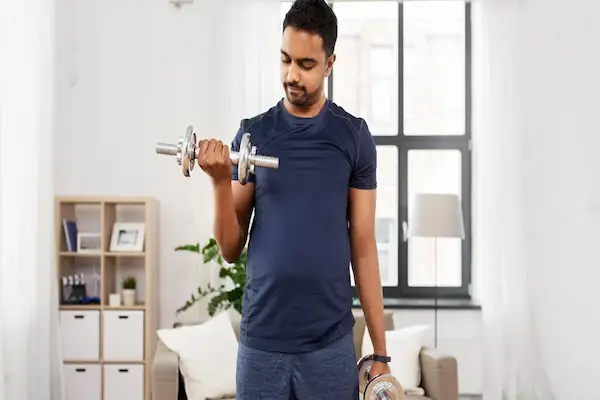
A simple home workout with dumbbells can give you real strength gains without fancy equipment, complicated programming, or a huge time commitment.
If you have one or two light weights at home and you want a beginner-friendly plan that feels safe, clear, and repeatable, you’re in the right place.
Simple home workout with dumbbells: what this plan helps you build
Strength training improves daily life because carrying bags, climbing stairs, standing up from the floor, and moving furniture all become easier when your muscles learn to work together.
Confidence often grows fastest when the routine is simple enough to repeat, because repetition turns “new and awkward” into “familiar and steady.”
Consistency matters more than perfection, so this simple home workout with dumbbells is built around a small set of movements that cover your whole body with minimal fuss.
Progress can happen with light weights workout sessions when you use control, smart rep ranges, and gradual increases, rather than chasing exhaustion every time.
Joint comfort tends to improve when technique is prioritized, which is why this beginner dumbbell routine includes form cues that protect your grip, posture, and breathing.
What you need for a beginner dumbbell routine at home
- One or two dumbbells that feel “light to moderate,” because the goal is clean reps you can repeat consistently.
- A stable chair or couch edge can help with support, especially for rows or balance work.
- A small clear area is enough, because this home strength plan is designed for small spaces.
- A towel or yoga mat adds comfort for floor work, especially for pressing and core drills.
- A simple timer helps pacing, although counting breaths can work if you prefer low-tech structure.
How long this simple home workout with dumbbells takes
Most people finish the main session in 20 to 30 minutes, especially when rest periods stay intentional and transitions stay calm.
Shorter versions are included later, because busy days still deserve a plan that counts.
Safety basics for a light weights workout that still feels solid
Good form reduces strain, and less strain usually means you can train more consistently without interruptions from nagging aches.
Sharp pain, dizziness, numbness, tingling, or symptoms that feel alarming deserve an immediate pause, because finishing a set is never more important than safety.
Control beats speed, so moving a little slower often makes the workout safer and more effective at the same time.
Stable footing matters, which means training on a non-slip surface is a simple upgrade that protects knees, ankles, and confidence.
Quiet breathing is a useful intensity check, because breath-holding often signals a load or pace that is too high for a beginner.
Grip and wrist safety notes for dumbbell training
Neutral wrists help most people, meaning your knuckles stay stacked above your forearm instead of bending back during presses and rows.
Balanced grip pressure works better than a death-grip, because excessive squeezing can create forearm tension that travels up into elbows and shoulders.
Full-hand contact is safer than holding a dumbbell with fingertips, so letting the handle sit across your palm can improve control.
Sweaty hands can increase slipping risk, which is why a towel nearby is a practical safety tool rather than a “nice extra.”
Posture cues that keep your back happy
Ribs stacked over pelvis is the simplest posture cue, because it reduces exaggerated low-back arching while still letting you breathe.
Soft knees during hinges and squats help shock absorption, which often makes movement feel smoother and more joint friendly.
Long spine does not mean rigid spine, so think “tall and relaxed” rather than “stiff and braced.”
Eyes focused slightly ahead can keep the neck neutral, especially during hinges where people tend to crank their head up.
How to choose the right dumbbell weight as a beginner
A useful target is finishing a set feeling like you could do two or three more clean reps, because that cushion keeps technique steady while you learn.
Heaviness should feel challenging in the muscles, not stressful in the joints, which means you should lower the load if your form collapses or your breathing panics.
One dumbbell can be enough for this simple home workout with dumbbells, because unilateral training increases the challenge without demanding heavier equipment.
Two dumbbells are helpful when you want symmetrical loading, yet a single weight still works beautifully for rows, squats, hinges, carries, and presses.
Warm-up for a simple home workout with dumbbells
A warm-up prepares joints, increases blood flow, and makes the first set feel smoother, which reduces the chance you compensate with poor posture.
Three to five minutes is plenty, especially when you focus on movement patterns you will use in the workout.
3-minute warm-up sequence
- March in place for 45 seconds with relaxed shoulders and steady breathing, because circulation wakes up quickly with simple rhythm.
- Hip hinge practice for 6 slow reps with hands on thighs, because hinges teach your hips to do the work instead of your low back.
- Bodyweight squats for 6 slow reps to a comfortable depth, because knees and ankles like gradual range before loading.
- Arm circles forward and backward for 20 seconds each direction, because shoulders benefit from gentle motion before pressing.
- Bracing breath for 3 slow cycles, because a long exhale helps you feel stable without clenching.
Optional 60-second “stiff day” add-on
- Thoracic rotation with hands on chest for 5 reps per side can loosen the upper back without aggressive stretching.
- Calf raises for 10 reps can warm the ankles and reduce the feeling of “rusty” steps.
Simple home workout with dumbbells: the main beginner plan
This beginner dumbbell routine uses six core movements that cover legs, hips, push, pull, core stability, and posture support.
Two formats are offered, because some people prefer reps and sets while others prefer a simple circuit structure.
Rest is part of the plan, so taking 45 to 90 seconds between sets is completely normal when you’re learning.
Format A: classic sets and reps
- Complete 2 to 3 sets per exercise.
- Use 8 to 12 reps for most moves.
- Rest 45 to 90 seconds between sets.
- Move to the next exercise when breathing feels steady again.
Format B: calm circuit for busy days
- Perform each exercise for 40 seconds, then rest for 20 seconds.
- Complete 2 to 3 rounds depending on time and energy.
- Slow down instead of rushing, because control is the secret ingredient in a light weights workout.
Exercise order for the home strength plan
- Goblet squat or suitcase squat.
- Dumbbell Romanian deadlift or hip hinge reach.
- One-arm dumbbell row.
- Floor press or incline press.
- Standing overhead press or half-kneeling press.
- Suitcase carry march or standing anti-rotation press substitute.
1) Goblet squat in a simple home workout with dumbbells
Goblet squats train legs and hips while encouraging an upright torso, which often feels more beginner friendly than back-loaded squats.
Chair guidance can be helpful, because tapping a chair lightly gives you a consistent depth without collapsing.
How to do it
- Hold one dumbbell at chest level with elbows angled down, because this position keeps the weight close and easier to control.
- Set feet about shoulder-width with toes slightly turned out if comfortable, because small toe angles often help knees track smoothly.
- Lower by sending hips back and down while keeping your chest tall, because the goal is a smooth descent rather than a sudden drop.
- Pause briefly where you still feel stable, then stand by pushing the floor away, because controlled drives build strength safely.
Reps and sets
- Choose 2 to 3 sets of 8 to 12 reps for a standard beginner dumbbell routine.
- Use 6 to 8 reps if the weight feels challenging, because lower reps can keep form cleaner at higher effort.
Form cues that protect knees and back
- Imagine spreading the floor slightly with your feet, because stable feet often create stable knees.
- Keep the dumbbell close to your chest, because reaching it away increases strain and makes balance harder.
- Maintain a tall neck and relaxed jaw, because tension tends to creep upward when the set gets hard.
Common mistakes and fixes
- Heels lifting often means you’re forcing depth, so reduce depth and focus on smooth control until ankles loosen over time.
- Knees collapsing inward often improves when you slow down and push knees gently outward, so choose a lighter load while you practice stability.
- Low-back arching often decreases when you exhale on the way up, so use your breath to keep ribs stacked over pelvis.
Two-dumbbell option
Suitcase squats work well when you hold a dumbbell in each hand at your sides, because the load stays balanced while the movement stays simple.
2) Dumbbell Romanian deadlift for a light weights workout
Romanian deadlifts train the back side of your body, which supports posture, reduces “weak hinge” discomfort, and improves everyday lifting mechanics.
Hip hinging is the skill, so the movement should feel like hips moving back rather than like your spine rounding forward.
How to do it with one or two dumbbells
- Stand tall with soft knees and dumbbells in front of your thighs, because the start position should feel balanced and relaxed.
- Slide hips back as your torso tips forward, keeping the weights close to your legs, because closeness improves control and reduces back strain.
- Lower until you feel a mild hamstring stretch while your back stays long, because forcing depth is less important than keeping shape.
- Return to standing by squeezing glutes gently and pushing hips forward, because hips should drive the movement rather than the low back.
Reps and sets
- Pick 2 to 3 sets of 8 to 12 reps with slow tempo, because hinge strength responds well to control and consistency.
- Use a three-second lower if the weights are light, because tempo increases intensity without needing heavier loads.
Form cues for posture and grip
- Keep shoulders “packed” down and back, because shrugging often turns hinges into neck tension.
- Hold dumbbells with straight wrists, because bent wrists can fatigue forearms and reduce control.
- Exhale as you stand, because the exhale can help you stay stacked and stable.
Beginner-friendly hinge alternatives
- Wall hip hinge taps are helpful when you’re learning, because touching your hips to a wall teaches the “hips back” pattern.
- Short-range hinges are safer on tight days, because hamstrings and hips can be stiff at the start of a new routine.
3) One-arm dumbbell row in a simple home workout with dumbbells
Rows train upper-back and lat muscles that support posture, shoulder comfort, and everyday pulling tasks like opening heavy doors or lifting bags.
Support from a chair or couch makes the row more stable, which lets you feel the right muscles instead of wobbling through the set.
How to do it
- Place one hand and one knee on a sturdy surface, or hinge with one hand on the desk, because stability keeps the spine calm.
- Hold the dumbbell in the free hand with a neutral grip, because neutral grips are often friendly on wrists and elbows.
- Pull the weight toward your hip rather than toward your shoulder, because that angle usually engages the back better.
- Lower slowly until the arm is long without losing shoulder position, because controlled lowering builds strength and reduces joint irritation.
Reps and sets
- Complete 2 to 3 sets of 10 to 12 reps per side, because rows often feel best with slightly higher reps and smooth control.
- Pause for one second at the top if the weights are light, because pauses create intensity without momentum.
Form cues that keep shoulders happy
- Think “elbow back, shoulder down,” because shrugging turns a back exercise into a neck exercise.
- Keep ribs gently down, because flaring ribs often creates low-back arching while you pull.
- Stop the set when your torso starts twisting, because twisting usually means the load is too heavy for clean reps.
Two-dumbbell option without a bench
Bent-over two-arm rows can work when you hinge and row both dumbbells at once, although beginners often prefer the one-arm setup because it feels steadier.
4) Floor press for a beginner dumbbell routine
Floor pressing builds chest, shoulders, and triceps while limiting range of motion, which can feel safer for many beginners than deep pressing positions.
A controlled press also teaches shoulder stability, especially when you keep elbows at a gentle angle instead of flaring wide.
How to do it
- Lie on your back with knees bent and feet flat, because grounded feet improve stability and reduce wobble.
- Hold one dumbbell in each hand, or hold one dumbbell with both hands if that feels more stable, because options keep the plan accessible.
- Start with upper arms resting lightly on the floor, because the floor gives you a consistent stopping point.
- Press up smoothly while keeping wrists stacked and shoulders down, because alignment protects joints and improves strength transfer.
- Lower until elbows touch the floor gently, because slamming elbows can irritate joints and create unnecessary noise.
Reps and sets
- Choose 2 to 3 sets of 8 to 12 reps, resting enough to keep reps smooth.
- Use a slower lower if you only have light weights workout equipment, because tempo increases challenge without chasing heavier loads.
Form cues for grip and posture
- Angle elbows about 30 to 60 degrees from your torso, because that often feels better than wide flares.
- Keep your head relaxed and jaw unclenched, because facial tension often shows up when effort rises.
- Exhale as you press, because exhaling supports stability without forcing a hard brace.
Incline alternative when the floor is uncomfortable
Incline presses using the back of a couch or a sturdy chair can reduce floor time, while still keeping the movement pattern simple and joint friendly.
5) Overhead press in a simple home workout with dumbbells
Overhead presses build shoulder strength and core stability, which supports daily reaching tasks like placing items on a shelf or lifting a suitcase into a car.
Half-kneeling presses are a great alternative when the standing version feels wobbly, because the kneeling position encourages stacked posture.
How to do it
- Stand tall with dumbbells at shoulder height, or hold one dumbbell for a single-arm press, because both styles work in a home strength plan.
- Slightly tighten glutes and keep ribs down, because a stable trunk protects the low back from excessive arching.
- Press overhead in a smooth line, finishing with biceps near ears without shrugging, because “reach tall” is better than “jam up.”
- Lower slowly to the shoulders, because controlled lowering trains stability and reduces shoulder irritation.
Reps and sets
- Complete 2 to 3 sets of 6 to 10 reps, because overhead work is often harder than it looks.
- Alternate arms for 8 to 12 reps per side if you use one dumbbell, because single-arm work challenges the core without extra equipment.
Form cues that prevent neck and low-back strain
- Let shoulders stay down as the weight rises, because shrugging can irritate the neck and reduce pressing power.
- Keep your gaze forward and chin neutral, because looking up aggressively can compress the neck.
- Shorten range if you feel pinching, because comfort is a priority and small ranges still build strength safely.
Beginner-friendly modifications
- Seated presses can feel steadier, especially when balance is the limiting factor rather than strength.
- Half-kneeling presses can reduce wobble, because one knee down often creates a more stable trunk position.
6) Suitcase carry march for small-space strength
Carrying a weight on one side trains core stability, grip endurance, and posture control, which is incredibly practical for real life and surprisingly challenging with light weights.
A march-in-place carry is apartment friendly and space friendly, because you can train stability without walking laps.
How to do it
- Hold one dumbbell at your side like a suitcase, because this setup challenges your side-body muscles to keep you upright.
- Stand tall and imagine growing longer through the crown of your head, because posture is the training goal here.
- March slowly in place with quiet feet, because control matters more than speed.
- Switch hands halfway through, because balanced training keeps the plan symmetrical over time.
Time, sets, and effort
- Hold for 30 to 60 seconds per side.
- Repeat for 2 to 3 rounds.
- Keep breathing smooth, because breath-holding turns a stability move into an unnecessary stress test.
Form cues for posture and grip
- Resist leaning away from the weight, because staying tall is the whole point of the carry.
- Keep your wrist neutral, because bent wrists fatigue grip and reduce control.
- Relax your shoulders down, because tense shoulders create neck discomfort without improving stability.
Optional 5-minute finisher that stays beginner friendly
A finisher is optional, because the main beginner dumbbell routine already covers the essentials for a solid home strength plan.
Moderate intensity works best, because you want to finish feeling energized rather than wrecked.
Finisher option A: 5-minute steady circuit
- Minute 1: Bodyweight squat to chair at a comfortable pace.
- Minute 2: Glute bridge on the floor with a slow lower.
- Minute 3: Incline push-ups on a wall or countertop.
- Minute 4: Dead bug with slow breath-led reps.
- Minute 5: March in place with strong arm swings and quiet feet.
Finisher option B: 5-minute dumbbell density block
- Pick one dumbbell and alternate 5 goblet squats with 5 one-arm rows per side, repeating calmly for five minutes.
- Stop early if form breaks, because density is only helpful when reps stay clean.
Cool-down after a simple home workout with dumbbells
A cool-down helps your breathing settle and gives your nervous system a clear “work is done” signal, which can improve recovery and mood.
Two to five minutes is enough when you choose gentle movements and unhurried breathing.
3-minute cool-down sequence
- Slow walk around the room for 60 seconds while breathing through the nose when possible.
- Chest opener with hands behind your back for 30 seconds, keeping ribs soft instead of flared.
- Hip flexor stretch for 30 seconds per side with a comfortable range, keeping posture tall.
- Hamstring hinge stretch for 30 seconds with soft knees, stopping before any back strain.
- Long exhale breathing for 30 seconds, because longer exhales can help tension release.
Home strength plan: how often to do this beginner dumbbell routine
Two to three sessions per week is a great starting point, because beginners improve quickly when recovery is respected.
Alternate days are helpful, because muscles and connective tissues adapt best when hard efforts are followed by rest or gentle movement.
Light activity on non-training days supports recovery, so walking, mobility, or stretching can fit nicely without becoming another intense workout.
Beginner weekly schedule options
- Option 1: Monday and Thursday for two full-body sessions with plenty of recovery time.
- Option 2: Monday, Wednesday, and Friday for three shorter sessions with slightly fewer sets each day.
- Option 3: Tuesday and Saturday for people who prefer longer gaps between training days.
How to keep sessions short on busy weeks
- Choose one lower-body move, one upper-body push, one upper-body pull, and one carry, because the essentials still deliver results.
- Perform only 2 sets per exercise, because a smaller dose done consistently beats a big plan you skip.
- Keep rest honest but not endless, because pacing helps you finish without rushing form.
Progression ideas for a light weights workout at home
Progress does not require heavier weights immediately, because you can increase challenge with reps, sets, tempo, pauses, and range of motion.
Small upgrades are powerful, because they feel manageable and sustainable rather than intimidating.
Five simple ways to progress without buying heavier dumbbells
- Add one rep per set each week until you reach the top of the rep range, because gradual increases build confidence and strength.
- Add a third set for two exercises only, because selective volume increases avoid turning the whole session into a grind.
- Slow the lowering phase to three seconds, because controlled eccentrics create intensity with the same weight.
- Add a one-second pause at the hardest point, because pauses reduce momentum and increase muscle demand.
- Switch from two-arm moves to one-arm moves, because unilateral work increases stability demands without extra load.
Simple progress markers that keep motivation calm
- Cleaner form near the end of the workout shows improved endurance and control.
- Less rest needed between sets often signals better conditioning and confidence.
- Daily tasks feeling easier is a meaningful win, because functional strength is the whole point for many beginners.
- Reduced soreness over time can mean adaptation, because your body becomes more efficient at handling the same training stimulus.
Troubleshooting common issues in a simple home workout with dumbbells
Small aches can happen when you are learning, yet persistent or sharp pain deserves adjustment and sometimes professional input.
Technique fixes are often enough, because beginners commonly improve comfort by slowing down and reducing range temporarily.
If your wrists feel sore during presses
- Neutralize your wrist by stacking knuckles above forearm, because wrist extension often causes discomfort under load.
- Reduce load or switch to one dumbbell held with both hands, because a single implement can feel more stable.
- Choose incline pressing, because a higher angle often reduces joint stress while still training the pattern.
If your shoulders feel pinchy during overhead work
- Press in a slightly forward arc instead of straight out to the side, because many shoulders prefer a natural scapular plane.
- Shorten range and stop before discomfort, because partial reps still build strength safely.
- Try half-kneeling presses, because stacked posture can reduce compensations in the low back and ribs.
If your low back feels tired during hinges
- Reduce depth and focus on hips moving back, because too much depth too soon often creates rounding or arching.
- Exhale as you stand, because breath timing can reduce bracing mistakes and rib flare.
- Practice hinge patterns without weight first, because skill work often solves discomfort faster than pushing harder.
When to pause and seek professional input
- Sharp pain, joint catching, or swelling deserves evaluation, because those signs can indicate more than normal training soreness.
- Numbness, tingling, or radiating pain should not be ignored, because nerve-related symptoms require individualized guidance.
- Dizziness, chest discomfort, or fainting sensations should be taken seriously, because health always comes before finishing a workout.
Frequently asked questions about a beginner dumbbell routine
Is one dumbbell enough for a home strength plan?
One dumbbell is plenty, because single-arm rows, goblet squats, suitcase carries, and single-arm presses can challenge the body deeply without symmetry being perfect.
How heavy should “light weights” be for beginners?
Light weights are the ones you can lift with great form for 8 to 12 reps while still feeling challenged near the end, because effective training sits between “too easy” and “too risky.”
Should you train to failure in a simple home workout with dumbbells?
Stopping with a couple of reps in reserve is usually smarter for beginners, because clean reps build skill, confidence, and consistency with less injury risk.
Can this routine help posture and daily comfort?
Rows, hinges, carries, and controlled pressing often improve posture muscles and core stability, which can make sitting and standing feel more supported over time.
What if you only have five to ten minutes?
Pick squats, rows, presses, and a carry march for one to two sets each, because the “big rocks” still give you a complete, efficient session.
Short versions of the simple home workout with dumbbells
Busy days still deserve training that counts, because small sessions protect the habit and keep momentum alive.
10-minute quick plan
- Goblet squat for 2 sets of 10 reps with calm breathing.
- One-arm row for 2 sets of 10 reps per side with a brief pause at the top.
- Floor press for 2 sets of 10 reps with slow lowering.
- Suitcase carry march for 30 seconds per side, repeated once.
5-minute micro plan
- Perform a 30-second goblet squat set, then rest 30 seconds.
- Complete a 30-second row set per side, then rest 30 seconds.
- Finish with a 60-second carry march, switching hands halfway through.
Closing notes for a straightforward, reassuring start
Starting with a simple home workout with dumbbells is a smart decision, because the best plan is the one you can repeat while staying safe and encouraged.
Progress will feel steadier when you focus on clean reps, moderate effort, and small upgrades over time, because consistency compounds faster than intensity.
Notice: this content is independent and has no affiliation, sponsorship, or control over any brands, platforms, retailers, or third parties mentioned in general terms.