
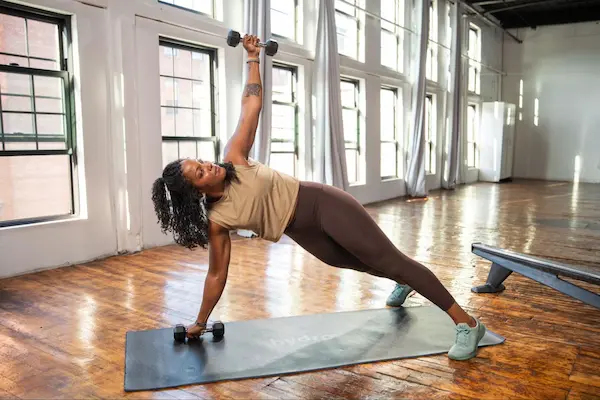
This five exercise home workout circuit is built for the days when you want something effective, easy to remember, and simple enough to repeat without overthinking.
Even if you’re a beginner, five moves can cover your whole body while keeping the plan friendly, upbeat, and confidence-building.
If “programs” feel complicated or intimidating, a simple five move circuit gives you structure without the stress, because you always know what comes next.
With a few smart timing options and a clear way to rest between rounds, you can turn this into a repeatable routine that fits your life instead of fighting it.
Five exercise home workout circuit: why five moves is a smart beginner strategy
Five moves works because your brain can remember it, your body can practice it, and your schedule can tolerate it, which creates the kind of consistency that produces real results over time.
When a routine is too long or too complex, the first thing that disappears is momentum, because decision fatigue shows up before your muscles even get a chance to work.
A time efficient workout becomes even more powerful when it is also a “low-friction” workout, meaning you can start quickly, transition smoothly, and finish feeling like you did something meaningful.
Instead of collecting random exercises and hoping they add up, a five-move plan gives you a complete pattern set that you can repeat, improve, and adjust without reinventing everything every week.
Because beginners improve quickly with repetition, a repeatable routine that feels familiar is often more effective than a fancy plan you only do once.
What a “complete” simple five move circuit usually includes
- A squat pattern for legs and daily-life strength, because standing up and sitting down is a skill your body uses constantly.
- A hinge pattern for hips and the backside of your body, because strong hips often make backs feel more supported.
- A push pattern for chest, shoulders, and arms, because pushing strength carries over to real-life tasks like getting up from the floor.
- A pull or posture pattern, because your upper back deserves attention even when equipment is limited.
- A core and conditioning pattern, because steady trunk control helps every other move feel more stable and safe.
The confidence-building benefit most people miss
Memory creates confidence, and confidence creates consistency, which means a beginner who can remember the workout is already ahead of the beginner who keeps starting over with new plans.
Skill improves when you repeat the same movements often enough to feel your form getting smoother, your breathing getting calmer, and your transitions getting less chaotic.
Progress also becomes easier to notice, because you can compare the same circuit from last week to this week without guessing what changed.
Simple five move circuit: the example routine you can start today
This example five-move circuit is designed to be quiet, equipment-free, and beginner-friendly, while still feeling like a full-body session that “counts.”
Each move has an easier version and a harder version, so the routine can meet you where you are instead of demanding perfection from day one.
Choose a pace that stays controlled, because control makes the workout safer, quieter, and more effective, especially when you’re still learning.
The five moves
- Squat: Chair squat or air squat.
- Hinge: Good morning hinge.
- Push: Wall push-up, desk push-up, or floor push-up.
- Pull/Posture: Prone “W” raise or standing back squeeze.
- Core/Conditioning: Dead bug or power march.
Why these five are beginner-proof
Squats build leg strength and confidence in a pattern you use every day, which makes them a practical anchor for the whole plan.
Hinges teach hips to do the work of bending, which can reduce the feeling that your low back is “doing everything.”
Push-ups are endlessly scalable, so you can build upper-body strength with a wall or countertop before you ever touch the floor.
Posture work fills the “pulling gap” that often happens at home, because upper-back muscles still need love even without machines.
Core or low-impact conditioning finishes the circuit by training stability and stamina without requiring jumps or loud movements.
How to run the five exercise home workout circuit with simple timing
Timing keeps the routine simple, because you don’t need to count reps precisely when you’re learning and you don’t need to wonder when to stop.
A time efficient workout becomes even easier when the clock does the coaching, especially on busy days when your attention is already stretched thin.
Pick one timing method and stay with it for two weeks, because repetition builds comfort and comfort builds consistency.
Timing option 1: balanced intervals for most beginners
- Work 40 seconds, rest 20 seconds, for each move.
- Complete 2 to 4 rounds depending on time and energy.
- Use the rest to breathe, reset posture, and set up the next move calmly.
Timing option 2: extra-friendly learning mode
- Work 30 seconds, rest 30 seconds, for each move.
- Complete 2 to 3 rounds while focusing on clean form and steady breathing.
- Increase effort only after the movements feel familiar, not before.
Timing option 3: stronger challenge without adding complexity
- Work 45 seconds, rest 15 seconds, for each move.
- Complete 2 to 3 rounds and stop before form gets sloppy.
- Choose quieter, controlled reps rather than rushing, because speed often breaks technique first.
Timing option 4: EMOM style for people who like structure
- Set a timer for 5 minutes per round, because you have five moves.
- Do Move 1 during Minute 1, then rest for the remainder of that minute.
- Do Move 2 during Minute 2, then rest for the remainder of that minute.
- Continue until all five minutes are done, then rest longer before starting the next round.
EMOM pacing works well when you want natural rest built in, because the clock forces you to avoid turning every set into a sprint.
Warm-up ideas that make the circuit feel smoother and safer
A warm-up should feel like a gentle ramp, not a second workout, because you want to arrive at the first move feeling ready rather than tired.
Movement feels better when joints get a little heat first, especially if you have been sitting, working, or waking up stiff.
Two to five minutes is enough for most people, and it is often the difference between “awkward first round” and “solid first round.”
Quick 3-minute warm-up
- March in place for 60 seconds with soft feet and relaxed shoulders.
- Hip hinges for 6 slow reps with hands sliding down thighs.
- Bodyweight squats for 6 slow reps to a comfortable depth.
- Arm circles forward and backward for 15 seconds each direction.
- Two slow breaths with longer exhales to settle posture and reduce tension.
If you have only 60 seconds, use this “minimum warm-up”
- March for 30 seconds, because circulation wakes up quickly.
- Do 5 slow squats, because knees and hips like rehearsal.
- Take one long exhale, because calm breathing improves control right away.
Move-by-move instructions for the simple five move circuit
Clear cues reduce guesswork, and less guesswork means more confidence, especially when you are new and you want to feel safe doing simple home exercises.
Smaller ranges with better control are always a win, because controlled reps teach your body the pattern you want to repeat.
Whenever discomfort feels sharp, pinchy, or unstable, pausing and choosing the easier version is the smart choice, not the “quitting” choice.
Move 1: Chair squat or air squat
Set feet about shoulder-width and let toes turn out slightly if that feels natural, because many bodies squat more comfortably with a small toe angle.
Send hips back and down as if you are sitting into a chair, while keeping your chest lifted and your weight balanced across the whole foot.
Press the floor away to stand tall again, and exhale as you rise, because a gentle exhale often keeps ribs stacked over pelvis.
- Easier: Tap a chair lightly and stand, using the chair as a depth guide without dropping into it.
- Harder: Lower for three seconds, pause for one second, then stand smoothly.
- Form cue: Keep knees tracking comfortably over toes rather than collapsing inward.
Move 2: Good morning hinge
Soften your knees and place hands on your thighs if you want a simple guide for range and position.
Slide hips back as your torso tips forward, keeping your spine long and your neck neutral, because hinging should feel like hips moving rather than back rounding.
Stand back up by squeezing glutes gently and bringing hips forward, finishing tall without leaning back at the top.
- Easier: Hinge to a smaller range and focus on control, because range increases naturally as your body learns.
- Harder: Add a one-second pause at the bottom, keeping your back long and steady.
- Form cue: Keep weight in mid-foot and heel, because tipping to toes often makes hinges feel unstable.
Move 3: Push-up at a level that matches your day
Choose a wall, countertop, desk, or floor, because your angle is your built-in difficulty dial for this repeatable routine.
Set hands slightly wider than shoulders and keep a straight line from head to heels, or head to knees if you are using a knee variation.
Lower with control and press up smoothly, while keeping shoulders away from ears and breathing steady.
- Easier: Wall push-ups with a tall posture and slow tempo.
- Harder: Lower to a deeper range or slow the lowering phase to three seconds.
- Form cue: Angle elbows gently instead of flaring straight out, because shoulders often prefer that path.
Move 4: Pull/Posture option A, prone “W” raise
Lie face down with forehead resting on a folded towel or your hands, because a supported head keeps the neck relaxed.
Bend elbows into a “W” shape with thumbs pointing up, then lift elbows and hands a small amount while squeezing shoulder blades down and back.
Lower softly and repeat with control, because height matters less than feeling the upper back muscles engage.
- Easier: Keep hands on the floor and only squeeze shoulder blades gently for a slow hold.
- Harder: Hold the top position for three seconds with steady breathing.
- Form cue: Stop before your low back arches hard, because the focus is upper back, not spinal compression.
Move 4: Pull/Posture option B, standing back squeeze
Stand tall and pull elbows back as if you are trying to put them in your back pockets, keeping your chest open without flaring your ribs.
Squeeze for one to two seconds, then relax fully, because full relaxation between reps makes the squeeze more effective and less tense.
Move slowly and keep your jaw relaxed, because face tension often turns posture work into neck tension.
- Easier: Make the squeeze smaller and focus on smooth breathing.
- Harder: Add a three-second hold every third rep.
- Form cue: Keep shoulders down rather than shrugging, because shrugging steals the work from the right muscles.
Move 5: Core/Conditioning option A, dead bug
Lie on your back with knees bent and arms toward the ceiling, then exhale gently so your ribs soften down without forcing your low back flat.
Lower one heel toward the floor while reaching the opposite arm overhead, moving slowly enough that your torso stays steady.
Return to start with control and switch sides, keeping your neck relaxed and your breathing calm.
- Easier: Tap one heel down at a time without reaching the arm, because smaller levers reduce strain.
- Harder: Pause briefly at the farthest point while maintaining control and steady breath.
- Form cue: Stop the rep before your low back arches, because arching means you went past your current control range.
Move 5: Core/Conditioning option B, power march
March in place with soft feet and strong arm drive, because arms can raise intensity without adding impact or noise.
Keep posture tall and shoulders relaxed, since tension in the shoulders usually signals you are trying to force intensity instead of building it smoothly.
Maintain a pace where you can still speak a full sentence, because moderate effort is the goal for a work-friendly, beginner-friendly circuit.
- Easier: Keep steps smaller and reduce arm height.
- Harder: Increase pace slightly while keeping feet quiet and controlled.
- Form cue: Avoid leaning back, because leaning back often shifts work into the low back.
Rest between rounds: how to recover without losing momentum
Rest is not wasted time, because rest is what keeps your form clean, your breathing steady, and your confidence high across multiple rounds.
Beginners often rush rest and then wonder why reps get sloppy, because fatigue accumulates quietly until it suddenly shows up as wobble and tension.
A simple rule makes this easy: rest until you can breathe calmly, then start the next round before you cool down completely.
Three simple ways to choose rest length
- Breath test: Start again when you can speak a full sentence without gasping.
- Posture test: Begin the next round when shoulders can stay down and jaw can stay relaxed.
- Quality test: Continue when you feel ready to move smoothly rather than just “push through.”
Practical rest suggestions by timing style
- After Round 1, resting 60 to 90 seconds is common, because your body is still adjusting to the rhythm.
- After Round 2, resting 90 to 120 seconds can help maintain good form, especially if lunges and push-ups feel challenging.
- After Round 3, resting 2 to 3 minutes is reasonable if you are doing four rounds, because quality in the final round matters most.
What to do during rest so it actually helps
- Walk slowly and shake arms out, because gentle movement can reduce stiffness without adding fatigue.
- Take two longer exhales, because longer exhales help the nervous system downshift quickly.
- Reset your next exercise setup, because calm transitions prevent rushed, noisy movement.
Swaps that keep the five-move circuit fresh without making it complicated
Swapping exercises keeps boredom away, yet swapping too often can erase the “repeatable routine” advantage, so a simple structure works best.
Think of each move as a slot, and then choose one option per slot for two weeks, because two weeks is enough to feel improvement without feeling stuck.
When a swap keeps the same pattern, your body learns the same skill, which means the circuit stays time efficient and easy to remember.
Squat slot swaps
- Chair squat, because it guides depth and builds confidence.
- Air squat, because it builds control through free space.
- Split squat hold, because it trains legs with less balance demand than stepping lunges.
- Wall sit, because isometrics are quiet and surprisingly challenging.
Hinge slot swaps
- Good morning hinge, because it teaches hips to load safely.
- Hip hinge with reach, because reaching forward increases challenge without speed.
- Glute bridge, because it trains hips while the back stays supported on the floor.
- Single-leg hinge reach to a wall touch, because it adds balance when you are ready.
Push slot swaps
- Wall push-up, because it is the easiest and most repeatable.
- Desk or countertop push-up, because it increases challenge without jumping to the floor.
- Knee push-up, because it reduces load while keeping the push pattern.
- Floor push-up, because it is the hardest version for most beginners.
Pull or posture slot swaps
- Prone “W” raise, because it targets upper back with control.
- Standing back squeeze, because it is quick and can be done anywhere.
- Wall angel slides, because shoulder mobility and posture often improve together.
- “T” raise on the floor, because it adds variety while keeping the pattern similar.
Core or conditioning slot swaps
- Dead bug, because it builds safe core control for many bodies.
- Forearm plank on knees, because it builds stability with less wrist stress.
- Power march, because cardio can be quiet and low impact.
- Step jacks, because you get rhythm without jumping.
How to adjust difficulty up or down while keeping the routine repeatable
Scaling is the skill that makes home workouts work long-term, because life changes daily and your body changes weekly.
Progress does not require a new routine every week, because the simplest path is often repeating the same five moves with slightly better control, slightly better effort, or slightly better consistency.
Most upgrades can happen quietly through tempo, pauses, range, and rest, which means you can get stronger without needing new equipment or more complexity.
Easy ways to scale down today
- Reduce the work interval to 30 seconds, because shorter work keeps form cleaner.
- Increase rest to 30 seconds, because breathing recovery prevents sloppy movement.
- Choose an easier push-up angle, because angle is the safest intensity dial.
- Shorten lunge or squat range, because partial range done well still builds strength.
- Swap conditioning for dead bug, because core work can be challenging without raising heart rate too high.
Quiet ways to scale up without adding a sixth move
- Slow the lowering phase to three seconds on squats, hinges, and push-ups, because time under tension increases difficulty fast.
- Add a one-second pause at the hardest point, because pauses remove momentum and build control.
- Reduce rest slightly while keeping breathing steady, because conditioning improves when recovery becomes easier.
- Increase rounds from two to three, because more practice often produces faster skill gains.
- Switch one move to a unilateral option, because single-leg or single-side work raises the challenge without equipment.
Form-first rules that keep beginners progressing safely
- Stop sets before technique collapses, because clean reps teach your body the right pattern.
- Keep breathing smooth, because breath-holding usually signals the intensity is too high for today.
- Choose a pace you can repeat tomorrow, because a repeatable routine is more valuable than a one-time grind.
- Finish sessions feeling capable, because confidence is the habit fuel you want to protect.
Example schedules that make this time efficient workout feel automatic
Scheduling turns good intentions into real practice, because the easiest workout to do is the one that already has a place in your week.
Many beginners do best with two to four sessions weekly, since recovery helps your body adapt and helps your mind stay motivated.
Light movement on non-training days can support recovery, which keeps your next circuit feeling smoother instead of heavier.
Simple weekly schedule options
- Two-day plan: Circuit on Monday and Thursday, with walks or mobility on other days.
- Three-day plan: Circuit on Monday, Wednesday, and Friday, using two rounds on the middle day if you feel tired.
- Four-day plan: Circuit on Monday and Thursday with three rounds, plus two shorter sessions with two rounds.
Micro-schedule idea for busy weeks
- Do one round on a busy day, because one round protects the habit and still counts.
- Do two rounds on a normal day, because two rounds gives you a complete stimulus without taking over your schedule.
- Do three rounds on a high-energy day, because extra volume is the simplest progression tool.
Common mistakes beginners make with five-move circuits and how to fix them
Beginners often assume “harder is always better,” yet harder is only better when you can recover and repeat, which is why pacing and rest matter so much.
Another common trap is rushing transitions, because transitions feel like “free time,” yet rushed transitions are where form breaks and confidence drops.
A third issue is skipping the pull or posture slot, because it seems less exciting, even though posture work often makes shoulders and neck feel better fast.
Quick fixes that keep your repeatable routine working
- Slow down the first round, because the first round is where you set your form and your breathing rhythm.
- Choose an easier push-up variation sooner, because good reps at an easier level beat ugly reps at a harder level.
- Rest longer between rounds when needed, because quality in Round 3 matters more than speed into Round 3.
- Keep posture work small and controlled, because small squeezes done well are more effective than big jerky motions.
Cool-down ideas that help you feel better after the circuit
A cool-down helps your body shift from effort to recovery, and that shift can reduce the “wired” feeling that sometimes follows circuits.
Gentle stretching should feel relieving rather than aggressive, because forcing range can irritate joints and tighten muscles instead of relaxing them.
Two to five minutes is plenty, especially when you breathe slowly and keep movements comfortable.
3-minute cool-down
- Walk slowly for 60 seconds, letting your heart rate settle naturally.
- Chest opener for 30 seconds, pulling elbows gently back while keeping ribs soft.
- Hip flexor stretch for 30 seconds per side, staying in a mild range that feels safe.
- Hamstring hinge stretch for 30 seconds with soft knees, stopping before back strain.
- Two slow breaths with longer exhales, because exhaling longer helps you relax.
Frequently asked questions about the five exercise home workout circuit
How long should the whole workout take?
Most people finish in 15 to 30 minutes depending on rounds, rest, and warm-up, which makes this a genuinely time efficient workout for busy schedules.
How hard should a beginner push?
A “moderate but honest” effort is ideal, meaning you feel worked and warm while still able to breathe in full sentences and keep form steady.
Is it okay to repeat the same five moves for weeks?
Repeating is the point, because a repeatable routine makes progress easier to track and makes confidence grow faster than constant novelty.
What if one move hurts?
Swapping to a gentler option is smart, and persistent pain deserves professional input, because safety matters more than completing a circuit.
Can the circuit work with zero equipment?
This example circuit is designed as a no-equipment option, and the swap menus keep it bodyweight-friendly while still feeling complete.
Closing encouragement for your next simple five move circuit
Confidence grows when your plan is easy enough to remember and solid enough to repeat, which is exactly what a five exercise home workout circuit is meant to deliver.
Progress shows up through clean reps, steady breathing, and consistent rounds across weeks, because consistency compounds faster than intensity that burns out quickly.
Notice: this content is independent and has no affiliation, sponsorship, or control over any institutions, platforms, workplaces, or other third parties mentioned.