
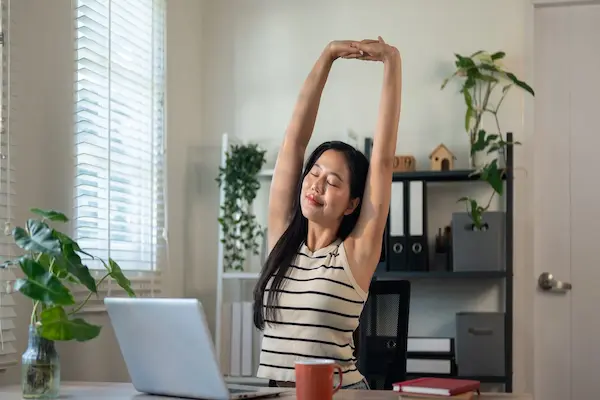
Your body was built to move, yet desk hours can quietly stack tension in your neck, shoulders, and hips until even simple tasks feel stiff.
Today you will learn a practical, small-space routine that fits beside your chair, respects your comfort range, and takes just five minutes.
Why desk work creates tightness, and how tiny movement breaks help
Desk stiffness often shows up first in the neck and shoulders because your head naturally drifts forward toward screens, which asks small stabilizing muscles to work for a long time without a real rest.
Hip tightness tends to build when sitting keeps the front of the hips in a shortened position, while the glutes stay relatively “off,” which can leave you feeling cramped when you stand up.
Upper-back restriction commonly increases when the ribcage stays still for hours, so breathing becomes shallower and the chest feels less open during the workday.
Circulation improves when you change positions, and that simple shift can make tissues feel warmer and less resistant without requiring deep, intense stretching.
Micro-break movement is useful because it interrupts the same posture pattern before your nervous system decides that tight, braced positioning is the safest default.
Progress usually comes from repetition rather than intensity, so a quick, consistent routine is often more realistic and more effective than a long session you never repeat.
Five minute desk stretching routine: rules that keep it quick and comfortable
Comfort is the guiding principle here, which means every stretch should feel like a mild-to-moderate pull or warm release rather than sharp pain, pinching, numbness, or tingling.
Breathing stays smooth and unforced throughout the routine, because the moment you hold your breath is often the moment you are pushing past a safe range for your body today.
Space constraints are expected, so each move is designed to work with a chair, a desktop edge, and a small standing area that does not require lying on the floor.
Clothing and footwear can influence how you feel, so loosen anything restrictive and consider standing moves in stable shoes if your office floor is slippery.
Time pressure is normal at work, so you will use simple cues and short holds that make it easy to finish even when your calendar looks crowded.
Fast setup checklist before you start
- Choose a chair position that lets both feet rest flat, so your pelvis feels stable before you move your upper body.
- Clear a small arm’s-length radius, so you can open your elbows and shoulders without bumping a drawer or monitor.
- Place your phone on silent if possible, so the five minutes feel uninterrupted and your breathing stays calm.
- Decide on a gentle effort level, so you never feel tempted to “win” a stretch in the middle of a workday.
- Keep water nearby if you like, because a sip afterward can become a simple habit cue to repeat later.
Safety notes that make the routine work for more bodies
- Stop immediately if sharp pain appears, since pain is not a flexibility signal and you deserve a more comfortable option.
- Reduce the range if joints feel pinchy, because smaller motion with better control is usually the smarter choice at a desk.
- Skip any neck position that causes dizziness, because steadiness matters more than completing every single step.
- Choose seated-only variations on days when balance feels off, since stability allows muscles to relax more easily.
- Consult a qualified professional if you have a recent injury, medical condition, or persistent symptoms, because individualized guidance is sometimes necessary.
Quick workday routine: the full 5-minute sequence by the desk
Each minute has one main focus, and the flow alternates between areas that commonly tighten at desks so you feel more balanced when you return to work.
A timer can help, yet counting slow breaths also works well because it keeps the pace steady while reinforcing relaxed movement.
Transitions are intentionally simple, so you can move from seated to standing without complicated setups or big changes to your workspace.
Minute 1: Seated posture reset and rib expansion
Start seated near the front half of your chair, letting your feet ground and your sit bones feel evenly weighted.
- Lengthen your spine gently as if the crown of your head is floating upward, while your shoulders soften down away from your ears.
- Place one hand on your lower ribs and inhale slowly, feeling the ribs widen sideways rather than lifting the shoulders.
- Exhale smoothly and imagine your sternum melting down slightly, which helps your neck relax without slumping.
- Repeat for five calm breaths, keeping your jaw loose and your tongue resting gently in your mouth.
- Exhale-driven softening usually makes the next stretches feel easier, because tension often hides in the breath.
- Neutral spine works better than rigid posture, because stiffness in “perfect posture” can create new strain.
- Quiet breathing is enough, because forcing extra-deep breaths can feel uncomfortable in a busy office setting.
Minute 2: Neck release plus shoulder blade glide
Neck tension often pairs with shoulder tension, so you will combine a gentle head position with a simple shoulder blade movement that does not require much space.
- Look straight ahead and perform a small chin nod as if making a soft “yes,” then return to neutral without dropping your head heavily forward.
- Slide your shoulder blades slightly back and down as if tucking them into back pockets, then release them forward without collapsing your chest.
- Turn your head slowly to the left, pause for one breath, return to center, and repeat to the right with the same calm speed.
- Finish with one gentle ear-toward-shoulder tilt on each side, keeping the movement small and stopping before any pinch appears.
- Slow head turns should feel like oiling a hinge, because grinding through range tends to irritate sensitive neck tissues.
- Shoulder blade glides should stay subtle, because aggressive squeezing can make the upper traps tighten more.
- Neutral gaze prevents neck overextension, because looking up while stretching often adds unnecessary compression.
Minute 3: Seated upper-back twist and chest opener
Rotation wakes up the thoracic spine, and a mild chest opener counters the rounded position that screens and keyboards can encourage.
- Place your right hand on the outside of your left thigh and your left hand lightly behind you on the chair for support.
- Inhale to grow taller through the spine, then exhale as you rotate your ribcage gently to the left, keeping both sit bones anchored.
- Hold for two slow breaths, then unwind smoothly and repeat the twist on the other side with the same easy effort.
- Interlace your fingers behind your head, open your elbows wide, and lift your chest slightly without flaring the ribs upward.
- Stay for two breaths, feeling space across the front of the shoulders while your neck remains long and relaxed.
- Ribcage rotation should lead the twist, because pulling with the arms can strain the shoulders and distract from the spine.
- Seated anchoring matters, because shifting hips during the twist reduces the benefit and can feel unstable.
- Elbow opening should feel gentle, because forcing a deep “backbend” in a chair can compress the lower back.
Minute 4: Seated hip stretch with figure-four and optional hamstring reach
Hips hold a lot of desk tension, and a seated figure-four is one of the most practical desk mobility options because it needs very little room.
- Cross your right ankle over your left knee, keeping the right foot gently flexed as if drawing toes back toward the shin.
- Inhale to lengthen your spine, then exhale as you hinge forward slightly from the hips until you feel a mild stretch in the outer right hip.
- Hold for three breaths, letting the exhale soften the hip while your shoulders remain relaxed and your jaw stays unclenched.
- Switch sides and repeat with the same comfortable intensity, noticing whether one hip wants a smaller range today.
- Optional: extend one leg forward with a soft knee bend, hinge a few centimeters from the hips, and take one calm breath for a light hamstring wake-up.
- Foot flexion often protects the knee, because it helps keep the hip stretch targeted and controlled.
- Forward hinging should be small, because deep collapsing can turn a hip stretch into a lower-back rounding strain.
- Optional hamstring reaches should stay gentle, because hamstrings can be sensitive when tissues are still cool at a desk.
Minute 5: Standing reset with hip flexor, chest opening, and calf release
Standing changes the whole system quickly, so this final minute helps you feel taller and less compressed before you return to sitting.
- Stand beside your desk and place one hand lightly on it for balance, then step your right foot back into a short split stance.
- Tuck your pelvis subtly as if zipping up jeans, then shift forward a few centimeters until you feel a mild stretch at the front of the right hip.
- Take two breaths, switch sides, and repeat with the same small shift rather than a deep lunge.
- Face your desk and clasp your hands behind your back or hold your elbows, then lift your chest gently as if widening your collarbones.
- Hold for one slow breath, then step one foot back, keep the heel down, and bend the front knee slightly for a calf stretch.
- Take one breath on each side, finishing by standing tall and reaching overhead softly without shrugging.
- Pelvic tuck prevents low-back dumping, because hip flexor stretches often get “stolen” by an exaggerated back arch.
- Balance support reduces tension, because wobbling can trigger bracing that makes stretching feel harsher.
- Calf release improves walking comfort, because ankles and calves influence how your whole body stands and moves.
Office stretch ideas: how often to repeat the routine during the day
Frequency matters because desk tightness builds gradually, so repeating small doses can feel better than waiting until discomfort becomes loud.
Many desk workers like a rhythm of one quick reset every 60 to 90 minutes, yet your schedule and workplace culture should guide what feels realistic and respectful.
Consistency improves when you attach the routine to natural transitions, so you do not need motivation every time you want to move.
Simple repetition plans you can choose from
- Use the routine once mid-morning and once mid-afternoon, which creates two predictable movement anchors without disrupting meetings.
- Repeat it three times per day by adding a quick lunchtime round, which can reduce the heavy “post-lunch slump” feeling.
- Practice it every hour on the hour when deadlines allow, which works especially well on intense screen-focus days.
- Split it into mini-blocks by doing minutes 1–3 now and minutes 4–5 later, which is helpful when you cannot stand up immediately.
Reminders that feel practical rather than annoying
- Calendar blocks labeled “move and breathe” can feel more professional than “stretch break,” while still protecting the habit.
- Bathroom or water refills can serve as cues, because standing transitions already happen and you can stack movement onto them.
- After-call resets work well, because your nervous system is already shifting gears and a minute of mobility feels natural.
- Document-save moments can trigger movement, because the tiny pause prevents you from staying frozen in one posture for too long.
Micro versions for ultra-busy minutes
- Take one posture breath, perform two chin nods, and roll shoulders once in each direction when you truly cannot step away.
- Do a seated twist for one breath per side right before sending an email, which refreshes the upper back without anyone noticing.
- Stand for a single hip flexor breath on each side during a loading screen, which can quickly reduce front-of-hip tightness.
Desk mobility details: form cues that make each stretch feel better
Small technical tweaks often matter more than bigger range, because clean alignment reduces strain and helps your body relax into the movement.
Gentle effort keeps the routine sustainable, because over-stretching at work can leave you sore and less likely to repeat tomorrow.
Neck and shoulder cues for desk workers
- Imagine your head stacking over your ribs, because that simple visualization often reduces forward-head strain without force.
- Soften your tongue and jaw, because jaw tension often recruits neck tension in a surprisingly strong way.
- Glide shoulder blades rather than squeezing hard, because subtle control usually feels smoother and more comfortable.
- Keep elbows heavy during chest opening, because lifting them aggressively can irritate shoulders in tight spaces.
Upper back and ribcage cues for better rotation
- Rotate from the ribs, because twisting from the lower back can feel pinchy when sitting.
- Stay tall before turning, because length creates space and makes rotation feel less restricted.
- Move on an exhale, because the exhale naturally helps the ribs soften and allows more ease.
- Return slowly, because a controlled unwind tells your nervous system the movement is safe.
Hip cues that keep the figure-four friendly
- Flex the crossed foot gently, because it tends to support the knee and keep the sensation in the hip.
- Hinge from the hips, because rounding the back can turn a hip stretch into a back strain.
- Use smaller range on tighter days, because forcing depth can create guarding instead of release.
- Switch sides evenly, because desk tightness is often asymmetrical and balanced practice prevents overloading one side.
Quick workday routine upgrades: small workspace tweaks that amplify results
Ergonomic perfection is not required, yet a few simple adjustments can reduce how quickly tension rebuilds after your five minutes are done.
Practical changes work best when they are easy to maintain, because complicated setups often disappear the moment your workload increases.
Easy desk adjustments to consider
- Screen height that keeps your gaze slightly downward can reduce neck extension and help your shoulders relax.
- Keyboard and mouse placement that avoids reaching can lower shoulder elevation and reduce upper trap gripping.
- Chair height that allows feet to feel grounded can improve pelvic stability and reduce hip and low-back bracing.
- Frequent posture variation beats one “perfect” posture, because bodies respond well to change more than rigid stillness.
Movement-friendly work habits that take seconds
- Stand during one short call per day, because the position shift can reduce hip compression without changing your workload.
- Alternate sitting positions gently, because micro-shifts prevent tissues from being pressed in the same places for too long.
- Reach for items by moving your whole body, because twisting only through the neck and shoulder can build strain.
- Let your eyes look far away for a few breaths, because visual breaks often reduce head-forward creep.
When to scale back, pause, or choose a gentler option
Stretching should feel helpful and safe, so any sensation that feels sharp, electric, numb, or deeply pinchy is a clear signal to stop and adjust.
Medical history matters, which means recent surgery, acute injury, or unexplained symptoms deserve professional evaluation before you rely on a general routine.
Workplace context matters too, so choose movements that feel appropriate for your environment and prioritize calm, discreet options when privacy is limited.
Gentler substitutions that still give relief
- Replace side neck tilts with slow head turns if your neck feels sensitive, because rotation can feel smoother for some people.
- Swap the behind-the-back chest opener for a doorway-free version by simply widening the collarbones on an inhale, because it is subtle and low-risk.
- Use seated hip flexor activation by standing briefly and squeezing glutes gently if lunging feels uncomfortable, because muscle engagement can reduce tightness sensations.
- Choose calf pumps instead of calf holds when balance feels shaky, because rhythmic motion can feel safer than a static stretch.
Notice: independence and no third-party control
Notice: this content is independent and does not have affiliation, sponsorship, or control by any institutions, platforms, employers, or third parties referenced or implied.
FAQ about the five minute desk stretching routine
Should the routine be done at the same time every day?
Habit formation often improves when timing is predictable, yet using natural work transitions can be just as effective when your schedule changes daily.
Is it better to stretch when you feel tight or before tightness appears?
Preventive micro-breaks usually feel easier than waiting for discomfort, because early movement often stops tension from escalating into pain-like signals.
Can you repeat the routine back-to-back?
Two rounds can feel great if everything stays gentle and your breathing remains easy, yet one round done consistently is already a strong win.
What if standing stretches feel awkward in an open office?
Seated-only versions still provide meaningful desk mobility, so you can keep minutes 1–4 and add a subtle seated calf pump instead of standing.
Will stretching fix posture permanently?
Posture changes best through a mix of movement, strength, ergonomics, and frequent position shifts, so treat stretching as one useful piece rather than a single magic solution.
Printable recap: do this 5-minute sequence beside your desk
- Minute 1: seated posture reset with five calm rib-expansion breaths.
- Minute 2: chin nods, shoulder blade glides, and slow head turns with relaxed shoulders.
- Minute 3: seated twist both sides, then a gentle chest opener without rib flare.
- Minute 4: seated figure-four both sides, plus an optional light hamstring hinge.
- Minute 5: standing hip flexor both sides, quick chest opening, and one-breath calf stretch per side.
Final note: keep it simple, repeat it often, and stay comfortable
Real relief at a desk usually comes from frequent, manageable resets, because your body responds to repeated signals of safety and movement more than occasional intense sessions.
Tomorrow will feel different from today, so adjust the range, keep the breathing steady, and let this quick workday routine support your work rather than interrupt it.