
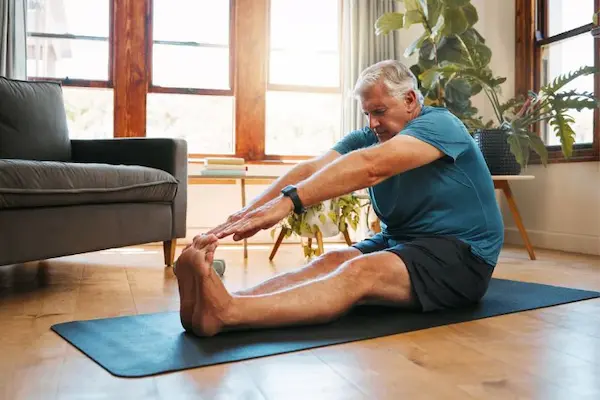
Even when energy feels lower than it used to, staying mobile can still feel wonderfully possible with a slow, respectful routine that never asks you to strain.
Here you will find a carefully paced sequence with chair options, joint friendly stretches, balance tips, and frequent reminders to check with a health professional before changing routines.
Gentle stretching routine for seniors: why slow mobility work matters
Mobility often supports independence in everyday moments, like getting up from a chair, turning to look behind you, or reaching for something on a shelf without wincing.
As tissues and joints change with age, a calm approach that emphasizes comfort can help older adult flexibility without triggering the “guarding” response that makes muscles tighten.
Instead of aiming for a big range of motion, the goal is to keep movements friendly to your joints and consistent enough that your body trusts what you are doing.
Many older adults notice that a senior stretching routine feels best when it creates ease first, because ease usually leads to smoother motion over time.
Because balance and circulation can vary from day to day, a slow routine with steady breathing gives you time to notice how your body responds before you go any deeper.
What “gentle” should feel like during stretching
Gentle stretching tends to feel like mild to moderate sensation in muscles, while joints themselves should feel supported, stable, and never pinched.
Sharp pain, numbness, tingling, dizziness, or a feeling that you must hold your breath are signals to stop, adjust, or consult a qualified clinician.
Progress in older adult flexibility is usually quieter than you expect, because tiny changes in comfort and control often matter more than dramatic increases in range.
Important medical reminder before you begin
Before starting a new routine or changing an existing one, speaking with a health professional is the safest step, especially if you have osteoporosis, recent surgery, joint replacement, nerve symptoms, uncontrolled blood pressure, or frequent falls.
Because this article cannot know your personal medical history, treat the guidance here as general education rather than individualized medical advice.
How to set up your space for joint friendly stretches
A supportive setup makes stretching feel safer, and safety is what allows your body to relax rather than brace.
Choose a sturdy chair that does not roll, and place it on a surface where the legs will not slip as you shift your weight.
Keep a wall or countertop nearby for balance support, because a small “hand anchor” can reduce fear and help your breathing stay calm.
Wear comfortable clothing that does not restrict your ribs or hips, since restricted breathing can make gentle movement feel harder than it needs to.
Have a glass of water nearby if you tend to get dry mouth, because hydration supports comfort and helps you avoid rushing through holds.
Helpful items that increase comfort without effort
- A firm pillow can support the lower back or knees when stiffness shows up in the morning or after sitting.
- A rolled towel can cushion the hands if arthritis makes pressure on the palms uncomfortable.
- A strap, belt, or scarf can help you reach your foot without hunching or yanking.
- A yoga block or thick book can bring the floor closer so you do not feel forced to fold deeply.
- A light blanket keeps you warm during slower holds, which is important because muscles relax more easily when the body is not chilled.
A quick safety checklist before the first stretch
- Check the chair by gently rocking it to confirm it feels steady, because a stable base reduces balance stress.
- Stand near a wall if balance feels uncertain, because confidence and safety go together.
- Rate your comfort on a simple scale from 0 to 10, and aim to stay around 2 to 4 for most stretches.
- Plan to move slowly when changing positions, because sudden shifts can cause lightheadedness in some older adults.
- Decide in advance that pain is not part of the plan, because permission to stop is what keeps this routine truly gentle.
Gentle stretching routine for seniors: a slow chair-first sequence
This gentle stretching routine for seniors starts in a chair to reduce strain, lower fall risk, and help you feel supported from the first minute.
Hold times are suggestions rather than rules, so choose the shorter end on stiff days and the longer end on comfortable days.
Breathing cues appear with each stretch because breath is a simple tool that helps your nervous system stay calm and your muscles stay cooperative.
If discomfort increases at any point, returning to neutral sitting and taking a few slow breaths is always a successful choice.
How long should the full routine take
Most people can complete the chair sequence in about 10 to 15 minutes, while adding optional standing or floor work may bring the routine closer to 20 minutes.
Consistency matters more than duration, so a shorter routine done regularly usually beats a long routine done rarely.
Breathing style for a senior stretching routine
A comfortable inhale through the nose and a slightly longer exhale through the nose or mouth often helps the body relax without effort.
Rather than forcing deep breaths, let the ribs expand gently as if you are slowly widening an umbrella inside your chest.
- Inhale cue: feel the sides of the ribs expand, especially under the armpits where many people hold tension.
- Exhale cue: imagine the shoulders melting downward while the jaw softens and the belly becomes less guarded.
- Pace cue: slow enough that you could speak a full sentence without gasping, because calm breathing supports safe movement.
1) Seated posture reset for neck and upper back
Sit tall with both feet flat, then imagine a string gently lifting the crown of your head while your shoulders remain heavy and relaxed.
Stay here for 5 to 8 slow breaths, letting your chest soften without collapsing and your chin stay level rather than jutting forward.
- Hold time: 30 to 60 seconds.
- Breathing cue: exhale as if you are quietly sighing tension out of the base of the neck.
- Stop or adjust if: you feel dizziness, and simply return to normal breathing with eyes softly focused on one spot.
2) Seated shoulder rolls for circulation and ease
Lift the shoulders gently toward the ears, roll them back in a slow circle, and let them glide down as if they are settling into a comfortable coat.
Complete 6 to 10 circles, then reverse direction to keep the movement balanced and smooth.
- Repetitions: 6 to 10 each direction.
- Breathing cue: inhale on the lift, then exhale as the shoulders slide down and back.
- Stop or adjust if: the movement feels sharp, and reduce the circle to a smaller, slower motion.
3) Seated side bend for ribs and waist
Place one hand on the chair seat and raise the other arm lightly, then lean to the side without twisting so the ribs open gently.
Hold for 4 to 6 breaths on each side, keeping both sitting bones heavy on the chair to avoid strain.
- Hold time: 30 to 45 seconds per side.
- Breathing cue: inhale into the open side ribs, then exhale and let the shoulder soften away from the ear.
- Stop or adjust if: the shoulder feels pinched, and keep the arm lower with the hand resting on the hip.
4) Seated chest opener with hands behind hips
Place your hands on the chair seat beside your hips, then gently press down to lift the chest slightly while keeping the neck relaxed.
Remain for 5 slow breaths, letting the collarbones widen as the front of the shoulders ease open without forcing.
- Hold time: 20 to 40 seconds.
- Breathing cue: exhale and imagine the sternum floating upward while the shoulder blades slide down the back.
- Stop or adjust if: the wrists feel uncomfortable, and place hands on thighs instead while lifting the chest gently.
5) Seated ankle circles for joint friendly mobility
Hold the chair for support, extend one leg slightly, and circle the ankle slowly as if you are drawing a smooth circle in the air with your toes.
Complete 8 to 12 circles each direction, then switch sides while keeping the movement pain-free and controlled.
- Repetitions: 8 to 12 each direction per ankle.
- Breathing cue: keep the breath easy and steady, because ankle work should feel light rather than effortful.
- Stop or adjust if: cramping appears, and reduce the range while gently shaking out the foot afterward.
6) Seated knee extension for thighs and circulation
With a tall posture, extend one knee until the leg is straighter, then flex and point the ankle gently to include the calf without strain.
Hold the extension for 2 to 3 breaths, lower slowly, and repeat 6 to 10 times per side.
- Repetitions: 6 to 10 per side.
- Breathing cue: exhale during the lift if that feels steadier, then inhale as you lower with control.
- Stop or adjust if: the knee feels painful, and reduce the extension range while keeping the motion smooth.
7) Seated hamstring stretch with heel forward
Slide one heel forward with the toes pointing up, then hinge from the hips slightly while keeping the back long and the chest gently lifted.
Stay for 5 to 8 breaths, aiming for a mild stretch behind the thigh rather than a deep pull near the knee.
- Hold time: 30 to 60 seconds per side.
- Breathing cue: exhale and let the back of the thigh soften, while the shoulders remain relaxed.
- Stop or adjust if: the lower back strains, and sit taller with less hinge while keeping the heel forward.
8) Seated figure-four, chair version for hips
Cross one ankle over the opposite knee if comfortable, flex the foot gently, and lean forward a small amount until the hip feels a steady stretch.
Remain for 5 to 8 breaths, keeping the spine long and using your hands for support on the chair if needed.
- Hold time: 30 to 60 seconds per side.
- Breathing cue: inhale into the lower belly, then exhale and let the hip muscles unclench.
- Stop or adjust if: the knee feels pressured, and keep the ankle lower on the shin or skip this stretch.
9) Seated gentle twist for mid-back comfort
Place one hand on the outside of the opposite thigh and the other hand on the chair back, then rotate slowly as if you are turning to look over your shoulder without forcing.
Hold for 4 to 6 breaths, and keep the twist mild so it stays friendly to the spine.
- Hold time: 20 to 40 seconds per side.
- Breathing cue: inhale to lengthen the spine, then exhale to rotate a tiny bit more only if it stays comfortable.
- Stop or adjust if: you feel sharp back pain, and return to facing forward with slow breathing.
10) Seated calf stretch with wall or towel option
Place one foot slightly behind the other while holding the chair, then press the back heel down gently to feel the calf lengthen.
Stay for 4 to 6 breaths and switch sides, noticing whether a small bend in the back knee reduces strain while still providing a stretch.
- Hold time: 20 to 40 seconds per side.
- Breathing cue: exhale and imagine the heel becoming heavy and grounded.
- Stop or adjust if: the Achilles tendon feels sharp, and shorten the stance while keeping the heel down gently.
Joint friendly stretches with optional standing balance support
Standing work can be very helpful for leg strength and balance confidence, yet safety comes first, so support from a chair, wall, or countertop is encouraged.
Balance changes are common with age, so using a stable surface is not “cheating,” because it allows good alignment and reduces fear.
When fatigue appears, returning to the chair is a smart choice, because tired muscles often make balance less reliable.
Balance tips before standing stretches
- Keep one hand lightly touching a stable surface, because a gentle touch can improve balance control without much effort.
- Place feet hip-width apart rather than tightly together, because a wider base feels steadier.
- Look at a fixed point in front of you, because the eyes help the body organize balance.
- Move slowly when shifting weight, because quick transitions can make you feel unsteady.
- Wear supportive footwear if barefoot feels slippery or unsafe on your floor.
11) Supported hip flexor stretch with chair
Stand behind the chair, step one foot back, and gently bend the front knee while keeping the torso upright so the front of the back hip feels a mild opening.
Hold for 4 to 6 breaths, then switch sides, keeping the stance small enough that you feel stable.
- Hold time: 20 to 40 seconds per side.
- Breathing cue: exhale and let the front of the hip soften rather than pushing the pelvis forward hard.
- Stop or adjust if: the lower back arches, and shorten the stance while gently tucking the tailbone a little.
12) Supported side leg slide for hip mobility
Hold the chair and slide one leg out to the side with toes pointing forward, then slide it back in with control, keeping the movement smooth and small.
Repeat 6 to 10 times per side, focusing on steadiness rather than height.
- Repetitions: 6 to 10 per side.
- Breathing cue: exhale during the slide outward if that helps you stay relaxed.
- Stop or adjust if: the hip feels pinched, and reduce the slide distance while slowing down.
13) Supported heel-to-toe rocking for ankles and balance
With hands on the chair, shift your weight forward onto the toes and then back onto the heels in a gentle rocking motion.
Continue for 30 to 45 seconds, keeping your posture tall and your jaw relaxed.
- Time: 30 to 45 seconds.
- Breathing cue: keep the breath steady and let the shoulders remain soft.
- Stop or adjust if: you feel unsteady, and reduce the range while keeping both hands on support.
14) Supported quad stretch, only if knee comfort allows
Stand tall with one hand on the chair, bend one knee, and bring the heel toward the buttock only as far as comfortable, using a strap if reaching the ankle is difficult.
Hold for 3 to 5 breaths and switch sides, keeping the knees aligned and the pelvis level.
- Hold time: 10 to 25 seconds per side.
- Breathing cue: exhale and soften the front of the thigh rather than pulling harder.
- Stop or adjust if: the knee feels painful, and skip this stretch in favor of seated knee extensions instead.
Chair options for days when getting to the floor is not ideal
Some days the floor feels like too much, and honoring that reality is part of a respectful, sustainable approach to older adult flexibility.
On those days, a chair-based gentle stretching routine for seniors can still support mobility without the stress of standing up and down.
Because comfort builds consistency, using chair options can keep your habit alive even when energy, pain, or balance confidence is lower.
A short “chair-only” routine you can repeat anytime
- Start with posture reset and shoulder rolls, because upper-body ease supports relaxed breathing.
- Add seated side bends and gentle twists, because the spine often feels better with small, controlled motion.
- Finish with seated hamstring and figure-four stretches, because hips and thighs often tighten after sitting.
- End with ankle circles and slow breathing, because calm is the best final note for a routine.
Signs the chair-only version is the best choice today
- Lightheadedness appears when standing up, because transitions may need to be slower and more supported.
- Balance feels uncertain, because safety is always more important than completing every stretch.
- Lower back pain increases with standing, because seated and supported positions may be kinder.
- Fatigue is high, because a shorter, gentler routine still counts as valuable movement.
Optional floor-friendly stretches for older adults who feel comfortable getting down
Floor work can feel wonderfully supported, yet it should only be included if you can get down safely and return to standing without strain or fear.
Using a sturdy chair as a “bridge” for getting down and up is a smart strategy, and having a family member nearby can add reassurance.
If knee discomfort makes floor positions unpleasant, extra padding and smaller ranges can help, while skipping floor work entirely is also perfectly fine.
How to get down to the floor more safely
- Place the chair next to you and keep one hand on it, because support increases stability.
- Lower one knee to a cushion first, because padding reduces pressure and fear.
- Bring the other knee down slowly, because controlled movement protects joints.
- Sit onto one hip, then roll to your side, because side-lying transitions often feel easier than bending forward.
- Move into your chosen stretch gradually, because the body relaxes when it feels in control.
15) Supported knees-to-chest, floor version
Lie on your back with knees bent, then bring one knee toward the chest while the other foot stays grounded to keep the lower back comfortable.
Hold for 5 to 8 breaths and switch sides, keeping the pull gentle and avoiding pressure on the kneecap.
- Hold time: 30 to 60 seconds per side.
- Breathing cue: exhale and let the back ribs feel heavy against the floor.
- Stop or adjust if: hip pinching appears, and hold behind the thigh rather than pulling the knee closer.
16) Figure-four, floor version with pillow support
Cross one ankle over the opposite thigh, flex the foot gently, and use your hands behind the thigh to draw the legs toward you only until the hip feels a mild stretch.
Stay for 6 to 10 breaths, and place a pillow under the head or hips if comfort improves.
- Hold time: 45 to 75 seconds per side.
- Breathing cue: inhale softly, then exhale and allow the hip muscles to soften as if they are unclenching.
- Stop or adjust if: knee discomfort increases, and reduce the pull distance or return to the chair version.
17) Gentle spinal twist with knees supported
With knees bent, let them fall to one side while keeping the shoulders relaxed, and add a pillow between the knees if the back asks for more support.
Hold for 6 to 10 breaths and switch sides, keeping the twist small and easy.
- Hold time: 45 to 75 seconds per side.
- Breathing cue: inhale into the back ribs, then exhale and let the belly soften.
- Stop or adjust if: shoulder strain appears, and keep the knees closer to center with support.
18) Resting pose with knees supported for calm breathing
Lie on your back with a pillow under the knees and your arms relaxed by your sides, then let your breath slow down without forcing.
Stay for 1 to 2 minutes, letting the face soften and the tongue rest comfortably in the mouth.
- Hold time: 60 to 120 seconds.
- Breathing cue: exhale a little longer than you inhale, as if you are slowly dimming the lights inside your body.
- Stop or adjust if: the lower back still feels tight, and add a second pillow or return to the chair.
How to choose hold times and frequency for older adult flexibility
Hold times should feel supportive rather than demanding, because the goal is to feel better after stretching, not depleted.
Frequency can be adjusted to your life, yet many older adults prefer shorter daily routines because gentle daily repetition feels more natural than occasional long sessions.
Rest days remain important, especially when joints are inflamed or when fatigue is higher than usual.
Simple timing guidelines that stay safety focused
- Start with 20 to 40 seconds per stretch if you are new, because shorter holds reduce the risk of overdoing it.
- Increase toward 45 to 75 seconds only if comfort stays steady, because intensity should remain mild for joint friendly stretches.
- Repeat the whole routine 3 to 6 days per week if it feels good, because consistency supports mobility without requiring intense exercise.
- Use fewer stretches on rough days, because doing something small is often better than doing nothing at all.
A gentle weekly plan that feels realistic
- On day one, do the chair sequence only, focusing on posture, shoulders, ankles, and easy hip work.
- On day two, repeat the chair sequence and add one supported standing stretch if balance feels good.
- On day three, keep it short with posture reset, hamstrings, and breathing, especially if soreness appears.
- On day four, return to the full chair routine and include gentle twisting to help the spine feel smoother.
- On day five, add optional floor work only if getting down and up feels safe and comfortable.
- On day six, repeat the chair-only routine and end with a longer breathing rest.
- On day seven, take a rest day or do a five-minute mini routine, depending on how your joints feel.
Common modifications for arthritis, stiffness, and sensitive joints
Arthritis and stiffness can change daily, so flexibility work must be adjustable, compassionate, and never rigidly prescribed.
Supportive props, smaller ranges, and slower breathing often create better results than pushing through pain, especially for older adults.
If hands or wrists are sensitive
- Choose chair-based stretches instead of floor positions that load the hands.
- Use forearms on a pillow for support if a tabletop position is needed.
- Keep fingers relaxed rather than gripping, because gripping can increase tension up the arms and into the neck.
If knees are sensitive
- Prioritize seated knee extensions and hamstring stretches rather than kneeling positions.
- Add extra cushioning for any floor work, because padding can reduce fear and allow muscles to relax.
- Skip quad stretches that irritate the knee, because irritation today often leads to guarding tomorrow.
If shoulders are stiff or painful
- Keep arm movements lower, because shoulder comfort often improves when range is reduced.
- Focus on shoulder rolls and gentle chest opening, because small movements can restore ease without strain.
- Avoid pulling the arms behind the body aggressively, because that can irritate sensitive joints.
If the lower back is easily aggravated
- Use a smaller hinge in the seated hamstring stretch, because the hamstrings can lengthen without rounding the spine deeply.
- Support twists with a gentle range, because mild rotation often feels better than strong rotation.
- Keep both feet grounded during many chair stretches, because grounding can feel stabilizing for the pelvis and spine.
Red flags: when to pause and consult a health professional
Stretching should feel helpful, so any signs that the body is not tolerating a movement deserve attention and respect.
Because older adults can have varied medical conditions, consulting a qualified professional before starting or changing routines is the safest foundation.
Stop and seek guidance if any of these occur
- Chest pain, unusual shortness of breath, or fainting feelings appear, because those symptoms require medical attention.
- Numbness, tingling, or radiating pain shows up, because nerves may be irritated.
- Sharp joint pain increases during a stretch, because joints should feel supported rather than compressed.
- Swelling, redness, or warmth around a joint worsens, because inflammation may need specific care.
- Balance suddenly feels dramatically worse, because fall risk should be assessed.
Questions worth asking your clinician or physical therapist
- Which stretches are safest for my specific diagnosis, especially if I have osteoporosis, arthritis, or a history of falls.
- What range of motion should I avoid, particularly after surgery or joint replacement.
- How often should I stretch, and what signs suggest I am doing too much.
- Which balance exercises are appropriate if I feel unsteady.
- What pain signals mean “stop now” for my situation.
Mini routines for low-energy days that still support mobility
Low-energy days happen, and honoring them while still moving a little can protect your confidence and your habit.
Even five minutes of joint friendly stretches can help you feel less stiff, especially when the movements are slow and supported.
Five-minute chair mini routine
- Do posture reset for 5 slow breaths, letting the shoulders soften and the jaw unclench.
- Add shoulder rolls for 6 circles each direction, keeping the movement small and smooth.
- Perform seated ankle circles for 8 rotations each direction per foot, keeping the motion easy.
- Hold seated hamstring stretch for 4 breaths per side, focusing on a long spine and gentle sensation.
- Finish with slow breathing for 6 breaths, letting the exhale be slightly longer than the inhale.
Five-minute standing-supported mini routine
- Hold the chair and do heel-to-toe rocking for 30 seconds, keeping eyes on a steady focal point.
- Step into a small hip flexor stretch for 4 breaths per side, keeping the torso tall and the stance stable.
- Slide the leg out to the side and back in for 6 slow repetitions per side, using both hands on support if needed.
- End with gentle calf stretch for 4 breaths per side, letting the heel settle downward comfortably.
FAQ about a gentle stretching routine for seniors
Should stretching be done in the morning or later in the day?
Morning stretching can reduce stiffness for some people, while later stretching can feel easier when the body is warmer, so choose the time that feels safest and most comfortable.
How can I tell if I am stretching too hard?
Overstretching often feels like sharp pain, breath-holding, shaking, or soreness that lasts longer than expected, while gentle stretching feels steady and manageable.
Is soreness normal after a senior stretching routine?
Mild muscle tenderness can happen, yet strong pain or joint soreness is a sign to reduce range and discuss symptoms with a health professional.
Can stretching help balance as I get older?
Stretching can support movement quality, while balance also benefits from strength and practice, so supported standing work can be useful if it feels safe.
What if I have a joint replacement?
Joint replacements often come with specific movement precautions, so medical guidance is essential before adding new stretches or increasing range.
What if I feel anxious about falling?
Using a chair, a wall, and slower transitions can reduce fear, while a clinician can help you build a personalized balance plan that feels safe.
Important independence notice
Notice: this content is independent and does not have affiliation, sponsorship, or control by any institutions, platforms, or third parties mentioned.
Closing: steady comfort is the real success
With a safety-first mindset, chair options, and calm pacing, a gentle stretching routine for seniors can support mobility in a way that respects your body and your life.
When comfort guides your choices and professional advice supports your plan, the routine becomes less about pushing and more about moving through your days with confidence.