
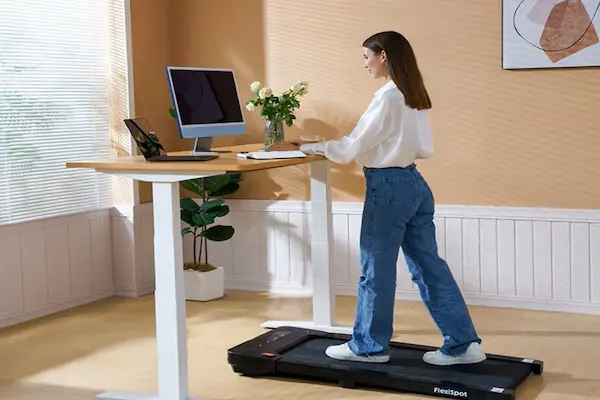
Hours at a desk can make your body feel like it is “shrinking,” even when your mind is doing big work and your calendar is full.
This guide is for walking for desk workers beginners who want gentle, schedule-aware ways to add movement without turning the workday into a fitness project.
Walking for desk workers beginners: why tiny walks matter more than big intentions
Long sitting blocks can quietly stiffen hips, calves, and upper back, which often makes you feel sluggish, tense, and less comfortable when you finally stand up.
Short movement breaks can support circulation and joint comfort, which is especially helpful when your job keeps you seated from nine to five and your body rarely gets variety.
Consistency tends to come from small actions that fit into real life, so a few minutes here and there often beats a single “perfect” workout you keep postponing.
A practical walking habit at work is less about counting steps like a contest and more about interrupting the same position before it starts to feel like your default.
Stress often shows up in shallow breathing and shoulder tension, and a quick walk can change your state fast enough to help you return to your screen with a calmer body.
Even modest low impact steps spread across the day can add up, because your body responds to repeated movement signals more reliably than to occasional bursts of effort.
Quick reality check that makes walking feel doable
- Five minutes is not “too small,” because five minutes repeated is how a daily habit gets built without relying on motivation.
- Walking counts even when it is slow, because gentle pace still changes posture, breathing, and muscle tension.
- Movement can be quiet and professional, because office walking breaks do not need to look like a workout.
- Progress is allowed to be messy, because consistency is created by returning after imperfect days.
Walking for desk workers beginners: safety, comfort, and a non-medical reminder
This article is educational and not medical advice, so checking with a health professional is the safest choice if you have heart, lung, circulation, balance, or joint conditions, or if you feel unsure about increasing activity.
Sharp pain, chest pressure, faintness, unusual shortness of breath, numbness, tingling, or new weakness are reasons to stop and seek professional care rather than “pushing through” for the sake of a goal.
Comfortable walking should feel steady and controlled, which usually means you can breathe without gasping and you can keep good posture without limping or bracing.
Supportive footwear matters because uncomfortable shoes can change your gait and create aches that make you avoid walking altogether.
Notice: this content is independent and does not have affiliation, sponsorship, or control by any institutions, platforms, employers, or third parties mentioned or implied.
Simple safety cues for low impact steps during the workday
- Use the talk test, because being able to speak in short sentences usually means the effort is in a safe, sustainable range.
- Slow down when form gets sloppy, because speed is never worth turning a small walk into a sore joint.
- Choose flatter routes at first, because predictable footing reduces the risk of ankle tweaks when you are new to daily walking.
- Keep transitions gradual, because jumping up quickly after sitting for hours can feel dizzy for some people.
Office walking breaks: the three-level system that fits any calendar
Desk schedules are rarely open and spacious, so a useful strategy is to build three sizes of walking breaks that match your time and energy instead of requiring the same effort every day.
Using levels reduces decision fatigue, because you can choose the break that fits the moment without debating whether you have time for a “real walk.”
Small breaks protect the habit, medium breaks build comfort, and longer breaks add extra minutes when the day allows it.
Level 1: the “micro break” for busy hours
- Walk to refill water, then return by a slightly longer route, because a tiny detour creates movement without changing your schedule.
- Do one loop around your room or office area after sending a message, because pairing walking with a completed task makes it automatic.
- Walk during a 60-second loading screen or between meetings, because short windows are common when work is intense.
Level 2: the “mini break” for focus resets
- Stand up, roll shoulders once, and begin walking slowly for one minute to let your joints adapt after sitting.
- Continue for 4–7 minutes at an easy pace, keeping breathing steady and posture relaxed.
- Return to your desk with a final slow minute, because a gentle downshift helps you sit without feeling rushed.
Level 3: the “meal or midday break” for extra minutes
- Start with two easy minutes, because easing in makes the walk feel kinder when your hips are stiff.
- Walk for 10–20 minutes at a comfortable pace, choosing flatter surfaces when possible for joint-friendly consistency.
- Finish with two easy minutes, then drink water and sit down slowly, because sudden stops can feel abrupt when you are new to movement breaks.
Choosing the right level without overthinking
- Pick Level 1 when meetings are stacked, because the goal is maintaining the habit signal rather than chasing time.
- Select Level 2 when focus drops, because a short walk can refresh attention without costing a full break.
- Use Level 3 when lunch exists on your calendar, because midday minutes add up quickly without needing extra evenings.
Walk more at work: attach walking to events that already happen
Most people skip walks because they wait for the “right moment,” so attaching walking to existing routines is one of the easiest ways to build walking routine consistency.
Habit anchors work because they reduce choice, and fewer choices often means fewer skipped days.
Workdays already contain repeated events like calls, bathroom breaks, coffee refills, and meeting transitions, so those moments can become cues for office walking breaks.
Choose a few anchors that match your real day
- After the first email check, take a 3–5 minute loop, because the morning scroll is a common trigger for shoulder tension.
- Before lunch, do one mini break, because late morning is when stiffness often starts to build.
- After lunch, do a gentle 5–10 minutes, because a short walk can help you reset energy without needing caffeine.
- After the last meeting, do a quick loop, because end-of-day transitions are powerful habit cues.
Schedule-aware templates for a nine-to-five day
- Template A (meeting-heavy): two micro breaks before lunch, one mini break mid-afternoon, and one micro break before heading home.
- Template B (focus blocks): one mini break mid-morning, one midday break after lunch, and one mini break mid-afternoon.
- Template C (home worker): one micro break every hour, a longer loop at lunch, and a short “shutdown stroll” after closing the laptop.
Micro scripts that make walking automatic
- After I finish a call, I walk for two minutes, because calls already create a natural transition moment.
- After I refill my water, I take the long way back, because the refill is already happening anyway.
- After I send a deliverable, I stand and loop once, because completing work becomes the cue for moving.
Walking meetings: turn talking time into moving time
Walking meetings are one of the most effective ways to walk more at work because they use time you already spend speaking, thinking, and listening.
Audio-only calls often work best, because screen-sharing and note-taking can make walking awkward and distracting.
Short walking calls can feel surprisingly productive, because movement sometimes improves creativity and reduces tension that builds during static focus.
Beginner-friendly walking meeting rules
- Choose low-stakes calls first, because confidence grows when the stakes feel manageable.
- Walk indoors if privacy matters, because hallway laps still count as low impact steps.
- Keep the pace easy, because breathless talking defeats the purpose and can sound unprofessional.
- Use stable shoes and a safe route, because tripping risk is never worth a few extra minutes.
Walking call formats that fit real work
- One-on-one catch-up: walk for 10 minutes while you align priorities and next steps.
- Status update: walk for 5–8 minutes while you review the top three items.
- Brainstorm: walk for 10–15 minutes, then stop to capture notes at the end.
Quick checklist to keep walking meetings smooth
- Charge earbuds, because dead audio can create stress that kills the habit.
- Pick a loop you know, because unfamiliar routes add cognitive load.
- Carry a simple note method, because good ideas appear and deserve a quick capture.
Low impact steps: stairs, loops, and “movement snacks” that do not feel dramatic
Low impact steps can be added quietly, which matters when you work in an office environment or when you share space at home.
Stairs can be useful, yet they should be optional, because knees and breath tolerance vary widely among beginners.
Indoor loops are underrated, because weather, safety, and time constraints become less powerful excuses when you have a simple inside route.
Stair choices that stay beginner-friendly
- Take one flight when you feel good, because small exposure builds confidence without overloading joints.
- Use the elevator up and the stairs down if knees tolerate it, because descending can feel different and should stay comfortable.
- Hold the rail lightly if balance feels uncertain, because stability makes movement calmer and safer.
- Skip stairs on sore days, because protecting consistency matters more than forcing a harder option.
Short loop ideas for offices and home setups
- Do a “printer loop” even when you do not need the printer, because a purposeful destination makes walking feel legitimate.
- Walk to the farthest restroom when time allows, because the route is predictable and built into the day.
- Loop your living room and hallway during a break, because indoor walking removes the weather barrier completely.
Movement snacks you can repeat without sweating
- Two minutes of easy walking after each meeting, because meetings are natural posture traps.
- Three minutes of walking every hour on the hour, because simple timing reduces decision-making.
- Five minutes after lunch, because digestion time can become movement time without adding a new block.
Comfortable shoes: the simplest upgrade that makes walking more likely
Shoe discomfort is one of the fastest ways to quit walking breaks, because foot pain makes every step feel like a negotiation.
Comfortable shoes help you relax your stride, which often reduces tension that travels into knees, hips, and lower back.
Work culture can limit what you wear, yet many desk workers can keep a pair of walking-friendly shoes at their desk or near the door for quick swaps.
Practical shoe and clothing tips for desk worker walking
- Choose stable soles with enough cushioning to feel comfortable on hard floors, because office surfaces are often unforgiving.
- Keep blister prevention simple with socks you trust, because hotspots create dread and dread kills habits.
- Wear layers if temperature changes, because being cold makes you tense and less likely to walk.
- Use a small bag or drawer for essentials, because searching for gear adds friction at the exact moment you need ease.
Comfort cues that signal your walking setup is working
- Feet feel fine during and after the walk, because lingering foot pain is a sign to adjust footwear.
- Stride stays natural rather than stiff, because stiffness often signals discomfort or fear of slipping.
- Shoulders remain down, because an easy walk should not become an upper-body stress hold.
Realistic goals for walking for desk workers beginners
Realistic goals keep you consistent, because unrealistic goals create guilt and guilt creates avoidance.
Many beginners do best with minutes-based goals rather than step targets, because minutes fit schedules and do not require devices.
Step counts can still be useful if they motivate you, yet the healthiest approach treats steps as feedback rather than as a daily pass-fail grade.
Three beginner-friendly goal styles
- Minutes goal: “I will walk 15 total minutes during workdays,” because minutes are simple and flexible.
- Breaks goal: “I will take three office walking breaks per day,” because frequency protects your posture more than one long block.
- Event goal: “I will walk after two meetings and after lunch,” because anchors make the habit automatic.
Sample goals that fit common schedules
- Minimum consistency goal: two micro breaks plus one mini break on workdays, because this is achievable even with meetings.
- Comfort-building goal: one midday break plus two micro breaks, because midday minutes add up quickly.
- Momentum goal: three mini breaks spread across the day, because repetition reduces stiffness buildup.
How to know when to increase your goal
- Increase when the current plan feels easy and repeatable, because ease is a sign your routine fits your life.
- Hold steady when soreness increases, because comfort protects the long-term habit.
- Scale down when stress spikes, because the minimum walk keeps the identity alive even in chaotic weeks.
Tracking ideas that motivate without turning walking into pressure
Tracking is helpful when it feels like encouragement, and tracking becomes harmful when it turns into self-judgment after one missed day.
Simple tracking reduces friction, which is exactly what desk workers need when mental energy is already being spent on work tasks.
Pick one easy tracking method for two weeks
- Checkmark calendar: mark each day you took at least one walking break, because visual streaks feel satisfying.
- Minutes note: write down total minutes walked during the workday, because time is easier than counting steps.
- Break counter: track how many office walking breaks you took, because frequency supports posture comfort.
- Mood cue: note one word after walking, because “calmer” and “looser” are powerful motivators.
A five-minute weekly review that keeps progress realistic
- Count how many days included walking, because evidence reduces the “I never do it” story.
- Identify the hardest day, because that day reveals what obstacle needs a plan.
- Choose one small adjustment, because small changes are easier to keep than big reinventions.
- Set next week’s minimum, because a minimum protects consistency when life gets unpredictable.
Troubleshooting: when weather, meetings, energy, or awkwardness gets in the way
Obstacles are not personal flaws, because weather changes, meetings run long, and energy fluctuates for everyone.
Planning alternatives in advance makes walking easier, because you do not have to invent a solution when you already feel tired or stressed.
Weather and environment solutions
- Use indoor hallway laps on rainy days, because indoor steps keep the streak alive without risk.
- Choose shaded routes or earlier walks on hot days, because heat can make effort feel harder than it is.
- Prioritize well-lit routes in low light, because feeling safe reduces tension and improves posture.
- Pick flatter surfaces on sore days, because predictable footing supports calm, low impact steps.
Meeting overload solutions
- Schedule two-minute transitions after key meetings, because tiny buffers can prevent the day from becoming one long sitting block.
- Walk during audio-only calls, because talking time can become movement time without adding minutes to the calendar.
- Use the restroom or water refill as a cue, because those actions happen anyway and can anchor a micro break.
Low energy solutions that still count
- Do the “minimum loop” around your room, because one small action keeps the habit identity intact.
- Walk more slowly, because speed is optional and gentle movement still changes your state.
- Split a longer break into two short breaks, because two starts can feel easier than one commitment.
Awkwardness solutions for office culture
- Frame the break as a posture reset, because health and productivity language often feels more acceptable than “exercise.”
- Carry a water bottle or notebook, because props can make walking feel purposeful rather than performative.
- Start with restroom and refill routes, because those walks look normal in most workplaces.
A gentle 2-week starter plan to walk more at work
A short plan reduces overwhelm, because you can focus on showing up rather than on building a perfect system from day one.
Progression is based on minutes and frequency, because beginners usually succeed faster when the plan feels light and repeatable.
Week 1: build the cue and protect consistency
- Goal: one mini break on three days, plus two micro breaks on most days, because repetition matters more than volume initially.
- Pace: easy, because comfort builds confidence and reduces soreness risk.
- Support: wear comfortable shoes or keep them nearby, because friction-free starts create follow-through.
- Monday: one 5–7 minute mini break after lunch, plus one micro break mid-morning.
- Tuesday: two micro breaks, because busy days still deserve movement.
- Wednesday: one 5–7 minute mini break mid-afternoon, plus one micro break after a meeting.
- Thursday: two micro breaks, because frequency interrupts sitting better than waiting for a long window.
- Friday: one 5–7 minute mini break after lunch, plus one micro break before the last hour.
Week 2: add minutes gently, then keep it sustainable
- Goal: two mini breaks on two days, plus micro breaks on most days, because small growth is safer than big jumps.
- Pace: easy to moderate, because you should still be able to speak without gasping.
- Recovery: keep one day lighter if soreness appears, because comfort protects long-term consistency.
- Monday: one 8–10 minute midday break, plus one micro break in the afternoon.
- Tuesday: one 5–7 minute mini break mid-morning, plus one 5-minute mini break mid-afternoon if time allows.
- Wednesday: micro breaks only if meetings are heavy, because maintaining the habit still counts as success.
- Thursday: one 8–10 minute midday break, plus one micro break later in the day.
- Friday: one mini break at any time you choose, plus two micro breaks as a calm end-of-week win.
FAQ for walking for desk workers beginners
Does walking around the office really count?
Office walking breaks absolutely count, because the goal is reducing long sitting blocks and adding low impact steps that your body can repeat daily.
How long should a walking break be?
Two to ten minutes works well for most beginners, because short breaks are easier to fit into schedules and easier to repeat.
Should the pace be fast to be effective?
Easy pace is effective for habit-building and joint comfort, and speed can be added later only if it stays comfortable and controlled.
What if I feel pain when I walk?
Stopping and consulting a health professional is the safest choice for sharp, persistent, or worsening pain, because pain deserves evaluation rather than guesswork.
How do I avoid forgetting breaks when I am focused?
Anchoring walking to meetings, water refills, and lunch usually works better than relying on memory, because cues beat willpower.
Printable checklist: walk more at work with simple consistency tips
- Keep a “minimum break” ready, because minimum protects the habit on busy days.
- Attach walking to existing events, because habit stacking reduces decision-making.
- Use three break sizes, because flexible options fit real calendars.
- Choose safe routes and comfortable shoes, because comfort removes the biggest barriers.
- Track with a checkmark or minutes, because simple tracking motivates without pressure.
- Plan indoor alternatives, because weather should not erase your routine.
- Stop before pain and consult professionals when needed, because safety is the foundation of sustainable movement.
Closing: small office walking breaks can become your new normal
Walking for desk workers beginners becomes easier when the goal is not “more discipline,” but fewer barriers, clearer cues, and kinder expectations that fit a real workday.
With comfortable shoes, short loops, walking meetings, and a minimum plan for stressful days, you can build low impact steps into your schedule until it feels as normal as opening your laptop.