
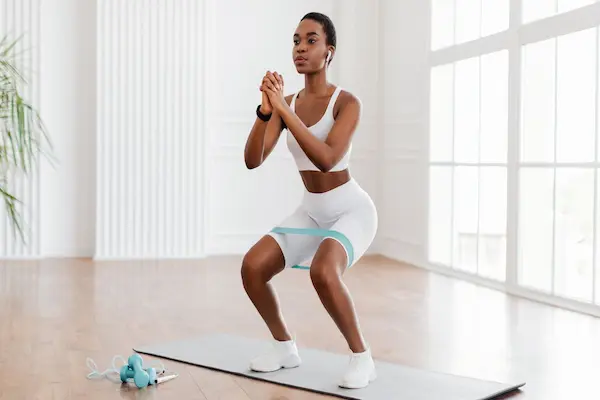
Your heart can work a little harder without your feet leaving the floor, which is great news if you live in an apartment or your joints prefer gentle movement.
Built as a neighbor-friendly plan, this home cardio workout without jumping uses quiet steps, steady rhythm, and clear breathing checks so you can rest whenever you need.
Home cardio workout without jumping: what “quiet cardio” really means
Quiet cardio is simply heart rate work that avoids loud impacts, heavy stomping, and repeated jumping that can rattle floors or irritate sensitive joints.
Instead of trying to create intensity through height, you create it through rhythm, arm drive, controlled speed changes, and consistent movement that feels smooth.
Because consistency beats intensity for most beginners, a no jump home routine that you can repeat often usually delivers better results than a hard workout you dread.
Many people also find that living room cardio feels more approachable, because you can start small, pause easily, and adjust the plan without feeling watched.
While this routine is designed to be gentle, it is still exercise, so it’s smart to consult a health professional before starting or changing routines if you have existing conditions, injuries, or symptoms that concern you.
Who this routine is ideal for
- Apartment-dwellers who want quiet heart rate work that won’t annoy neighbors below.
- Beginners who feel intimidated by high-impact workouts but still want a real cardio benefit.
- Joint-sensitive movers who prefer low-impact options while building confidence and consistency.
- Busy people who want a simple plan that fits into a small space with minimal equipment.
- Anyone who enjoys a “take breaks as needed” approach instead of a push-through mindset.
What this routine is not
- It is not a medical treatment, and it is not tailored to your specific health history or diagnosis.
- It is not a test of toughness, because the goal is sustainable effort with controlled breathing.
- It is not a jumping workout in disguise, because every move has a grounded, quiet option.
How to pace a no jump home routine without guessing
Pacing matters because low-impact cardio can feel deceptively easy at first, then suddenly feel hard if you sprint the early minutes.
Using simple cues like the talk test and an effort scale helps you stay safe, because your body will tell you when it needs a softer pace.
Since the goal is gentle progress, your best pace is the one you can hold with control and repeat several times per week.
The talk test for quiet heart rate work
Conversation is a practical intensity tool, because it reflects breathing demand without any devices.
- Easy effort means you can speak full sentences comfortably, which is perfect for warm-ups and recovery minutes.
- Moderate effort means you can speak in shorter sentences with a little breathiness, which is ideal for the main part of the workout.
- Too-hard effort means talking is difficult, which is a sign to slow down or take a brief reset.
A simple 1–10 effort scale you can use today
Numbers can reduce overthinking, because you can aim for a range rather than chasing a perfect speed.
- Level 2–3 feels like easy movement you could do for a long time, which suits warm-up and cool-down minutes.
- Level 4–6 feels like steady work that raises your breathing, which is the sweet spot for most of this session.
- Level 7 feels challenging but controlled, which you might touch briefly during optional intervals if your joints feel happy.
- Level 8–10 feels like high strain, which is unnecessary here and often counterproductive for consistency.
Break rules that keep you safe and consistent
- Pause whenever breathing becomes rushed or tight, because smooth breathing helps you move with better control.
- Slow your feet first before stopping, because gradual transitions can reduce dizziness and help your heart rate settle.
- Restart at an easy pace for 20 to 40 seconds, because easing back in keeps the workout calm and sustainable.
- Stop the session entirely if discomfort increases, because pain is not a requirement for progress.
Set up your living room cardio space for quiet movement
A small setup can make a big difference, because slipping, bumping furniture, or feeling cramped can raise stress and reduce movement quality.
Space does not need to be large, yet you should be able to step side to side and forward and back without worrying about sharp corners.
Footwear choices depend on your floors, because some people feel steadier in supportive shoes while others prefer barefoot grip on a mat.
A quick pre-session checklist
- Clear a space about the size of a yoga mat plus one step in every direction.
- Place a chair nearby for balance support or seated breaks if needed.
- Use a non-slip mat if your floor is slick, because traction reduces the urge to tense your hips and knees.
- Keep water within reach, because small sips can help you avoid pushing through dry-mouth discomfort.
- Choose low-volume audio if you use it, because you still want to hear your breathing cues clearly.
Neighbor-friendly technique cues that reduce noise
Quiet steps come from control, because control keeps your footfalls soft and your joints calmer.
- Land softly with a gentle heel-to-toe roll, because slapping the floor often means you are rushing.
- Shorten your stride slightly, because long reaches can create louder impacts and more knee stress.
- Keep knees softly bent, because locked knees tend to create stompy steps.
- Use arm swing to increase intensity, because bigger arm drive raises heart rate without louder feet.
Home cardio workout without jumping: the full 10–30 minute plan
The routine below is written as a complete session that can last about 25 to 30 minutes, yet it also includes shorter options for very busy or low-energy days.
Every move stays grounded, so you can keep it quiet while still getting a satisfying cardio response.
Choose the base plan first, then add optional intervals later, because gentle progression usually beats immediate complexity.
Choose your session length in one decision
- 10–12 minutes: warm-up plus one circuit, then cool-down, which works well when motivation is low but consistency matters.
- 15–20 minutes: warm-up plus two circuits, then cool-down, which is a strong beginner target for regular weekly practice.
- 25–30 minutes: warm-up plus three circuits with optional light intervals, then cool-down, which suits days when you feel energized and steady.
Timing format options
Pick one timing format and stick with it for the whole session, because consistency makes pacing easier.
- Option A: 40 seconds work and 20 seconds easy march, which feels spacious and beginner-friendly.
- Option B: 45 seconds work and 15 seconds transition, which feels slightly more challenging without becoming frantic.
- Option C: 30 seconds work and 15 seconds transition, which works well when you want a calmer effort and more frequent resets.
Warm-up: 5 minutes of quiet, joint-friendly movement
A warm-up matters because cold muscles and stiff joints often feel cranky when you ask for speed too quickly.
Gentle movement also helps your breathing settle into a rhythm, which makes the main portion feel smoother.
Warm-up sequence
- March in place for 60 seconds with light arm swings, because rhythm wakes up hips and shoulders without impact.
- Step-touch side to side for 60 seconds, because lateral movement warms outer hips that support knee comfort.
- Heel digs forward for 45 seconds, because gentle hamstring activation improves stride control.
- Knee lifts at a comfortable height for 45 seconds, because hip flexors often feel stiff after sitting.
- Easy “boxer shuffle” without jumping for 60 seconds, because a light weight shift prepares ankles for direction changes.
- Shoulder rolls and relaxed arm circles for 30 seconds, because upper-body tension can make cardio feel harder than it is.
Warm-up breathing check
During the final warm-up minute, aim for breathing that is slightly deeper but still calm, because that is the ideal ramp into moderate work.
If you already feel breathless during warm-up, slow down and shorten the range of motion, because the session will still be effective at a gentler pace.
Main circuit: quiet heart rate work in your living room
The main circuit uses movements that raise heart rate through continuous stepping and coordinated arms, while keeping your feet grounded and quiet.
Each move includes an easier version, because joint-sensitive beginners often do best when the routine adapts to the day.
Complete one to three rounds, resting 30 to 90 seconds between rounds as needed.
Round 1: steady foundation circuit
- Power march with arm drive for one interval, because stronger arms can elevate effort without louder steps.
- Side step with reach for one interval, because reaching overhead and outward adds intensity without impact.
- Alternating knee lift with cross-body tap for one interval, because controlled core rotation creates a cardio effect while staying joint-friendly.
- Low-impact “skater step” for one interval, because sliding side-to-side challenges coordination without jumping.
- Toe tap forward and back for one interval, because directional shifts raise heart rate while keeping movement quiet.
- Shadow boxing with soft knees for one interval, because punches add intensity with almost no foot noise.
Round 1: quiet form cues that protect joints
- Keep steps under you rather than reaching far, because shorter steps often reduce knee irritation.
- Use soft knees and tall posture, because locked joints tend to create louder landings and more stiffness.
- Let your hands stay relaxed, because clenched fists can pull tension into shoulders and neck.
Round 2: gentle cardio variety circuit
- Step-back lunge tap for one interval, stepping back lightly and returning, because backward steps activate glutes without impact.
- Marching “high knees” at low height for one interval, because speed can increase without lifting knees high.
- Grapevine-style side steps for one interval, moving laterally with a gentle cross-step, because coordination raises intensity quietly.
- Standing hamstring curl with arm sweep for one interval, because heel-to-glute curls warm the back of the legs gently.
- Fast feet in place, no hop for one interval, because quick steps increase heart rate while staying grounded.
- Diagonal reach steps for one interval, stepping and reaching across the body, because rotating gently can make the workout feel more complete.
Round 2: beginner modifications
- Replace step-back taps with a smaller toe tap if balance feels uncertain, because stability supports safer effort.
- Slow the grapevine into plain side steps if crossing feels awkward, because the cardio benefit still counts.
- Swap fast feet for a calm march if your shins feel sensitive, because comfort protects consistency.
Round 3: optional light intervals for more challenge
Intervals are optional because the routine is effective without them, and adding intensity should feel chosen rather than required.
- 30 seconds brisk march plus 30 seconds easy march, repeated twice, because short spikes can feel motivating without impact.
- 30 seconds faster step-touch plus 30 seconds slower step-touch, repeated twice, because the same move at two speeds feels simple and predictable.
- 30 seconds punch combo with quick feet plus 30 seconds punch combo with slow feet, repeated twice, because arms can carry intensity when joints want gentleness.
Interval safety notes
- Keep faster minutes at “controlled brisk,” because frantic speed usually creates sloppy steps and louder impacts.
- Return to easy movement before you feel desperate, because ending intervals early is smarter than pushing into poor form.
- Stop intervals entirely if anything feels sharp or unstable, because stability matters more than finishing the plan.
Cool-down: 4–6 minutes to settle breathing and reduce stiffness
Cooling down helps your heart rate come down gradually, which often prevents the lightheaded feeling some beginners get after stopping suddenly.
Gentle stretches can feel soothing, yet the goal is comfort, not deep flexibility work at the end of a cardio session.
Cool-down walking and breathing reset
- Slow march for 60 seconds, letting shoulders drop and hands soften.
- Step-touch slowly for 60 seconds, breathing in a calm rhythm that feels steady.
- Side-to-side sway with gentle arm swings for 60 seconds, allowing the face and jaw to relax.
Quiet stretching suggestions after living room cardio
- Calf stretch against a wall or chair for 20 to 40 seconds per side, because calves often work harder when you stay on the balls of your feet.
- Hamstring hinge with soft knees for 20 to 40 seconds per side, because hamstrings can tighten when you take many small steps.
- Hip flexor stretch in a short stance for 20 to 40 seconds per side, because sitting and stepping can make the front hips feel tight.
- Chest opener with hands behind the back for 20 to 30 seconds, because arm drive can leave shoulders slightly tense.
How to monitor breathing and know when to take breaks
Breathing is your best safety tool, because it reflects how hard your body is working in real time.
Joint sensations also matter, because quiet cardio should feel like muscular effort rather than sharp joint discomfort.
Breathing cues that suggest “slow down a notch”
- Talking becomes difficult, which suggests intensity has climbed above your current comfort zone.
- Inhales feel tight or shallow, which can happen when you rush pace and tense your shoulders.
- Exhales become short and choppy, which often signals you need a quick reset minute.
Break options that keep the session flowing
- Switch to a slow march for 30 to 60 seconds, because moving gently can be easier than stopping completely.
- Take a seated break on a chair for 30 to 90 seconds, because seated recovery is joint-friendly and beginner-friendly.
- Do shoulder rolls and slow breathing for 20 seconds, because calming the upper body often calms the whole system.
- Restart with the easiest move on the list, because rebuilding momentum should feel smooth and safe.
Stop immediately and seek professional guidance if needed
- Chest pain, faintness, or unusual shortness of breath appears, because those symptoms require medical attention.
- Dizziness persists even after slowing down, because safety comes first in any cardio routine.
- Sharp joint pain increases with movement, because pain is a clear signal to reassess and modify.
- Numbness or tingling shows up, because nerve symptoms should not be ignored.
Progression plan: how to make this no jump home routine harder safely
Progress feels best when it is gradual, because tendons, joints, and cardiovascular endurance all adapt on their own timelines.
Changing one variable at a time keeps things predictable, because adding speed, time, and complexity together can raise load too quickly.
Four safe progression levers
- Time: add one extra round or two extra minutes, because longer steady work builds endurance quietly.
- Rhythm: slightly quicken your steps while staying quiet, because cadence increases heart rate without impact.
- Arms: increase arm drive or add overhead reaches, because upper-body effort can raise intensity without stressing knees.
- Intervals: add one extra short interval set once per week, because occasional variety can boost fitness without burnout.
A simple 4-week progression for beginners
- Week 1: complete warm-up, one main round, and cool-down, because building the habit matters more than doing everything.
- Week 2: add a second main round on two days, because small volume increases build confidence and stamina.
- Week 3: include two rounds most days and add optional intervals once, because controlled variety keeps motivation alive.
- Week 4: try three rounds one day per week if recovery feels good, because gradual expansion is safer than sudden leaps.
How often to do quiet heart rate work
Most beginners do well with 3 to 5 sessions per week, because consistency builds endurance without requiring extreme effort.
Rest or lighter days still count, because recovery is where adaptation happens and where joints often feel happiest.
Joint-friendly swaps and apartment-friendly adjustments
Having options reduces stress, because you can keep moving even when knees, hips, or ankles want a gentler day.
Quiet modifications also help neighbors, because softer steps and smaller ranges reduce vibration through floors.
If knees feel sensitive
- Choose smaller knee lifts and reduce step-back depth, because shallow ranges often feel kinder.
- Emphasize arm-driven moves like shadow boxing, because arms can carry intensity without extra knee load.
- Slow down directional changes, because quick pivots can irritate knees on slick floors.
If ankles or shins feel cranky
- Reduce fast-feet work and use steady marching instead, because calmer rhythm can reduce lower-leg irritation.
- Keep steps flatter and quieter, because toe-bouncy movement can increase calf and shin strain.
- Check footwear stability, because worn shoes can increase wobble and tension.
If balance feels uncertain
- Stay near a wall or chair, because light fingertip support can increase stability without limiting movement.
- Remove cross-steps like grapevine until confidence improves, because simple steps still deliver cardio benefits.
- Slow transitions between moves, because rushed changes are where stumbles often happen.
If neighbors are especially close
- Keep feet in contact with the floor at all times, because sliding and rolling are quieter than lifting and landing.
- Use a mat for damping if your floor is loud, because a small layer can reduce sound and vibration.
- Shift intensity toward arms and torso, because upper-body work raises heart rate without extra foot noise.
Tracking progress without turning it into pressure
Tracking helps when it feels encouraging, because visible consistency often motivates more than vague hopes.
Simple tracking is usually best, because complicated systems can become another task that stops you from moving.
Three easy tracking methods
- Calendar checkmarks for each session, because consistency is the main goal of a beginner routine.
- Minute totals per week, because weekly totals reward small sessions that add up.
- Breathing notes like “easier today,” because improved breathing control is a real sign of fitness progress.
Signs your living room cardio is working
- Recovery becomes quicker, because your heart rate settles faster after the main round.
- Movement feels smoother, because coordination improves with repetition.
- Moderate pace feels more comfortable, because your body adapts to steady work over time.
- Motivation rises, because feeling capable makes the habit easier to repeat.
FAQ: home cardio workout without jumping
Can no-jump cardio still improve fitness?
Low-impact routines can improve cardiovascular health when done consistently, especially when you use rhythm and steady movement to reach moderate intensity.
How long should a quiet session be for a beginner?
Ten to twenty minutes is enough to start, while longer sessions become easier once your breathing stays controlled and recovery feels quick.
Do I need equipment for this no jump home routine?
No equipment is required, although a chair for balance and a mat for comfort can make the routine feel safer and more neighbor-friendly.
What if I get tired halfway through?
Taking breaks is part of the plan, so switching to slow marching or seated recovery is a smart way to keep the habit alive.
Should I do this routine every day?
Many beginners do well with 3 to 5 days per week, because rest and lighter days support recovery and joint comfort.
When should I consult a health professional?
Professional guidance is wise if you have existing conditions, concerning symptoms, or uncertainty about safe intensity and movement choices.
Important independence notice
Notice: this content is independent and does not have affiliation, sponsorship, or control by any institutions, platforms, or third parties mentioned.
Closing: quiet cardio can still feel powerful
With grounded steps, steady rhythm, and permission to rest, a home cardio workout without jumping can raise your heart rate while keeping your space calm and your joints respected.
Over time, repeating this neighbor-friendly living room cardio plan with small upgrades can build endurance in a way that feels safe, practical, and genuinely sustainable.