
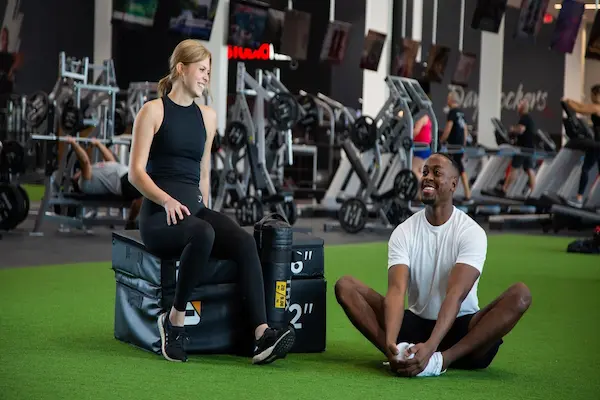
Stepping into a gym when you feel nervous can seem like walking into a room where everyone already knows the rules, the names of the machines, and the secret language of sets and reps.
Feeling self conscious at gym is incredibly common, and this guide will help you build gym confidence with warm, practical beginner tips that make the first time gym experience feel safer and simpler.
Overcoming Gym Anxiety for Beginners: Why It Feels So Intense
Gym anxiety can feel personal because the environment is unfamiliar, your body is doing something vulnerable in public, and your mind is trying to protect you by scanning for signs of judgment.
Anxiety also turns guesses into “facts,” so a random glance can get translated into “they think I’m doing it wrong,” even when that person is just looking for a bench or checking the clock.
Confidence rarely arrives before action, because the brain learns safety by collecting calm experiences, and beginners simply have fewer calm gym experiences stored yet.
That mismatch can create a loop where you avoid going, then feel behind, then feel even more exposed when you finally return, which makes the next visit feel heavier than it needs to be.
Signs you might be dealing with gym anxiety, not “laziness”
- Your heart races on the way in, even though you are not physically exerting yourself yet.
- Your thoughts fixate on what others might think, instead of what you planned to do.
- Your body feels tense, shaky, or sweaty in a way that does not match the effort.
- Your mind keeps bargaining for escape, like “I’ll just go tomorrow when I feel ready.”
- Your attention narrows, so you forget the plan the moment you see the equipment.
Nothing about these reactions means you are weak, because they are often signs of a stressed nervous system, not a lack of character.
Common triggers that make beginners feel watched
- Not knowing where to stand, which can create that “lost in public” feeling.
- Walking into a weight area that seems louder or more crowded than expected.
- Trying a new movement while worrying you will do it “wrong” and look foolish.
- Comparing your body or strength to someone else without noticing their years of practice.
- Feeling unsure about etiquette, like whether someone is using a machine or “saving” it.
Relief starts when you treat these triggers as solvable problems, not as proof that you do not belong.
Build Gym Confidence by Understanding the “Spotlight” Feeling
The “everyone is watching me” sensation often comes from a mental bias where you overestimate how visible you are, because your own feelings are loud inside your body.
Most people at the gym are thinking about their own sets, their playlist, their breathing, their back, their knees, or their schedule, which means they have limited mental space to judge strangers.
Even when someone notices you, the observation is usually neutral, like “that machine is free now,” rather than a harsh critique of your beginner form.
Real gym confidence grows when you replace mind reading with reality checking, because you stop treating your anxious story as the only explanation.
Reality checks that calm the nervous system without forcing positivity
- “I cannot know what they think, but I can know what I am doing next.”
- “Looking around is normal here, and it does not automatically mean judgment.”
- “I am allowed to be new, and learning in public is part of training.”
- “My job is to follow my plan, not to perform confidence for strangers.”
When these phrases feel hard to believe, treat them as practice, because calm self-talk becomes more believable after repeated experiences that prove you can handle the moment.
Overcoming Gym Anxiety for Beginners: Plan Ahead to Feel Safer
Planning ahead lowers anxiety because it removes decision pressure, and decision pressure is what makes a busy gym feel like a maze.
A simple plan also gives you something to focus on when your mind tries to wander into comparison, embarrassment, or “escape” fantasies.
Structure does not have to be intense, because the goal is not perfection, and the goal is to show up with enough clarity that you can start moving within the first few minutes.
Night-before checklist for a calmer morning or evening
- Pack clothes that feel comfortable and secure, so you are not adjusting fabric every minute.
- Choose shoes that feel stable, because wobble can increase self-consciousness and tension.
- Fill your water bottle and put it by your bag, so you avoid last-minute scrambling.
- Write your workout plan in a note on your phone, so your brain can stop rehearsing it.
- Decide your first exercise before you arrive, so you can start without wandering.
Preparation is a confidence tool, because it creates the feeling that you are “on purpose,” which naturally reduces the urge to hide.
A quick arrival routine that makes the first five minutes easier
- Walk in, breathe slowly, and look for a clear “home base” spot like an open wall or stretching area.
- Put your stuff down, even if it is just a water bottle, so your body signals “I’m staying.”
- Start with a simple warm-up you already know, so your first movement feels familiar.
- Glance at your plan, choose your first station, and move there before you overthink.
- Begin with lighter effort than you think you need, because calm repetition matters more than impressing anyone.
Momentum is powerful, because once you have started, anxiety has less room to argue.
First Time Gym Strategy: Choose Quieter Times and Low-Pressure Spaces
Going at a quieter time can reduce sensory overload, which matters because a packed gym increases noise, movement, and the feeling of being “in the way.”
Quieter sessions also give you room to read machine labels, adjust seats, and rest without feeling rushed, which makes you less likely to spiral into “I’m taking too long.”
Not everyone can choose any hour, yet even small shifts can help, like arriving twenty minutes earlier than usual or choosing a weekend afternoon instead of weekday peak time.
How to find calmer gym hours without obsessing over it
- Notice when parking is easiest, because that often correlates with a less crowded floor.
- Ask the front desk what times feel quieter for beginners, because they see patterns every day.
- Try two different time slots in one week, then pick the one that feels less activating.
- Choose the same time for a month, because familiarity builds gym confidence faster than constant switching.
Consistency helps your nervous system predict what will happen, and predictability is one of the fastest ways to reduce anxiety.
Beginner-friendly areas that often feel less intimidating
- Cardio machines near windows, where the vibe can feel less intense and more routine.
- Selectorized machines with diagrams, because they guide your setup and reduce guesswork.
- Stretching or functional spaces with open floor, where you can move without “taking” a station.
- Quiet corners for simple dumbbell movements, especially if you keep your plan short and clear.
Starting in a calmer zone is not avoidance, because you are still showing up, still practicing, and still building the exposure that reduces fear over time.
Micro-Exposure: The Kindest Way to Grow Gym Confidence
Exposure works best when it is small, repeatable, and chosen by you, because forcing yourself into the scariest situation can backfire and teach your brain that the gym equals panic.
A micro-exposure approach lets you build proof that you can be uncomfortable and still okay, which is the real foundation of confidence.
Instead of asking yourself to “feel brave,” you practice being present, doing one thing, and leaving with a win, even if the win looks tiny from the outside.
Overcoming gym anxiety for beginners with a step-by-step exposure ladder
- Visit the gym and stay for five minutes, simply walking around and noticing where things are.
- Return and do a ten-minute warm-up, then leave before anxiety peaks too high.
- Complete one machine exercise with light effort, focusing on calm breathing and slow setup.
- Add a second exercise, while practicing a neutral face and relaxed shoulders.
- Practice asking one simple question at the desk, even if your voice shakes a little.
- Use the free-weight area for one movement that feels safe, like dumbbell rows or goblet squats.
- Rest openly between sets, reminding yourself that resting is normal training behavior.
- Try one new machine during a quiet hour, giving yourself extra time for adjustments.
- Complete a full beginner routine, keeping intensity moderate and attention on form cues.
- Repeat the routine for several weeks, because repetition is what turns “scary” into “familiar.”
Each step is designed to stretch your comfort zone without snapping it, which means you build courage that actually lasts.
How to choose the “right” step for today
- Pick a step that makes you slightly nervous but not frozen, because learning happens in that middle zone.
- Choose a step you can repeat within a few days, because frequency builds familiarity faster than rare big pushes.
- Decide the win before you go in, because vague goals invite anxious wandering.
Small wins stack quickly, and stacking wins is how you stop feeling like the gym is a test you might fail.
What to Do When You Feel Self Conscious at Gym Mid-Workout
Anxiety can spike in the middle of a session when you notice your breathing, your sweat, your shaky hands, or the sense that someone is nearby, so having a short reset plan keeps you from bolting.
Calm is not the absence of sensations, because calm is your ability to stay present even while your body is activated.
A quick reset also teaches your brain that you can handle discomfort, which makes the next visit less dramatic.
A 60-second reset you can do without anyone noticing
- Slow your exhale slightly longer than your inhale, because longer exhales signal safety to the body.
- Press your feet into the floor and feel the contact points, because grounding brings attention out of your head.
- Relax your jaw and drop your shoulders, because tension there often fuels the “I’m being watched” sensation.
- Name the next tiny action, like “sip water” or “adjust the seat,” so your brain returns to task mode.
- Restart with a lighter set, because lowering intensity can lower panic without ending the session.
Finishing the session is great, yet even staying two more minutes after a spike is a meaningful confidence win.
Gentle self-talk prompts that reduce shame
- “This feeling is uncomfortable, and I can still do the next step.”
- “My body is allowed to sweat and breathe hard, because that is what training looks like.”
- “I do not have to look confident to build confidence.”
- “People who belong here are people who show up, including me.”
Shame shrinks when you speak to yourself the way you would speak to a friend who is trying something new.
Beginner Tips for Equipment Without Feeling Awkward
Equipment anxiety is common in a first time gym experience because machines have levers, pins, seat settings, and handles that feel like they should be obvious, even when they are not.
Learning the setup is part of training, not a side quest, so giving yourself permission to adjust things slowly is a legitimate beginner strategy.
Most machines also have diagrams, and those diagrams are there for you, not just for advanced lifters.
The “two-minute setup rule” that saves your confidence
- Give yourself two minutes to adjust the seat and weights without rushing, because rushing increases mistakes.
- Set the weight lighter than you think you need, because clean form is more calming than struggling.
- Do one slow practice rep, because practice reps reduce fear and create immediate control.
- Start your first set only when the movement feels predictable, because predictability reduces anxiety.
Control is calming, and setup is one of the easiest ways to create control as a beginner.
A simple “safe list” of beginner-friendly movements
- Leg press or seated leg extension, because the path is guided and the setup is straightforward.
- Lat pulldown or seated row, because you can feel the back muscles without complex balance demands.
- Chest press machine, because it supports your posture and reduces “where do my hands go” stress.
- Cable face pulls or cable rows, because you can go light and focus on smooth movement.
- Treadmill walking or easy cycling, because rhythm calms the nervous system while you get used to the room.
Starting with simpler patterns does not mean you will stay there forever, and it simply means you are choosing a stable foundation for gym confidence.
Polite scripts for asking for help without feeling exposed
- “Hi, I’m new here, and I want to make sure I’m setting this up correctly, could you show me the basics?”
- “I’m not sure how to adjust this seat, can you point me to the right lever?”
- “Could you confirm if this machine is free, or is someone using it?”
Asking one short question can save you twenty minutes of anxious guessing, and most staff members genuinely prefer a quick question over a confused struggle.
Gym Etiquette That Reduces Anxiety Because You Know the Rules
Etiquette matters for anxiety because uncertainty makes you feel like you might accidentally break a rule, so learning a few basics can immediately reduce the “I don’t belong” story.
Most etiquette is simple and kind, and it exists to help people share space safely rather than to exclude beginners.
Knowing what to do also keeps your mind busy with practical steps instead of imagined judgment.
Quick etiquette basics that cover most situations
- Wipe equipment after use when wipes are available, because it is considerate and expected.
- Re-rack weights you used, because it keeps the area safe and reduces clutter for everyone.
- Share equipment during busy hours when appropriate, because alternating sets is common and normal.
- Keep your phone use respectful, because long breaks on a machine can frustrate others.
- Give people space in free-weight areas, because personal space reduces accidents and awkwardness.
Confidence often increases when you realize the “rules” are mostly about respect, not about looking perfect.
What to do when someone is using the station you need
- Stand at a comfortable distance, make eye contact briefly, and wait for a natural break in their set.
- Ask calmly, “How many sets do you have left?” because that is standard and not rude.
- Offer to work in if it makes sense, because alternating can reduce your waiting and reduce pressure.
- Choose a backup movement if you prefer, because flexibility can keep your anxiety low.
Having a backup option is a powerful beginner tip, because it prevents the “I’m stuck and everyone is staring” feeling.
Make Your Workout Short, Clear, and Repeatable
Short workouts reduce anxiety because they feel achievable, and they make the gym feel like a place you can handle, not a place you must endure for an hour.
Repeating the same plan for a few weeks also builds familiarity, which quietly builds gym confidence even when your emotions still wobble.
Clarity matters more than variety at the beginning, because variety can become another source of decision stress and comparison.
A beginner routine designed for calm confidence
Choose a weight that lets you move smoothly, stop with a little energy left, and focus on control rather than intensity.
- Warm-up for 5 to 8 minutes with easy walking, cycling, or rowing at a pace where you can breathe comfortably.
- Leg press for 2 to 3 sets of 8 to 12 reps, adjusting the seat so your knees feel supported and stable.
- Seated row for 2 to 3 sets of 8 to 12 reps, pulling smoothly and pausing briefly when the handle reaches your torso.
- Chest press machine for 2 to 3 sets of 8 to 12 reps, keeping your shoulders down and your movement slow.
- Lat pulldown for 2 to 3 sets of 8 to 12 reps, thinking about pulling your elbows down rather than yanking the bar.
- Optional core work for 1 to 2 sets, choosing a simple plank or dead bug variation that feels safe for your back.
- Cool down for 3 to 5 minutes with slower walking and relaxed breathing, reminding your body that effort is over.
Repeating this routine two or three times per week can build skill, comfort, and confidence without requiring you to “figure out everything” at once.
Backup plan for crowded days, so anxiety does not decide for you
- Swap leg press for goblet squats with a light dumbbell, because one dumbbell can replace a machine when lines are long.
- Swap seated row for a cable row or resistance band row if available, because the pattern stays the same.
- Swap chest press machine for push-ups on an incline bench or wall, because bodyweight can be less intimidating.
- Swap lat pulldown for a straight-arm pulldown or assisted pull-up if those feel accessible, because variety can still be simple.
Options reduce panic, because having a “Plan B” stops you from feeling trapped.
Overcoming Gym Anxiety for Beginners: Build Comfort With Small Social Steps
Social anxiety at the gym often feels like a fear of being evaluated, so gentle social steps can teach your brain that interaction does not automatically equal embarrassment.
A big leap is not required, because micro-connection works surprisingly well when you repeat it across several visits.
Kindness also tends to be contagious in gyms, because many people remember being new and they respect honest effort.
Low-pressure social steps that build gym confidence
- Smile briefly at the front desk while checking in, because small friendliness reduces “enemy territory” feelings.
- Ask one practical question per week, because repetition builds comfort faster than one dramatic moment.
- Nod or say “thanks” when someone shares space, because polite exchanges reduce the sense of isolation.
- Practice the phrase “Are you using this?” because it removes the fear of accidentally breaking etiquette.
- Accept that awkward moments happen, because recovery is a skill and not a catastrophe.
Social confidence grows when you stop aiming to be impressive and start aiming to be present and respectful.
If you worry your face shows anxiety, try these body cues
- Relax your jaw and let your tongue rest, because clenched faces often intensify self-consciousness.
- Keep your shoulders down and back, because posture signals safety to your brain.
- Move slightly slower than you think you need, because rushed movements can look more uncertain than calm ones.
Your goal is not to look fearless, and your goal is to feel steady enough to keep going.
Comparison Traps: How to Stop Feeling Behind When Everyone Looks “Better”
Comparison hits hard in gyms because bodies, strength, and technique are visible, and your anxious mind may treat visibility as proof that you are being ranked.
Progress is not linear and fitness histories differ wildly, so comparing your first month to someone else’s fifth year is an unfair contest your mind will always lose.
Focusing on your plan is a form of self-respect, because it protects your attention from spiraling into shame.
Beginner tips to reduce comparison without pretending it never happens
- Choose one “anchor” metric, like showing up twice this week, because it keeps your focus on behavior you control.
- Limit scanning the room, because scanning feeds the story that you must monitor everyone else.
- Pick a training cue, like “slow reps,” because cues keep your attention inside your body instead of outside.
- Remind yourself that everyone is at a different chapter, because you are not late to your own life.
Attention is a resource, and protecting it is one of the fastest ways to build gym confidence.
Track Progress When Anxiety Is the Real Goal
When your main struggle is nervousness, tracking strength alone can miss the real wins, because emotional progress often looks like staying five minutes longer or trying one new station.
Celebrating these wins is not cheesy, because your brain learns from what you reward and repeat.
A simple log can also reduce fear before you go, because you will know you have succeeded before, even when today feels shaky.
Non-scale victories that prove you are growing
- You entered the gym without turning around, even though your anxiety tried to negotiate.
- You asked one question, even if your voice felt small, and you stayed anyway.
- You rested between sets without apologizing with your body language.
- You completed your warm-up and one exercise, which is still a real workout.
- You returned the next week, which is how confidence is built in real life.
Noticing progress makes it easier to return, because returning is the behavior that changes everything.
A simple journaling prompt for after each session
- Write one moment that felt hard, describing it without judging yourself.
- Write one thing you did anyway, because courage is measured in actions.
- Write one adjustment for next time, because strategy beats self-criticism.
This practice turns vague fear into specific learning, which helps you feel more in control.
Troubleshooting: Real Scenarios That Trigger Gym Anxiety
Even with a plan, some days will feel harder, because stress from work, sleep, relationships, or hormones can make your nervous system more reactive.
Having a response for common scenarios keeps you from interpreting a tough day as “proof” that you cannot do this.
Flexibility is a confidence tool, because it helps you stay consistent without forcing perfect sessions.
Scenario responses you can use immediately
- If the gym is crowded: Choose your backup plan, shorten the workout, and treat “showing up” as the win for the day.
- If you feel watched: Do the 60-second reset, then focus on one slow set while looking at a fixed point.
- If you forget your plan: Do a simple circuit of three machines you recognize, then leave with momentum intact.
- If you feel too out of place: Spend ten minutes walking, then practice one machine, because exposure still counts.
- If you feel embarrassed by a mistake: Correct it calmly, remind yourself mistakes are normal, and continue with the next rep.
Recovery after an awkward moment is where gym confidence is actually trained, because your brain learns that discomfort is survivable.
A “minimum effective workout” for anxious days
- Walk or cycle for 8 minutes at an easy pace while breathing slowly through your nose when possible.
- Choose one machine exercise and do 2 gentle sets with excellent control.
- Stretch briefly, drink water, and leave while you still feel capable, so the gym stays associated with success.
Keeping the gym associated with success is more important than squeezing every drop of intensity out of a stressful day.
Mindset Tools That Make the Gym Feel More Human
Anxiety often tells you that you must earn your right to be there, yet gyms are built for people who are improving, not for people who have already arrived.
Self-compassion is not an excuse to avoid effort, because it is the emotional safety net that allows you to keep trying.
Identity shifts also help, because you stop seeing yourself as an imposter and start seeing yourself as a beginner athlete in training.
Identity-based reminders that build lasting gym confidence
- “I am a person who practices, and practice includes being new.”
- “I am training consistency, not performing skill.”
- “I can be anxious and still be disciplined.”
- “I belong because I am here, not because I look a certain way.”
Repeating these reminders works best when you pair them with action, because action is what convinces the nervous system.
A gentle way to reframe “I’m so self conscious at gym”
- Replace “I’m embarrassing” with “I’m learning,” because learning is an honorable reason to be in any room.
- Replace “Everyone is judging” with “Some people might notice, and that does not harm me,” because neutrality is believable.
- Replace “I have to get it right” with “I have to keep going,” because momentum beats perfection.
Believable thoughts calm you more than forced positivity, because your brain can accept them without argument.
Support Options That Don’t Require You to Be Outgoing
Support can speed up confidence, because it reduces uncertainty and helps you feel less alone, yet support does not have to look like intense socializing.
One helpful conversation with staff or a single session with a trainer can clarify equipment and reduce the fear of “doing it wrong.”
A friend can help too, although it is perfectly fine to build confidence solo if that feels safer right now.
Beginner-friendly support ideas
- Ask for an orientation, because a quick tour can reduce the “I don’t know where anything is” panic.
- Book one coaching session focused only on setup and form, because clarity reduces self-consciousness.
- Choose a quiet class where the structure is provided, because structure reduces decision fatigue.
- Invite a friend to do the same simple routine, because shared discomfort feels lighter.
Choosing support is not a sign you cannot do it, and it is often a sign that you are serious enough to learn well.
Overcoming Gym Anxiety for Beginners: A Calm, Repeatable Weekly Plan
A weekly plan reduces anxiety because it removes the constant question of “When should I go,” and that question often becomes a loophole anxiety uses to keep you home.
Two to three sessions per week is a realistic starting point for many beginners, because it builds rhythm without demanding your whole schedule.
Rest days also help your nervous system, because recovery supports both muscles and mood.
A simple two-week starter schedule
- Week 1, Session 1: Tour the space, do a short warm-up, and complete two machine exercises with light weights.
- Week 1, Session 2: Repeat the same plan, adding one extra set if you feel stable.
- Week 1, Session 3: Practice one new machine, then finish with a familiar movement to end on confidence.
- Week 2, Session 1: Repeat your full beginner routine, focusing on slower reps and calm breathing.
- Week 2, Session 2: Go at a slightly busier time for gentle exposure, staying with your short plan.
- Week 2, Session 3: Add one small social step, like asking “How many sets do you have left?” once.
Repeating the structure is the point, because repetition is what turns the gym into a familiar place rather than a threat.
Rules that keep the plan kind and sustainable
- Stop a set while you still feel in control, because control builds confidence more than exhaustion does.
- Leave after a win, because ending on success makes the next visit easier.
- Adjust the plan when life is messy, because consistency thrives on flexibility, not harshness.
Sustainability is a form of strength, especially when anxiety has been trying to convince you that you cannot handle the gym.
Closing Reminder: You Are More Normal Than Your Anxiety Says
Many people who look confident today once felt nervous, awkward, and convinced they were being watched, and their comfort grew because they kept showing up gently.
Building gym confidence is not about never feeling anxious, and it is about learning that you can feel anxious, follow a plan, and leave proud anyway.
Overcoming gym anxiety for beginners happens through small exposures, kind self-talk, and practical strategies like planning ahead and choosing quieter times, which means you can start exactly where you are.
Notice: this content is independent and has no affiliation, sponsorship, or control over any gyms, platforms, brands, or third parties mentioned.
If anxiety ever feels overwhelming beyond what self-help strategies can handle, reaching out to a qualified health professional for personalized support can be a strong and caring next step.