
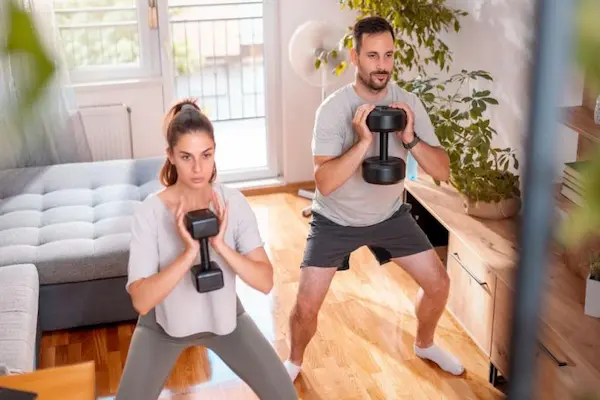
For many adults who have spent years sitting at desks, commuting in cars, and collapsing onto the couch at the end of the day, the idea of walking into a busy gym can feel overwhelming and even a little embarrassing.
Instead of forcing yourself into an environment that raises your anxiety, choosing a beginner fitness plan at home lets you start moving in a space that feels familiar, private, and under your control.
When you exercise at home, you can wear whatever feels comfortable, move at your own pace, and pause when your body asks for a break without worrying about what anyone else might think.
Over time, that sense of safety and privacy helps you build confidence, so that exercise stops feeling like punishment and begins to feel like something you are genuinely doing for yourself and your well-being.
By starting small and keeping your plan simple, you give your body and your mind a chance to adapt gently, which matters far more than intensity when you are just beginning.
Important Safety Notes Before You Start Exercising

Before you begin any new beginner workout plan, especially if you have been mostly sedentary or have medical conditions, it is wise to talk with a qualified health professional such as your doctor or another licensed provider.
A short conversation about your current health, medications, past injuries, and any symptoms you experience can help your provider advise you on what is safe, what to avoid, and whether you need additional tests first.
If you ever feel chest pain, strong shortness of breath that does not settle quickly, dizziness, faintness, or sharp joint pain when you move, you should stop the activity immediately and seek medical attention rather than pushing through.
Because every body is different and only your own provider can evaluate your personal health situation, the routine in this guide is general information and not a medical prescription.
Whenever something feels wrong, too intense, or simply not right for your body, listening to that signal and easing off is more important than completing any specific repetition or time target.
Signs You Should Speak to a Health Professional First
- You have been told you have heart disease, lung disease, or uncontrolled high blood pressure.
- There is a history of heart problems in your close family at a young age.
- You feel chest tightness, strong breathlessness, or dizziness even with light effort such as climbing a few stairs.
- You have joint pain, past injuries, or surgeries that limit your movement or cause discomfort when you walk or stand.
- You are taking medications that affect your heart rate, blood pressure, or balance and are unsure how they interact with exercise.
- You are pregnant or have recently given birth and have not yet been cleared for activity by a health professional.
If any of these points apply to you, pausing to get professional advice first can make your beginner fitness plan at home safer and more comfortable.
Core Principles of a Beginner Fitness Plan at Home
Instead of jumping into intense training, your first goal is to build a simple exercise routine that feels manageable, repeatable, and kind to your joints and energy levels.
By keeping your sessions short and focusing on low impact moves, you protect your body while you teach your muscles, heart, and lungs to handle a little more activity than they are used to.
1. Start Smaller Than You Think You Need
New exercisers often believe that they must work out for at least an hour for it to “count,” but in reality even ten to twenty minutes of gentle movement can meaningfully help your health and mood when done regularly.
At the beginning, it is far better to finish a short, easy session and feel successful than to push so hard that you end up exhausted, sore, and discouraged.
Choosing a 2–3 day weekly schedule lets your body rest between sessions, which supports recovery and helps reduce the risk of overuse aches.
2. Keep It Low Impact and Joint Friendly
Low impact moves are exercises where at least one foot stays on the floor and there is little or no jumping, which keeps stress on your knees, hips, and spine to a minimum.
Examples include marching in place, gentle squats to a chair, wall push-ups, and slow step-touches side to side, all of which suit a beginner workout plan without special equipment.
As you build strength and confidence, you can always add a little more challenge, but there is no need to rush into fast or high-impact exercises.
3. Focus on Three Simple Goals
- Raise your heart rate slightly with light cardio so you feel warmer and maybe a little breathless but still able to talk.
- Strengthen major muscle groups such as legs, hips, core, and upper body using your own body weight for resistance.
- Maintain or gently improve flexibility and joint comfort through slow, controlled stretching and mobility work.
When your beginner fitness plan at home covers these three areas, you create a well-rounded base that supports daily life tasks such as walking, climbing stairs, carrying groceries, and standing from a chair.
Simple Warm-Up for Every Session
Each training day in this plan starts with three to five minutes of very gentle movement to gradually increase blood flow, lubricate your joints, and prepare your mind for exercise.
Warm-Up Routine (3–5 Minutes)
- Slow March in Place – 60 seconds moving your arms comfortably while your feet lift just a little higher than a normal walk.
- Shoulder Rolls – 10 slow rolls forward and 10 rolls backward, keeping your movements relaxed and smooth.
- Side Step Touch – 60 seconds stepping to one side, bringing the other foot to meet it, then repeating to the opposite side at an easy pace.
- Gentle Torso Rotations – 10 slow twists each way, with your hips facing forward while your upper body turns slightly side to side.
During the warm-up, you should feel your body starting to wake up while still being able to hold a full conversation without struggling for breath.
Your 2–3 Day Beginner Fitness Plan at Home
The following routine is designed as a very simple exercise routine that can be done in a living room, bedroom, or any small open area without any special gear.
You will see a 2-day structure, plus an optional third day if you feel good and want an extra session after a few weeks.
For each exercise, move slowly, breathe steadily, and stop if anything feels sharp, painful, or wrong for your body.
Weekly Structure Overview
- Day 1 – Full body focus with slightly more emphasis on legs and light cardio.
- Day 2 – Full body focus with gentle core and upper body emphasis.
- Optional Day 3 – Repeat Day 1 or Day 2, or create a mix of your favorite low impact moves.
- Rest Days – Keep at least one full rest day between sessions, especially during the first few weeks.
Many beginners find that a Monday and Thursday pattern or a Tuesday and Friday pattern works well because it gives plenty of recovery time between workouts.
Day 1: Gentle Lower Body and Light Cardio
After completing the warm-up, move through the following circuit at a calm pace.
- Chair Squats – 2 sets of 8–10 repetitions, sitting down onto a stable chair and then standing up using your legs as much as possible while keeping your chest lifted.
- Wall Push-Ups – 2 sets of 8–10 repetitions, standing arm’s length from a wall, hands at chest level, bending your elbows to bring your chest toward the wall and pushing back to the starting position.
- Standing March – 2 sets of 45–60 seconds, lifting your knees comfortably while swinging your arms lightly for a small cardio challenge.
- Supported Calf Raises – 2 sets of 10–12 repetitions, holding the back of a chair for balance while lifting your heels off the floor, pausing briefly at the top, and lowering slowly.
- Seated Knee Extensions – 2 sets of 8–10 repetitions each leg, sitting tall on a chair and slowly straightening one knee at a time, then lowering your foot back down with control.
Take 30–60 seconds to rest between sets or exercises, and lengthen that rest if you feel very breathless or tired.
Once you finish the circuit, walk slowly around your space for one to two minutes, then perform a short cool-down stretching sequence.
Day 2: Gentle Core and Upper Body Focus
On the second training day, the emphasis shifts slightly toward your midsection and upper body while still including some lower body and light cardio work.
- Wall or Counter Plank Hold – 2 sets of 15–20 seconds, placing your forearms on a wall or sturdy counter, stepping your feet back until your body forms a straight line, and gently tightening your abdominal muscles.
- Seated or Standing Row with Towel – 2 sets of 8–10 repetitions, holding a long towel in front of you with both hands, pulling it “apart” as if it were a resistance band while squeezing your shoulder blades together.
- Side Step Touch with Arm Reach – 2 sets of 45–60 seconds, stepping side to side while reaching your arms forward or slightly overhead at a pace that feels manageable.
- Seated or Standing Chest Squeeze – 2 sets of 8–10 repetitions, pressing your palms together at chest height, gently pushing inward to engage your chest muscles, then relaxing.
- Gentle Dead Bug Variation – 1–2 sets of 6–8 alternating movements, lying on your back on a mat or firm surface, knees bent, slowly lifting one arm and the opposite leg a short distance, then returning and switching sides, stopping immediately if your lower back feels uncomfortable.
Because this day includes core work, pay attention to your breathing and avoid holding your breath while you concentrate on each movement.
If any floor exercise feels too intense or awkward, you can skip it and instead add another round of marching or side steps to keep the routine accessible.
Optional Day 3: Light Mix and Movement Confidence
After two to four weeks of consistent two-day training, some people feel ready to add an optional third session that stays just as gentle but gives a little more practice.
For this day, you can either repeat Day 1 or Day 2, or you can create a mixed session using the exercises that feel best in your body.
Sample Day 3 Routine
- Warm-Up – 3–5 minutes using the same warm-up listed earlier.
- Chair Squats – 2 sets of 8–10 repetitions.
- Wall Push-Ups – 2 sets of 8–10 repetitions.
- Side Step Touch with Arm Reach – 2 sets of 45–60 seconds.
- Supported Calf Raises – 2 sets of 10–12 repetitions.
- Wall or Counter Plank Hold – 1–2 sets of 15–20 seconds.
- Cool-Down – 3–5 minutes of gentle walking and stretching.
If the idea of a third day feels like too much, you can absolutely stay with two sessions per week for as long as you like and still make meaningful progress.
Cool-Down: Finishing Each Session Kindly
Ending your simple exercise routine with a short cool-down helps your heart rate and breathing gradually return toward resting levels while offering your muscles a little gentle stretch.
Cool-Down Sequence (3–5 Minutes)
- Slow Walk Around the Room – 1–2 minutes with relaxed arms and deep, calm breathing.
- Calf Stretch – 20–30 seconds each side, hands on a wall or chair, one leg back with heel on the floor, leaning forward slightly until you feel a gentle stretch in the back calf.
- Seated Hamstring Stretch – 20–30 seconds each leg, sitting near the edge of a chair with one leg extended and heel on the floor, gently leaning forward with a straight back until you feel a stretch along the back of your thigh.
- Chest and Shoulder Stretch – 20–30 seconds, clasping your hands behind your back or resting them on your hips while gently drawing your shoulder blades together and lifting your chest.
- Neck Relaxation – 10–15 seconds each side, sitting or standing tall while slowly letting one ear move toward the same-side shoulder without forcing the stretch.
During the cool-down, aim to feel calmer, looser, and more grounded, rather than trying to reach extreme stretches or big ranges of motion.
How to Listen to Your Body and Stay Safe
A key part of any beginner fitness plan at home is learning to notice the difference between normal effort and warning signs that something is not right.
Normal Discomfort vs. Warning Pain
- Mild muscle warmth, light burning near the end of a set, and feeling your heart beat faster usually indicate normal exertion.
- Sharp, stabbing, or sudden pain in a joint or muscle, especially if it makes you stop immediately, is a sign to end that movement.
- Strong chest discomfort, intense shortness of breath, or feeling like you might faint are not normal and require you to stop and seek help if they do not ease quickly.
- Lingering joint pain that continues hours or days after light exercise suggests that the exercise may need to be modified or replaced.
Any time you feel unsure about a sensation during or after exercise, discussing it with a health professional can provide reassurance and guidance.
Simple Ways to Adjust Intensity
- Reduce Range of Motion – Instead of squatting deeply, sit back only partway toward the chair, or instead of long steps, take shorter steps.
- Slow the Speed – Move more slowly through each repetition, giving your muscles and joints time to control the motion safely.
- Shorten the Time – If 60 seconds feels too long, start with 20–30 seconds and gradually add more time as your stamina improves.
- Increase Rest – Take longer breaks between exercises or sets whenever you feel your breathing has not yet settled enough.
- Skip an Exercise – If one particular movement always feels uncomfortable, leave it out and choose another low impact move from the plan.
Adjustments like these do not mean you are failing; they simply mean you are respecting your current starting point and protecting your body.
Home Fitness Tips to Make Your New Habit Stick
Creating a beginner fitness plan at home is only the first step, because sticking with it week after week is what truly leads to change.
Environment and Mindset Tweaks
- Prepare a Small Space – Choose a corner or area where you can move freely without obstacles, and keep a chair or wall space available for support.
- Set Visual Reminders – Place your workout clothes, a water bottle, or a simple note somewhere you will see it at the time you intend to exercise.
- Pair Exercise with an Existing Habit – Connect your simple exercise routine to something you already do, such as starting your session right after brushing your teeth in the morning or after work.
- Celebrate Tiny Wins – Acknowledge each session you complete, even if it feels short, because consistency matters more than perfection.
Scheduling Your Week
Clear scheduling removes guesswork and makes it easier to follow through even on low-motivation days.
Here are three example schedules for your beginner workout plan.
- Two-Day Plan Example
- Tuesday – Day 1 routine in the early evening.
- Friday – Day 2 routine in the late afternoon.
- Three-Day Option After a Few Weeks
- Monday – Day 1 routine.
- Wednesday – Day 2 routine.
- Saturday – Optional Day 3 routine.
- Weekend Focused Plan
- Saturday – Day 1 routine in the morning.
- Sunday – Day 2 routine in the afternoon or evening.
Whichever schedule you choose, keeping at least one full day of rest between sessions in the early weeks supports recovery and helps avoid feeling overwhelmed.
Understanding the Exercises in Your Simple Routine
Knowing what each exercise is meant to do makes it easier to trust the process and stay engaged as you move.
Key Low Impact Moves Explained
- Chair Squats – Strengthen thighs and glutes while practicing the exact motion you use when standing up from a chair, which helps daily life feel easier.
- Wall Push-Ups – Build gentle upper body and core strength with less pressure on your wrists and shoulders than floor push-ups.
- Standing March – Provides light cardio, wakes up your hip flexors, and improves coordination without the impact of jogging.
- Supported Calf Raises – Work the lower leg muscles that support walking, balance, and stair climbing.
- Side Step Touch – Gently challenges your heart and lungs while improving lateral movement that often gets neglected in daily life.
- Wall or Counter Plank – Engages your core muscles in a safe, supported position that is kinder to your lower back than many floor variations.
- Dead Bug Variation – Teaches your core to stabilize while your arms and legs move, which helps with posture and back support when done comfortably.
As you repeat these low impact moves over the weeks, you may notice that standing from a chair becomes easier, carrying things feels less tiring, and simple daily activities leave you less breathless.
How to Progress Your Beginner Fitness Plan at Home Over Time
Once you have completed two to four weeks of consistent sessions and feel that your current plan is becoming easier, you can gently increase the challenge so your body keeps adapting.
Simple Progression Steps
- Add Repetitions – Increase each set by two repetitions, for example moving from 8 to 10 chair squats or wall push-ups, as long as your form stays controlled.
- Extend Time – Add 10–15 seconds to marching or side stepping intervals, paying attention to your breathing and comfort.
- Add a Third Set Occasionally – For one or two exercises that feel especially manageable, include a third set once per week at first.
- Reduce Rest Slightly – Shorten rests by 5–10 seconds while still allowing yourself enough time to feel ready for the next exercise.
- Experiment with Slightly Deeper Movements – When your joints feel comfortable, sit a little lower in the chair squat or reach slightly farther during stretches without forcing anything.
Progress never has to be fast, and there is no deadline; what matters most is that you continue to find a level that challenges you just a little while remaining safe and sustainable.
Common Fears When You Start Exercising and How to Handle Them
Many people who start a beginner workout plan feel worried that they will look foolish, fail quickly, or hurt themselves, especially if past attempts at fitness have not lasted long.
Fear of Not Being “Fit Enough” to Begin
It is very common to believe that you must reach a certain weight or baseline fitness before exercise becomes “allowed,” yet the truth is that your starting point is exactly where exercise belongs.
A short and gentle beginner fitness plan at home is designed precisely for people who feel unfit, tired, or out of practice, not for people who already love intense workouts.
Every small session you complete is evidence that you are already the kind of person who takes steps, however tiny, toward caring for your health.
Fear of Soreness and Discomfort
Some mild muscle soreness a day or two after a new movement can be normal, especially in muscles that have not been used much, but intense pain is not required for progress and should not be your goal.
By choosing low impact moves, taking rest days, and increasing volume slowly, you greatly reduce the chances of significant soreness that interferes with your daily life.
If a particular exercise always leads to lingering discomfort, modifying it or swapping it for a different movement is a smart, not a weak, choice.
Fear of Quitting Again
Past experiences of starting and stopping can make you doubt whether this attempt will be any different, which is why focusing on consistency rather than intensity helps reframe what success looks like.
Instead of aiming for a perfect month, consider aiming to complete two short sessions this week and then repeating that goal next week.
Each week that you meet this simple target, you build evidence that you can maintain a gentle routine, and if you miss a week, you can simply restart without guilt because there is no rule that says you only get one chance.
Putting It All Together: Your Gentle Home Fitness Roadmap
By now, you have seen how a basic 2–3 day beginner fitness plan at home can combine low impact moves, short sessions, and careful rest to create a realistic starting point for a formerly sedentary lifestyle.
Step-by-Step Roadmap for the First Four Weeks
- Week 1
- Complete two sessions, one Day 1 and one Day 2, keeping intensity very low and focusing on learning the movements.
- Take at least one full day of rest between sessions, and adjust any exercise that feels uncomfortable.
- Week 2
- Again complete two sessions, repeating Day 1 and Day 2 with the same sets and times.
- Notice any improvements in confidence, breathing, or ease of daily tasks, even if they are very small.
- Week 3
- If everything feels comfortable, add a few repetitions or 10 seconds to one or two exercises.
- Optionally introduce the gentle Dead Bug variation or wall plank if not used previously, stopping if your back feels strained.
- Week 4
- Maintain two sessions and consider adding an optional third session only if your body feels ready and your schedule allows.
- Review how your energy, mood, and confidence have changed compared with the first week, and adjust goals for the next month.
After four weeks, you can continue with this structure, slowly adding variety or challenge, or you can consult a fitness or health professional for personalized guidance based on the base you have built.
Final Encouragement and Important Disclaimer
Every time you choose to follow even a small part of this simple exercise routine, you are investing in a healthier and more comfortable future for yourself, whether or not anyone else sees your efforts.
Progress might feel slow at first, yet small consistent steps often lead to more lasting change than sudden, intense bursts that quickly fade away.
Whenever you need to pause, rest, or restart, remember that your beginner workout plan is a tool to support you, not a test that you pass or fail.
Before beginning or significantly changing your exercise routine, you should always consult a qualified health professional who can consider your individual history, conditions, and medications.
This content is for general information only and does not replace medical advice, diagnosis, or treatment from your own healthcare provider.
It is also important to note that this article is completely independent and does not have any affiliation, sponsorship, endorsement, or control from any institutions, platforms, brands, or other third parties that may be mentioned in examples.
Any decisions you make about exercise, equipment, or services should be based on your own judgment and professional guidance, rather than on any assumption of partnership or responsibility by external entities.
As you move forward, approach your beginner fitness plan at home with patience, kindness, and curiosity, giving your body the time it needs to adapt while you gradually build a more active and confident life.