
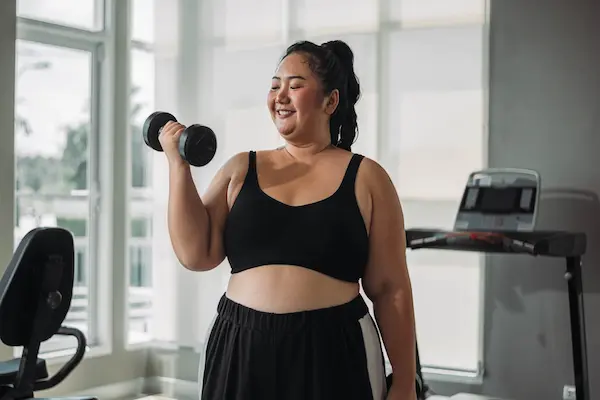
Starting to exercise in a plus size body can feel like stepping into a world that was never really designed with you in mind, especially when so many images and messages about fitness still center thinness, speed, and intensity instead of comfort, strength, and care.
For a lot of plus size beginners, the hardest part is not the first squat or the first walk around the block, but the fear of being judged, stared at, or misunderstood by people who have no idea what it took just to show up.
Concerns about joint comfort, chafing, breathing, clothing that actually moves with your body, and whether the equipment will feel supportive are often just as real as the worry about what others might think or say.
When exercise spaces feel intimidating or unfriendly, it becomes completely understandable that someone might avoid movement altogether, even if a quiet part of them really wants to feel stronger, more energetic, and more at home in their body.
This guide was created to offer beginner workout tips for plus size bodies in a way that feels respectful, practical, and genuinely size inclusive, focusing on how movement can feel safer and more empowering instead of treating exercise as a punishment or a test.
Across the next sections, you will find plus size fitness tips about clothing, pacing, and modifications, a catalog of gentle low impact options, and encouragement to measure success by comfort, confidence, and lived experience rather than by numbers on a scale or comments from strangers.
Understanding the Plus Size Beginner Experience
Before diving into exercises or schedules, it helps to acknowledge what makes starting movement in a larger body uniquely complicated, because these realities shape the kind of support and strategies that will feel truly helpful.
Fitness culture often sends the message that people in bigger bodies should exercise only to shrink themselves, instead of affirming that every size deserves strong muscles, better mobility, and joyful movement right now.
Recognizing these patterns does not solve everything, yet it can reduce the sense that you are “overreacting” or “too sensitive” when certain spaces or comments feel unsafe or dismissive.
Common Worries Plus Size Beginners Often Carry
Many plus size people step toward movement carrying a whole backpack of worries that have nothing to do with how capable their bodies actually are.
- Fear of judgment from others, whether in a gym, a class, a park, or even at home when family members make comments about your efforts or your appearance.
- Anxiety about joint comfort, especially in knees, hips, and ankles, based on past pain or warnings that “exercise will be too hard for someone your size.”
- Worries about equipment, such as whether a bike seat, bench, or yoga mat will actually feel supportive and comfortable for your body shape and size.
- Embarrassment about sweating, breathing more heavily, or moving more slowly than the people around you, even when those responses are completely normal and valid.
- Frustration with clothing that rides up, digs in, or simply does not stretch where it should, making movement feel awkward instead of freeing.
When these worries are present, it becomes easier to understand why someone might delay beginning, even if their heart genuinely wants the benefits of size inclusive workouts and a kinder relationship with movement.
Shifting the Focus From Appearance to Experience
One of the most powerful beginner workout tips for plus size bodies is to gently pull your attention away from how you look while moving and toward how you feel, because the sensations in your body provide far more useful information than mirrors or outside opinions.
- Ask yourself questions like “Do my joints feel supported,” “Is my breathing staying manageable,” or “Do I feel a little more awake or connected after this session.”
- Notice moments of comfort or ease, such as a stretch that feels satisfying, a walk that feels smoother, or a squat that becomes just a bit more stable than before.
- Pay attention to signals of discomfort too, including pinching clothing, sharp pain, or overwhelming fatigue, and treat these as cues for adjustment rather than reasons for shame.
- Consider keeping a small journal where you record sensations, energy levels, and emotions after workouts, focusing on qualities like strength, calm, or relief instead of only numbers or calories.
As this practice becomes more familiar, movement slowly shifts from being a mirror-focused activity toward a body-focused experience where your feelings matter more than outside expectations.
Comfort Foundations: Clothing, Gear, and Environment
Feeling physically comfortable in your clothes, shoes, and surroundings may not sound as dramatic as an intense training plan, yet it often makes the difference between abandoning a routine after two days and feeling able to keep showing up.
For plus size beginners especially, thoughtful choices around clothing, support, and environment are core plus size fitness tips that protect your joints, reduce chafing, and create a sense of safety that allows you to focus on what your body is doing instead of what others might see.
Choosing Clothing That Supports Movement
Exercise clothing does not need to be trendy or expensive to be effective; what matters most is that it supports your movement rather than fighting against it.
- Look for fabrics that stretch in multiple directions so your clothes move with you when you reach, bend, or squat, instead of pulling tight across your stomach, chest, or thighs.
- Prioritize waistbands that stay in place without digging in, which might mean choosing high-rise leggings, shorts with soft elastic, or drawstring styles that you can adjust throughout the session.
- Consider layering a light top over a more fitted base layer if that helps you feel more secure and less self-conscious about your shape while still allowing airflow and comfort.
- Pay attention to seams, tags, and waistbands that sometimes cause rubbing or irritation, especially during repetitive movements like walking, and adjust or cut tags where needed.
- If a sports bra is part of your setup, aim for one that supports your chest without causing sharp pressure or restricting your breathing, even if that means trying a few different styles or sizes.
When your clothing becomes a quiet ally instead of a constant distraction, it becomes much easier to focus on developing exercise confidence and enjoying movement on your own terms.
Footwear and Joint-Friendly Support
Feet and joints carry a lot of responsibility during movement, and for plus size bodies, comfortable, supportive footwear is often one of the most important investments, especially for any activity that includes walking or standing.
- Seek shoes with cushioning under the heel and forefoot to absorb some of the impact when your feet make contact with the ground, which can be especially helpful for sensitive knees or hips.
- Look for a wide or extra-wide fit if your feet tend to swell or feel cramped, because cramped toes can alter your stride and place extra stress on ankles and knees.
- Consider using insoles or inserts designed for arch support if you often experience foot fatigue, plantar discomfort, or knee pain, bearing in mind that a podiatrist or other professional can offer personalized guidance.
- Reserve old, unsupportive shoes for casual wear and use your best-fitting, most supportive pair for walks, low impact options at home, or gym sessions to provide better joint comfort.
Thoughtful choices in footwear do not eliminate all strain, yet they can significantly reduce discomfort, making each step feel more sustainable and less worrisome.
Creating a Safer, More Peaceful Environment
The environment where you move plays a huge role in how safe, welcome, and confident you feel, especially when starting size inclusive workouts as a plus size beginner.
- At home, clear a small space where you can walk in place, stretch, or follow simple routines without bumping into furniture, using a mat or rug to create a designated movement zone.
- If noisy neighbors or thin floors are a concern, favor low impact options that keep your steps gentle and controlled, such as marching in place, slow walking, or chair-based movements rather than jumping.
- In gyms or studios, choose times that tend to be less crowded if possible, and look for corners, side areas, or machines near walls where you feel you have a bit more privacy.
- Consider bringing headphones with music, podcasts, or affirmations that help you stay connected to your own experience instead of focusing on any glances or background chatter.
- Remember that you are allowed to leave any space that feels unsafe or disrespectful, and that your comfort matters more than finishing a planned session in a particular location.
When surroundings feel calmer and less threatening, your nervous system has more room to relax, making it easier to explore new movement without carrying constant tension.
Beginner Workout Tips for Plus Size: Pace, Intensity, and Rest
With comfort foundations in place, attention can gently shift toward how fast, how hard, and how often you move, because pacing and intensity choices play a big role in both joint comfort and emotional confidence.
Many plus size beginners have been told they must “work extra hard” or “go all in” to make progress, yet sustainable movement usually grows from the opposite approach: smaller steps, consistent practice, and plenty of rest.
Starting Smaller Than You Think You “Should”
Beginning with less than you believe you “should” do can feel strange at first, but it is one of the most effective plus size fitness tips for avoiding injury and burnout.
- Choose a realistic time frame, such as ten or fifteen minutes of gentle movement, rather than aiming for an hour-long workout right away.
- Break that time into segments, for example three blocks of three to five minutes with rests in between, so that your body and mind can reset regularly.
- Stop your session while you still have a little energy left instead of going to absolute exhaustion, which signals to your nervous system that movement is safe rather than threatening.
- Treat the first few weeks as data-gathering time, where the main goal is to learn how your body responds rather than to chase big changes or impress anyone.
This approach might look gentle from the outside, yet it often builds deeper trust with your body and helps exercise confidence grow from a foundation of safety.
Using a Simple Effort Scale Instead of Numbers
Tracking effort based on how your body feels rather than on external metrics can be especially helpful when starting in a larger body, because traditional fitness numbers sometimes create unhelpful comparisons or pressure.
- Imagine a scale from one to ten, where one feels like lying down and resting, five feels like moderate effort where talking is still comfortable, and ten feels like a near-maximum effort you could only sustain for a few seconds.
- Aim to keep most of your beginner sessions around a four to six on this scale, where your breathing is a bit faster but you can still speak sentences and do not feel panicked.
- Notice when your effort suddenly jumps higher on the scale, and respond by slowing down, reducing range of motion, or taking a longer rest rather than pushing through discomfort.
- Over time, you may decide to include small bursts at a slightly higher effort level, but there is no requirement to rush; this is your body and your timeline.
Using this kind of internal guide supports size inclusive workouts that adapt to your reality and leave plenty of space for fluctuations in energy, mood, and stress.
Honoring Rest Days and Recovery Needs
Rest is not evidence of laziness; it is a crucial piece of every beginner program, especially when joints and soft tissues are still adapting to new demands.
- Plan at least one or two full rest days each week where no structured workout is required, and where light everyday movement like walking around your home still “counts.”
- Treat extra tiredness, heavier soreness, or joint stiffness as signals that you might benefit from stretching, hydration, and more sleep instead of harder training.
- Use rest days as a chance to check in emotionally, noticing whether movement is supporting your mental health or whether certain settings or comments are adding stress that you may want to address.
- Remind yourself that consistent, moderate effort with regular rest can be far more powerful than rare, extreme workouts that leave you depleted or worried about injury.
Honoring recovery needs sends a clear message that your body deserves care and protection at any size, not just when it meets someone else’s ideal.
Low Impact Options and Size Inclusive Workouts
Once the basics of comfort, pacing, and rest are in place, it becomes easier to explore specific low impact options that feel kind to your joints and practical for your life, whether you prefer movement at home, outdoors, or in a gym.
The focus here is on safe beginner moves that can be modified for many plus size bodies, not on perfect form or complicated choreography.
Gentle Walking Routines
Walking often becomes a go-to option for plus size beginners because it is familiar, flexible, and easy to adapt, yet it still qualifies as meaningful exercise when approached with intention.
- Start with short walks of five to ten minutes, either outside or inside your home, and gradually extend the time as your legs and lungs grow more comfortable.
- Choose routes with fewer steep hills at the beginning to protect your knees and hips, adding inclines later if and when your joints feel ready.
- Allow yourself to take pauses to catch your breath, stretch your calves, or adjust your pace, especially on days when energy feels lower.
- Use walking as both cardio and a chance to clear your mind, focusing on how the air feels, how your feet contact the ground, and how your shoulders relax over time.
For many plus size people, regular short walks become a foundation practice that can stay with them through many different seasons of life.
Chair-Based or Supported Workouts
Chair-supported exercises are powerful tools for building strength, mobility, and balance without putting excessive pressure on joints or worrying about getting up and down from the floor.
- Try seated marches where you sit tall and lift one knee at a time, waking up hip and core muscles while staying fully supported by the chair.
- Use sit-to-stand variations, where you move from seated to standing and back again, to strengthen legs and glutes in a very functional, real-life pattern.
- Practice seated upper-body movements like shoulder circles, bicep curls with light weights or water bottles, and gentle twists to build strength without strain.
- For balance and confidence, perform some standing moves like calf raises or side steps while lightly holding the back of the chair for stability.
Chair-based sessions can be full workouts on their own and are absolutely valid, especially when you are honoring joint comfort and building exercise confidence step by step.
Water-Based Movement
If access to a pool exists in your life, water can become a deeply supportive environment for plus size bodies, because buoyancy reduces joint impact while still allowing meaningful resistance and movement.
- Walking in waist or chest-deep water decreases stress on knees and hips, making it easier to explore longer or slightly quicker strides.
- Gentle water aerobics or free play in the pool can raise your heart rate in a playful way while keeping movements low impact.
- Slow leg lifts, arm sweeps, and supported floating can build strength and relaxation at the same time, especially for anyone who finds land-based workouts intimidating.
- Even simple water routines should respect effort and rest, so notice breathing, energy levels, and any discomfort, and pause when needed.
While pools are not available to everyone, they can be a beautiful example of size inclusive workouts when facilities and staff are welcoming and respectful.
Gentle Strength Training With Bands or Bodyweight
Strength training helps support joints, build muscle, and improve everyday tasks, and it can be tailored to plus size bodies with mindful positioning and moderate resistance levels.
- Use resistance bands for rows, chest presses, or leg extensions, adjusting the tension by changing how far you stretch the band rather than forcing heavy loads.
- Try wall push ups instead of floor push ups to protect wrists and shoulders while still training pressing strength.
- Perform bodyweight moves like wall-supported squats or modified lunges only within a comfortable range of motion, stopping before any sharp joint pain appears.
- Include rest between sets, breathing deeply and noticing how your body feels, rather than rushing from one move to the next.
Strength training does not need to be extreme to be effective; what matters most is consistency, control, and respect for your body’s feedback.
Sample Plus Size Friendly Beginner Routine
Having a concrete example can make these ideas feel more real, so the following is a gentle routine that you might use two or three times per week, depending on your energy and availability.
Always adapt times, repetitions, and specific moves based on your comfort and any guidance from healthcare professionals.
Example 20-Minute Size Inclusive Workout
- Warm-up (3–4 minutes)
- March in place or walk around your home at an easy pace for one to two minutes.
- Add gentle arm circles and shoulder rolls for one to two minutes, staying within a comfortable range.
- Lower-body focus (5–6 minutes)
- Perform eight to ten sit-to-stand repetitions from a chair, resting as needed between smaller sets.
- Complete eight to twelve supported calf raises while holding the back of the chair for balance.
- Repeat the sequence once if energy allows, or move on if you prefer a shorter strength section.
- Upper-body and core (5–6 minutes)
- Do eight to twelve wall push ups, adjusting foot distance from the wall to control difficulty.
- Follow with seated or standing band rows or towel rows for eight to twelve repetitions, focusing on squeezing the shoulder blades gently.
- Finish with ten to twenty seated knee lifts, alternating legs slowly and maintaining a tall posture.
- Gentle cardio finisher (3–4 minutes)
- Return to marching in place or side stepping for two to three minutes at a light to moderate effort level.
- Allow your arms to move naturally or add soft arm motions for additional engagement if it feels good.
- Cool-down and stretch (3–4 minutes)
- Walk slowly in place for one minute while breathing deeply.
- Stretch calves, thighs, hips, chest, and shoulders, holding each stretch for about fifteen to twenty seconds without bouncing.
This structure can be shortened, lengthened, or rearranged based on your schedule and energy, and it serves primarily as a flexible template rather than a rigid prescription.
Building Exercise Confidence in Plus Size Spaces
Even with a practical plan in hand, walking into a gym, studio, or public park can still feel emotionally intense when you are used to being judged or misunderstood in movement spaces.
Confidence does not appear overnight, yet certain strategies can make each visit feel a bit more manageable and less overwhelming.
Gentle Mindset Practices Before and After Workouts
Preparing your mind matters just as much as preparing your muscles, because inner dialogue can either fuel your courage or quietly erode it.
- Before starting, take a few slow breaths and remind yourself that your body deserves care, support, and strength exactly as it is today, not only after it changes.
- Set one small intention for the session, such as “I will notice my breathing,” “I will protect my knees,” or “I will honor my limits without apology.”
- After finishing, acknowledge at least one thing you appreciate about your effort, even if the session felt awkward, short, or imperfect in your eyes.
- When self-critical thoughts appear, gently ask whether you would speak that way to a close friend, and if not, experiment with replacing the thought with something more compassionate.
Over time, these practices can slowly reshape how you talk to yourself about movement, transforming exercise from a battlefield into a space of exploration.
Handling Stares, Comments, or Awkward Moments
Unfortunately, not every environment is completely free from rude comments or unkind looks, and while you are never responsible for the behavior of others, having some tools can help you navigate these situations with more grounding.
- Remember that many people who glance at you are simply curious or distracted, not automatically judging; letting some looks pass without interpretation can reduce emotional strain.
- Keep one or two neutral phrases ready, such as “I’m just here to move my body,” or “This is what works for me,” in case someone offers unsolicited advice you did not ask for.
- Give yourself permission to walk away from any conversation, machine, or class that feels disrespectful or unsafe, even if it means leaving before your workout is technically “finished.”
- When possible, seek out spaces, instructors, or online communities that clearly state their commitment to size inclusive workouts and diverse bodies, so you feel less alone in your experience.
Knowing that you have options, responses, and supportive people available can make it less frightening to step into new fitness environments.
Listening to Your Body and Seeking Medical Guidance When Needed
A major part of exercising safely in any body, including plus size bodies, involves learning to differentiate between normal effort sensations and signals that something more serious might be happening.
Your body carries wisdom, and developing a relationship of listening and response is one of the most important long-term skills in your fitness journey.
Normal Discomfort Versus Concerning Pain
Not all discomfort is dangerous, yet some types of pain should prompt you to stop immediately and consider professional guidance.
- Mild muscle soreness that appears a day after new activity and fades within a couple of days is usually a normal sign that muscles are adapting.
- Burning sensations in muscles during a set often signal fatigue and effort, which usually ease when you rest or reduce intensity.
- Sharp, stabbing, or sudden joint pain, especially in knees, hips, ankles, or spine, should not be ignored and means that specific movement needs to be stopped or modified.
- Severe shortness of breath, chest pain, heavy pressure, or dizziness are signs to stop exercising and, particularly if they persist or feel intense, to seek urgent medical care.
- Swelling, redness, or warmth around a joint that continues or worsens after exercise can indicate irritation or injury that may benefit from a professional evaluation.
Choosing caution in these situations is a sign of respect for your body, not a lack of willpower or commitment.
When to Check In With a Healthcare Professional
While many plus size beginners can safely start with low impact options, certain circumstances make a check-in with a doctor, physical therapist, or other qualified professional particularly wise.
- A history of heart, lung, or serious metabolic conditions that could affect how your body responds to increased activity.
- Joint pain or mobility limitations that significantly interfere with walking, standing, or basic daily activities.
- Past injuries or surgeries involving knees, hips, spine, or ankles that create uncertainty about which movements are safe.
- Episodes of unexplained fainting, strong palpitations, or chest discomfort, especially when associated with even light exertion.
Bringing questions about your beginner workout plan to a professional can help you feel safer and more confident, and it reinforces the idea that your health deserves tailored attention, not one-size-fits-all advice.
Redefining Success in Plus Size Fitness
Perhaps the most transformative shift of all comes when you redefine what success looks like for your movement practice, moving away from purely aesthetic goals and toward outcomes that genuinely improve your life from the inside out.
Numbers like clothing sizes, scale readings, or step counts can have a place for some people, yet they do not tell the full story of strength, resilience, or courage.
Non-Scale Wins to Celebrate
Tracking non-scale wins can help you notice progress that might otherwise go unseen.
- Climbing a flight of stairs with slightly less effort or fewer pauses than before, even if the distance and speed remain the same.
- Finding that getting out of chairs, cars, or bed feels smoother, with less heaviness or strain in your joints and muscles.
- Feeling more stable on your feet when walking on uneven ground, turning quickly, or carrying bags and groceries.
- Sleeping more soundly, experiencing a little less stress, or noticing that your mood lifts after movement, even on difficult days.
- Standing in front of a mirror and noticing a new sense of appreciation or neutrality toward your body, instead of constant criticism.
Each of these changes reflects how movement is supporting your life, regardless of whether anyone else can see or measure it.
Letting Your Body Be Worthy at Every Stage
One of the most empowering beginner workout tips for plus size individuals is remembering that your body is worthy of care, movement, and comfort right now, not only after it changes shape or size.
Every time you choose a joint-friendly walk, a gentle stretch, a chair-based strength move, or even a thoughtful rest day, you are practicing a form of respect toward yourself that runs deeper than any quick fix or harsh challenge ever could.
Movement can become a way of saying, “My body matters and deserves support,” rather than “My body is a problem I need to fix,” and that shift is powerful, healing, and entirely within your reach.
Notice: this content is independent and has no affiliation, sponsorship, or control from any institutions, platforms, or third-party entities mentioned.