
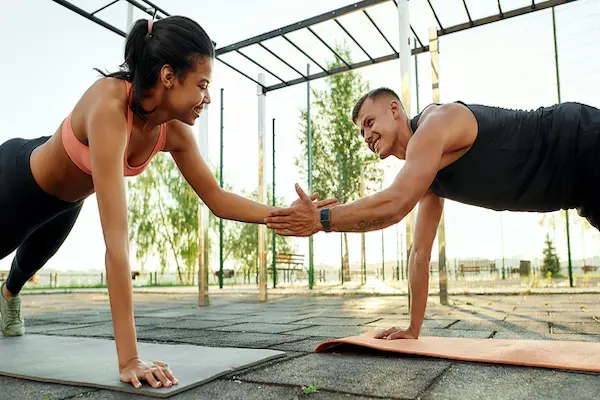
Moving together at home can feel like a mini date that also helps your body, especially when the plan is playful, simple, and not overly intense.
Because a shared routine only works when both people feel safe and included, you will get partner workout ideas with clear cues and easy modifications.
General fitness information cannot replace personal medical advice, so a qualified health professional should guide you if health status or injuries have changed.
Home Workout Routine for Couples: How To Make It Fun And Safe
A home workout routine for couples works best when the goal is teamwork rather than competition, because “winning” a workout can quietly turn into resentment or risky pushing.
Shared movement also becomes more consistent when you treat it like a routine you can repeat on an average day, not a one-time event you survive on adrenaline.
Playfulness matters more than perfection, since laughing through awkward reps often keeps couples coming back far longer than strict, serious training vibes.
Respect stays non-negotiable, because no fun home exercises are worth sore joints, bruised egos, or feeling pressured to match your partner’s pace.
Who This Two Person Routine Is For
Relatively healthy adults who want to move more together at home usually do well with this structure, because the plan is simple, flexible, and easy to scale.
Beginners can join confidently when they choose the easiest variations first, because the routine rewards consistency rather than advanced skills.
Couples with different fitness levels can still train together smoothly, because each exercise includes “level split” options that keep both partners engaged.
What You Need Before You Start
- A clear space where you can step back safely, because crowded floors create tripping risks during transitions.
- A sturdy chair or couch edge, because incline options protect wrists and shoulders while keeping the workout accessible.
- A small towel or long scarf, because it can become a gentle partner “row” tool without requiring any equipment purchase.
- A timer on a phone or kitchen device, because clear intervals prevent mid-workout bargaining and confusion.
- A shared agreement that either person can pause, because consent and comfort come before the clock.
Partner Workout Ideas: Communication That Keeps You Both Comfortable
Clear communication is the secret ingredient in every successful couple workout, because it reduces surprises and makes intensity feel predictable.
Checking in out loud can feel silly at first, yet it prevents small discomfort from turning into a bigger problem that ruins the mood.
Using simple signals helps, because it lets you adjust without stopping the whole session for a full conversation.
Use The “Three-Point Check-In” Before Every Round
- Ask “Breathing okay,” because breath control is a fast indicator of intensity and stress.
- Ask “Joints okay,” because knees, wrists, hips, and shoulders should feel stable rather than pinchy or sharp.
- Ask “Energy okay,” because fatigue changes form, and form changes safety.
Agree On Two Simple Signals
- Choose “Pause” as a neutral word, because neutral language prevents defensiveness when someone needs a break.
- Choose “Downshift” as a neutral word, because it reminds you to pick easier variations without implying failure.
Respect Each Other’s Limits Without Making It Awkward
Limits are not negotiations, because pushing a partner past comfort can damage trust even if the workout “looks fine” on the outside.
Boundaries can change day to day, because sleep, stress, and soreness will affect how each person responds to the same moves.
Encouragement works best when it is specific and kind, because “nice work staying steady” is safer than “go harder.”
Home Workout Routine for Couples: Choose Your Time Option
Time flexibility keeps this two person routine realistic, because busy schedules are the main reason couples stop, not lack of motivation.
Consistency matters more than perfection, which means a short session done twice a week can be more valuable than a long session you keep postponing.
Pick One Option And Commit To It Today
- The 10-minute option works when life feels chaotic, because short wins keep the habit alive.
- The 20-minute option fits most weeks, because it provides enough volume for noticeable progress without draining your evening.
- The 30-minute option feels great on weekends, because you can add extra rounds and longer rest without rushing.
Simple Timer Formats That Reduce Confusion
- Use 40 seconds work and 20 seconds rest when you want steadier breathing, because extra rest protects form and mood.
- Use 45 seconds work and 15 seconds rest when you want a bigger sweat, because it increases challenge without changing exercises.
- Use 30 seconds on and 30 seconds off when one partner is new, because equal rest makes the session feel safer and more approachable.
Warm-Up: 4 Minutes To Get In Sync
A warm-up makes everything smoother, because warm joints move better and coordination improves when you ease into rhythm together.
Starting gently also reduces accidental clumsiness, because cold bodies tend to move stiffly and stiff movement can lead to bumps and missteps.
4-Minute Couples Warm-Up
- March facing each other for 60 seconds while matching pace, because mirroring builds coordination and sets a friendly tone.
- Step-touch side to side for 60 seconds with soft knees, because lateral motion warms hips that often feel tight from sitting.
- Do shoulder rolls together for 30 seconds and then arm circles for 30 seconds, because upper-body comfort helps pushing and rowing feel safer.
- Perform slow sit-to-stands from a chair for 60 seconds, because leg warm-up protects knees and makes later squats feel more stable.
Warm-Up Cues That Keep It Playful And Safe
- Keep steps quiet and light, because heavy feet create impact and kill the “easy vibe.”
- Match breathing pace rather than speed, because shared calm makes the main routine feel less intimidating.
- Use smiles as feedback, because grimacing often signals someone is pushing too hard.
Home Workout Routine for Couples: The Main Circuit
This main circuit blends strength and gentle cardio so you both feel like you worked, while still keeping the session joint-friendly and repeatable.
Six exercises are enough for a full-body effect, because simplicity makes it easier to show up consistently and easier to modify on the fly.
Partner interaction is included without forcing physical strain, because the goal is connection and support rather than “using your partner as equipment.”
Main Circuit Setup
- Complete six moves in order, because predictable order reduces mental load.
- Rest 60–90 seconds between rounds, because couples workouts stay nicer when nobody is gasping or irritated.
- Start with 2 rounds for 10–20 minutes, because early success builds momentum.
- Add a third round only when both partners feel stable and energized, because progression should be shared and not forced.
Move 1: Partner Squat High-Five
Facing each other, squat to a comfortable depth, stand up, and high-five lightly, because the high-five makes the rhythm fun without adding risk.
- Option for beginners: squat to a chair behind you, because a target increases confidence and control.
- Option for more challenge: slow the lowering for three seconds, because tempo builds strength without impact.
- Form cue: keep knees tracking in the direction of toes, because collapsing inward can irritate knees over time.
- Communication cue: agree on a “depth” before starting, because matching depth prevents one partner from rushing the other.
Move 2: Incline Push-Up Partner Count
Both partners use a wall, counter, or sturdy chair for incline push-ups, while the other partner counts slow reps out loud, because shared counting helps pacing.
- Option for less load: use the wall and step closer, because a higher incline reduces shoulder strain immediately.
- Option for more load: use a lower surface and slow the lowering, because control keeps shoulders happier.
- Form cue: keep a straight line from head to hips, because sagging often turns pushing into back discomfort.
- Playful cue: switch “counting styles” each round, because silly counting keeps it light and motivating.
Move 3: Two-Person Towel Row
Sitting or standing facing each other, hold a towel between you, lean back slightly with tall posture, and take turns pulling gently for three seconds while the other resists, because controlled tug-of-war teaches pulling safely.
- Option for safer balance: sit on chairs and keep feet planted, because seated rows reduce wobble and prevent slipping.
- Option for different strength levels: let the stronger partner “match” the weaker partner’s pull, because equal effort feels better than unequal force.
- Form cue: keep shoulders down and chest lifted, because shrugging shifts work into the neck.
- Safety cue: avoid sudden jerks, because fast yanks can strain elbows, shoulders, or wrists.
Move 4: Alternating Reverse Lunge Pass
Standing side by side with enough space, step one leg back into a small reverse lunge and pass a light object like a pillow at chest height, because passing keeps attention on control rather than speed.
- Option for sensitive knees: switch to a split-stance knee bend without stepping, because removing the step reduces balance demand.
- Option for more challenge: add a slow pause at the bottom, because pauses increase leg endurance without pounding.
- Form cue: keep the front foot planted and drive up through midfoot, because that reduces knee stress and improves stability.
- Partner cue: pass gently and predictably, because surprise tosses create awkward catches and risky twists.
Move 5: Plank Tap Or Chair Plank Together
Using the floor or a chair for incline, hold a plank and tap opposite shoulders slowly, because the tap adds a “game” feel while training core stability.
- Option for wrist comfort: use fists or forearms, because neutral wrist positions can reduce irritation.
- Option for beginner comfort: hold a steady plank without taps, because stillness can be challenging enough early on.
- Form cue: widen feet slightly, because a wider base reduces hip swaying during taps.
- Safety cue: stop if wrists pinch or tingle, because those sensations are a signal to modify rather than push.
Move 6: Quiet Cardio Relay
Partner A marches fast with strong arms while Partner B does slow step-touches, then you switch halfway, because relays keep effort high without turning into jumping.
- Option for different fitness levels: let the newer partner march slower while the experienced partner uses bigger arm drive, because intensity can change without changing speed.
- Option for small spaces: march in place only, because turning and traveling can create bumps and noise.
- Breathing cue: aim for short-sentence talking ability, because panic breathing is a sign to slow down or rest longer.
- Fun cue: add a “victory clap” at the switch, because tiny rituals make routines stick.
Two Person Routine: Plug-And-Play Workout Plans
Clear plans reduce friction, because couples are more likely to follow through when nobody has to design the session mid-evening.
Each version below uses the same exercises, because consistency makes progress easier to track and makes setup simpler.
The 10-Minute Version
- Warm up for 2 minutes using march and step-touch, because quick prep still helps joints.
- Run one round of the six moves using 40 seconds on and 20 seconds off, because the pacing stays manageable.
- Cool down for 1 minute with slow walking and long exhales, because calm endings reduce dizziness and stress.
The 20-Minute Version
- Warm up for 4 minutes using the full warm-up sequence, because coordination improves when you take the time.
- Complete two rounds of the six moves with 45 seconds on and 15 seconds off, because the longer work creates a better training effect.
- Rest 60–90 seconds between rounds while walking slowly, because shared recovery keeps mood friendly.
- Finish with a 2-minute cool-down, because transitions back to normal life matter after effort.
The 30-Minute Version
- Warm up for 5 minutes and add extra ankle circles, because warm ankles often improve balance during lunges.
- Complete three rounds using 40 seconds on and 20 seconds off, because that format stays sustainable for most couples.
- Take a longer rest after round two, because fatigue management protects form and reduces irritability.
- End with a longer cool-down and gentle stretching, because a calm finish feels rewarding after a longer session.
Fun Home Exercises: Mini-Games That Keep Motivation High
Games keep couples engaged, because playful goals feel different from “working out” even when the physical effort is similar.
Short challenges also reduce boredom, because you can rotate mini-games without replacing the entire routine.
Pick One Mini-Game After The Main Circuit
- Try the “perfect form minute,” because you both move slowly and focus on control instead of speed.
- Use the “mirror round,” because one partner leads simple steps while the other copies smoothly.
- Play the “quiet feet challenge,” because the goal is to keep foot sounds minimal while keeping arms active.
- Choose the “compliment swap,” because each partner names one thing the other did well after a round.
Three Safe Competitive Twists That Do Not Get Reckless
- Count total high-fives during squats, because it encourages rhythm without encouraging sloppy depth.
- Time a smooth towel row hold, because longer controlled holds are safer than faster jerking pulls.
- Track how calm your breathing stays, because “staying controlled” is a healthier target than “going harder.”
Partner Workout Ideas When Fitness Levels Differ
Different fitness levels are normal, because bodies adapt at different speeds and schedules often create uneven training history.
Training together still works when you scale smartly, because scaling lets both partners experience success without resentment.
Respectful adjustments also improve consistency, because nobody wants a routine that makes them feel left behind.
Level-Split Strategies That Keep You Together
- Match tempo rather than reps, because moving at the same speed feels connected even when range differs.
- Match range rather than load, because shared depth and shared posture improve safety and coordination.
- Let the stronger partner do slower eccentrics, because slow lowering increases challenge without requiring the other partner to move faster.
- Give the newer partner longer rest, because breath control is a safety tool and a confidence tool.
Simple Modifications By Exercise
- During squats, one partner can use a chair while the other stays free-standing, because the same pattern still builds teamwork.
- During push-ups, one partner can use a wall while the other uses a counter, because incline changes intensity dramatically.
- During lunges, one partner can do split-stance bends while the other steps back, because balance demand differs across people.
- During planks, one partner can use a chair while the other uses the floor, because wrist and core tolerance varies daily.
When One Partner Feels “Done” Earlier
Ending early is allowed, because forcing extra rounds can turn a supportive plan into a stressful one.
Solo finishers can do a gentle cool-down beside their partner, because staying present feels more connected than wandering off.
Switching to an easy version keeps the vibe positive, because shared success is the goal of a home workout routine for couples.
Safety Notes For A Home Workout Routine For Couples
Partner workouts add a social layer, which is great for motivation, yet safety requires extra attention because distractions can lead to rushed movement.
Controlled contact is safer than forceful contact, because pushing, pulling, or lifting a partner’s body can create unpredictable joint angles.
Good form becomes more important when laughing happens, because laughter can make people move quickly without noticing alignment.
Five Safety Rules That Protect Both Partners
- Keep movements smooth and avoid jerking, because bands, towels, and momentum can create sudden strain.
- Do not pull on arms, wrists, or neck, because joints dislike sudden traction and awkward angles.
- Choose stable surfaces and stable shoes, because slipping is the fastest way to ruin the session.
- Maintain personal space during lunges and steps, because accidental collisions happen when spacing is too tight.
- Stop immediately for sharp pain, dizziness, or alarming symptoms, because finishing a timer is never worth an injury.
Wrist And Knee Friendly Alternatives
- Swap floor planks for chair planks, because incline reduces wrist extension and shoulder load.
- Replace deep lunges with split-stance bends, because shallow ranges can still strengthen legs safely.
- Use a towel under knees during floor work, because padding often solves discomfort that is purely pressure-related.
- Choose marching over fast stepping on sensitive days, because marching is predictable and easier to control.
Medical Reminder Without Drama
Consulting a health professional is wise if health status has changed, because individualized guidance is safer than guessing.
Seeking medical help is appropriate if chest pain, fainting, severe shortness of breath, or unusual symptoms appear, because safety outranks any workout plan.
Make It A Habit: Weekly Scheduling For Couples
A schedule makes follow-through easier, because you remove the daily question of “when are we doing this.”
Two weekly sessions can be enough to start, because the relationship-friendly goal is sustainability rather than maximum volume.
Adding small movement outside workouts helps too, because extra walks and stretch breaks support recovery and reduce stiffness.
Three Weekly Templates That Fit Real Life
- Use two non-consecutive days, because recovery and busy calendars both benefit from spacing.
- Choose three shorter days, because shorter sessions often feel easier to protect in a crowded week.
- Pick one “anchor day” plus one “floating day,” because floating days survive unpredictable schedules better than rigid plans.
Progress Without Turning It Into A Project
- Add one extra round only after two weeks of consistency, because consistency proves the routine fits your life.
- Increase tempo slightly only when steps stay quiet and controlled, because quiet form is a safety marker.
- Reduce rest by five seconds only when breathing stays steady, because breath control keeps workouts repeatable.
- Upgrade one exercise variation at a time, because changing everything at once increases soreness and friction.
Closing: Keep The Two Person Routine Respectful And Repeatable
A home workout routine for couples succeeds when it feels like quality time that also happens to build strength and stamina.
Partner workout ideas work best when both people feel heard, because respect is the foundation that makes effort feel safe and fun.
Notice: This content is independent and has no affiliation, sponsorship, or control by any institutions, platforms, brands, or third parties mentioned or implied.
Choose the 10- or 20-minute version for your next session, agree on a “Pause” signal, and let playful consistency do the heavy lifting together.