
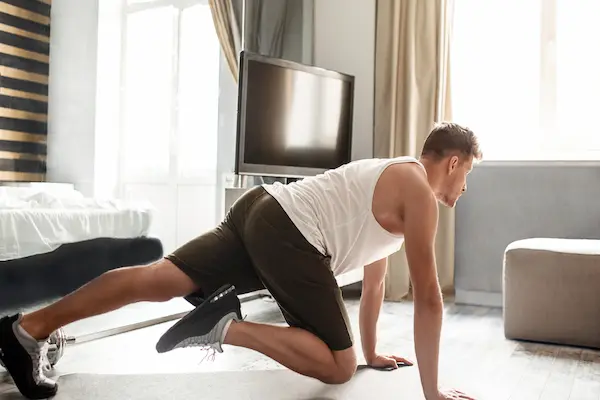
Travel can mess with your rhythm, yet a hotel room workout without equipment can keep you feeling sharp, calm, and “still me,” even when your suitcase is your closet.
Busy trips do not require perfection, because a small space routine done consistently can protect your energy, posture, and mood without turning your room into a noisy gym.
General fitness information cannot replace personal medical advice, so talk with a qualified health professional if you have injuries, health changes, or symptoms that make exercise feel uncertain.
Hotel Room Workout Without Equipment: The Travel-Proof Mindset
Travel workouts work best when the goal is “show up and feel better” rather than “crush it,” because stress, sleep changes, and long sitting can make extreme effort feel rough and unnecessary.
Consistency becomes easier when you choose hotel friendly exercises that are quiet, controlled, and repeatable, because repeating a simple plan is what builds real results on the road.
Momentum usually returns when you start smaller than your ego wants, because a short win reduces friction and makes the next session feel obvious instead of intimidating.
Confidence grows when you finish with steady breathing and stable joints, because leaving the session feeling capable is how travel workout ideas become a habit instead of a one-time burst.
Why Hotel Workouts Often Fail, And How To Fix That Fast
Limited space can make people assume they cannot train, yet a small space routine is often more efficient because it forces simple patterns and removes distracting options.
Fear of disturbing neighbors is real, so quiet movement and soft steps matter more than fancy moves, because pounding and jumping are usually the main sources of complaints.
Uncertainty about furniture safety can create hesitation, so this guide shows exactly how to test chairs, beds, and desks before you put weight on them.
Decision fatigue is common after travel days, which is why you will get plug-and-play circuits with clear timing, clear order, and easy scaling.
What “Without Equipment” Really Means Here
Bodyweight is enough for strength and cardio when you use tempo, pauses, and good posture, because intensity can come from control instead of load.
Hotel items can be used as props safely when you test them and respect limits, because a towel, a wall, and a sturdy chair can add variety without adding risk.
Minimalism is the point, because bringing less mental clutter into your routine makes it easier to train on nights when you are tired, hungry, or jet-lagged.
Small Space Routine Setup: Protect Floors, Walls, And Your Peace
Hotel rooms are shared environments, so a great hotel room workout without equipment starts with noise control and surface protection rather than with intensity.
Quiet workouts usually feel better on joints too, because soft foot contact and controlled transitions reduce impact while still raising heart rate.
Safety improves when you treat the room like a mini training studio, because clear space prevents surprise trips, bumps, and awkward twisting.
Two-Minute Safety Sweep Before You Start
- Clear a rectangle of space near the bed, because stepping backward safely matters more than having lots of room.
- Move luggage away from your feet, because rolling bags and straps can turn a simple lunge into a stumble.
- Check the floor for slick spots, because hotel floors can be slippery when you are in socks.
- Choose your footwear plan, because bare feet, grippy socks, or shoes will change stability and sound.
- Locate a stable wall and a stable chair, because support options reduce risk and increase confidence.
Quiet Cardio Rules That Keep Neighbors Happy
- Keep one foot close to the floor most of the time, because air time usually becomes noise when you land.
- Use soft knees and controlled steps, because locked legs send vibration straight through the floor.
- Drive intensity with arm movement and tempo, because arms raise heart rate without adding impact.
- Choose “quiet feet” as your form cue, because quieter reps are usually more controlled reps.
Floor And Wall Protection Tips That Avoid Accidental Damage
- Place a towel under hands for floor work, because it adds comfort and reduces friction on hotel carpeting or hard floors.
- Use the rug area if the room has one, because rugs absorb sound and reduce slipping for many people.
- Avoid kicking or pushing hard into walls, because scuffs and marks can happen even during “gentle” movements.
- Skip sliding moves on polished floors, because sliding can scratch surfaces and create an unpredictable fall risk.
Furniture Safety: How To Test Props Without Guessing
Chairs, desks, and beds vary a lot across hotels, so a quick stability test protects you from surprises while also helping you relax during the workout.
- Press down on the chair seat with both hands and wiggle gently, because wobble is a sign to avoid using it for support moves.
- Test the bed edge by sitting and standing once, because some frames shift and some mattresses slide unexpectedly.
- Check desk stability by pushing lightly at different corners, because lightweight tables can tip if you lean on them.
- Use the wall for support when uncertain, because a wall is usually more reliable than hotel furniture.
Hotel Room Workout Without Equipment: Choose Your Time Option
Time flexibility makes travel training realistic, because some days you have ten minutes before a meeting and other days you have twenty minutes after dinner.
Consistency matters more than perfection, so the best plan is the one you can repeat even when you are tired and your schedule changes.
Pick The Version That Matches Today’s Reality
- 6-minute “keep-the-habit” session: perfect after a long flight when you want circulation and joint comfort without sweating heavily.
- 10-minute quick circuit: ideal for mornings or late nights when you want a full-body stimulus without a long commitment.
- 20-minute full routine: great when you want a more complete session with warm-up, strength, cardio, and cooldown.
Timer Formats That Work In A Tight Space
- Beginner-friendly: 30 seconds work, 30 seconds rest, because equal rest keeps breathing calm and technique clean.
- Standard travel pace: 40 seconds work, 20 seconds rest, because it builds steady intensity without rushing transitions.
- More challenge without chaos: 45 seconds work, 15 seconds rest, because longer work increases effort while still staying low-impact.
Warm-Up First: The Fastest Way To Make Hotel Workouts Feel Better
A warm-up matters more when you have been sitting in planes, cars, meetings, and restaurants, because stiff hips and tight ankles can make normal movements feel awkward.
Preparation also reduces noise, because warm joints move more smoothly and smoother movement usually means quieter foot contact.
Three-Minute Warm-Up You Can Do Almost Anywhere
- March in place with relaxed shoulders for 60 seconds, because rhythm raises temperature without impact.
- Step-touch side to side for 60 seconds, because lateral movement wakes up hips that often feel stiff from travel.
- Hip hinge practice with hands on thighs for 30 seconds plus gentle half-squats for 30 seconds, because rehearsing the patterns improves control.
Warm-Up Cues That Keep You Safe
- Keep steps quiet and small, because large steps often become heavy steps when you are not warmed up.
- Let breathing stay easy, because breath-holding early is a sign you started too hard.
- Move through comfortable ranges, because forcing range on cold tissues can create guarding.
Travel Workout Ideas: Circuit A For Quiet Cardio And Legs
This first circuit is built for hotel friendly exercises that feel athletic without jumping, because jumping is usually the loudest and most joint-irritating choice in small rooms.
Leg work and steady movement also help circulation, which can feel especially good after sitting for hours.
Circuit A Structure
- Complete the six moves in order, because predictable order reduces decision fatigue.
- Use 40 seconds on and 20 seconds off as a default, because that pace is steady and manageable for most travelers.
- Do 1 round for a 10-minute workout, or 2 rounds for a 20-minute workout, because volume is a safe way to progress.
Move 1: Chair Sit-To-Stand Or Air Squat
Sit-to-stands train legs in a practical way, because standing up and sitting down well is a real-life strength skill that supports knees and hips.
- How: stand up smoothly, pause tall, then sit back with control without dropping.
- Quieter option: tap the chair gently instead of landing hard, because soft contact reduces noise and improves control.
- Easier option: use hands on thighs lightly, because assistance can keep reps smooth and pain-free.
- Harder option: lower for three seconds, because tempo increases challenge without impact.
Move 2: Reverse Lunge Or Split-Stance Knee Bend
Reverse lunges build balance and leg strength with less forward knee stress for many people, which is helpful when space is limited and control matters.
- How: step back softly, lower into a comfortable depth, then push through the front foot to rise.
- Floor-safe cue: land the back foot quietly, because a loud step usually means a rushed step.
- Easier option: stay in a split stance and bend both knees slightly, because removing the step reduces balance demand.
- Harder option: add a brief pause at the bottom, because pauses build stability.
Move 3: Hip Hinge “Good Morning”
Hip hinges target glutes and hamstrings while teaching safe bending, which can protect your back when you lift luggage or lean into a suitcase.
- How: push hips back, keep a long spine, then stand tall by gently squeezing glutes.
- Quieter cue: keep feet planted and stable, because shifting feet can add unnecessary noise and wobble.
- Easier option: reduce range and slow down, because control matters more than depth.
- Harder option: pause for one second at the bottom, because time under tension increases training effect.
Move 4: Step-Touch With Strong Arm Drive
Step-touches raise heart rate without jumping, especially when arms move with purpose and steps stay small and controlled.
- How: step right, tap left, step left, tap right, while pumping arms like brisk walking arms.
- Apartment-friendly cue: imagine you are trying not to wake someone up, because that mental image naturally softens foot contact.
- Easier option: keep arms low and slow the steps, because pace changes intensity quickly.
- Harder option: add a gentle torso rotation with the arm drive, because rotation recruits more muscles without more noise.
Move 5: Calf Raises With Balance Support
Calf raises are quiet and useful, because lower legs often get tight during travel and stronger calves can support steadier walking.
- How: hold a wall lightly, rise onto toes slowly, pause, then lower with control.
- Easier option: keep the range smaller, because partial reps still train the muscles.
- Harder option: use a slow three-second lower, because eccentric control builds strength effectively.
- Balance note: fingertip support is fine, because confidence matters more than “doing it hands-free.”
Move 6: Quiet March Or Shadow Boxing
Marching and shadow boxing both raise heart rate in a small space, while staying quiet enough for most hotel environments.
- Quiet march: lift knees moderately, pump arms, and keep steps soft.
- Shadow boxing: punch lightly at chest height while shifting weight gently, because arm effort increases intensity without impact.
- Breathing cue: slow down if you cannot speak a short sentence, because panic breathing is a signal to downshift.
- Safety cue: avoid twisting aggressively, because tired twisting can irritate the back.
Hotel Room Workout Without Equipment: Circuit B For Upper Body And Core
Upper-body training in hotels can feel tricky without weights, yet pushing patterns, towel-based pulling, and core stability can create a full-body effect quickly.
Wrist comfort and furniture stability matter here, so options are included to keep the routine safe and predictable.
Circuit B Structure
- Choose 5 moves and rotate through them, because fewer moves reduce transitions in tight rooms.
- Work for 30–45 seconds depending on energy, because your effort should feel controlled rather than frantic.
- Rest 20–40 seconds depending on breathing, because longer rest can keep technique clean.
Move 1: Incline Push-Up On Desk Or Wall
Incline push-ups build chest, shoulders, arms, and core stability, while using an angle that is often kinder than floor push-ups for tired travelers.
- How: hands on a stable surface, body in a long line, lower slowly, then press up while exhaling.
- Wall option: use the wall if furniture feels unstable, because higher incline reduces load and risk.
- Desk option: use a sturdy desk only after testing stability, because some hotel desks are lightweight.
- Form cue: keep shoulders away from ears, because shrugging often causes neck tension.
Move 2: Towel Isometric Row
A towel row is a simple pulling substitute that balances pushing work, especially when you create steady tension instead of yanking.
- How: hold the towel ends, pull outward as if trying to stretch it, and squeeze shoulder blades gently.
- Timing: hold 10–20 seconds, rest briefly, then repeat, because isometrics build strength without equipment.
- Posture cue: keep ribs stacked and chin neutral, because good posture keeps the upper back doing the work.
- Safety cue: avoid jerking the towel, because sudden force can irritate elbows and shoulders.
Move 3: Triceps Press Into Wall
Wall presses can train arms quietly, because you create effort through controlled pushing rather than through fast reps or heavy load.
- How: place palms on the wall at shoulder height, bend elbows slightly, then press the wall away with controlled effort.
- Intensity tip: step feet farther back for more challenge, because body angle increases loading.
- Comfort tip: keep wrists neutral and hands spread, because stable hands reduce wrist strain.
- Breathing cue: exhale during the press, because continuous breathing keeps tension appropriate.
Move 4: Dead Bug Core Control
Dead bugs build core stability in a low-stress way, because the floor supports you while you practice control and breathing.
- How: lie on your back, move opposite arm and leg slowly, and keep the lower back comfortable.
- Easier option: move only legs or only arms, because simpler patterns can still build control.
- Harder option: slow the movement further, because slow control increases challenge safely.
- Breathing cue: exhale as the limb extends, because exhalation helps prevent bracing and neck tension.
Move 5: Side Plank On Knees Or Wall Side Hold
Side plank variations train the side body and improve shoulder stability, which can feel great after carrying bags and sitting in cramped seats.
- Knee side plank: forearm down, knees bent, lift hips gently, and hold while breathing steadily.
- Wall option: press forearm into the wall sideways and hold a firm posture, because wall holds reduce shoulder load.
- Comfort cue: keep shoulders stacked and neck long, because collapsing often causes strain.
- Timing tip: hold 15–30 seconds per side, because quality holds beat long shaky holds.
Hotel Friendly Exercises: Circuit C For Recovery, Mobility, And Jet Lag Days
Recovery-focused sessions are not wasted time, because gentle movement can reduce stiffness, improve circulation, and help you sleep better in unfamiliar beds.
Mobility work also protects weekend-warrior style overdoing on trips, because your body feels less “locked” when you move a little every day.
Circuit C Structure
- Move slowly and breathe steadily, because calm rhythm is the goal on recovery days.
- Spend 30–60 seconds on each move, because short doses add up without overwhelming you.
- Repeat the circuit once or twice, because volume can be gentle rather than intense.
Move 1: Standing Spine Wave With Long Exhales
Spine waves can reduce that “travel stiffness” feeling, especially when the movement stays small and the exhale stays long.
- How: soften knees, roll the spine gently forward, then rebuild tall posture slowly.
- Comfort cue: keep the range small if dizziness appears, because slow transitions matter.
- Breathing cue: inhale to lengthen, exhale to soften, because breath guides smoothness.
Move 2: Hip Flexor Opener With Chair Support
Hip flexors tighten during sitting-heavy travel, so a standing split stance with support can feel instantly relieving without kneeling.
- How: hold chair, step one foot back, tuck pelvis slightly, and shift forward gently.
- Safety cue: keep the front knee comfortable, because hip opening should not become knee stress.
- Timing: 30–45 seconds per side, because gentle holds work well here.
Move 3: Ankle Rocks At The Wall
Ankle mobility supports walking comfort, especially when you have been in stiff shoes or sitting for long periods.
- How: face the wall, bend knee toward the wall while keeping heel down, and move slowly.
- Comfort cue: stop before pinching in the front of the ankle, because pinching means reduce range.
- Timing: 30–45 seconds per side, because repetition matters more than intensity.
Move 4: Wall Slides For Upper Back And Shoulders
Wall slides help posture muscles wake up, which can reduce that rounded-shoulder feeling from laptops and travel bags.
- How: elbows and forearms near the wall, slide up only as far as you can without shrugging.
- Comfort cue: keep ribs gently down, because rib flare can mimic shoulder restriction.
- Timing: 6–10 slow reps, because slow reps build control.
Move 5: Gentle Forward Fold With Bent Knees
A knee-bent hinge can soothe hamstrings and back without aggressive stretching, especially when you treat it as a relaxed hang rather than a reach contest.
- How: hinge with bent knees, let arms hang, and shift weight gently.
- Support option: place hands on a chair, because support makes it safer and calmer.
- Breathing cue: take three long exhales, because long exhales reduce guarding.
Hotel Room Workout Without Equipment: Two Plug-And-Play Plans
Clear plans remove hesitation, because you can stop thinking and start moving even when your brain is tired from travel logistics.
Both plans below keep impact low, because quiet cardio is often the best choice for hotel environments.
Plan 1: 10-Minute Full-Body “I’m Busy” Circuit
- Warm up for 2 minutes with marching and step-touches, because preparation helps joints and reduces noise.
- Run Circuit A for one round using 40 seconds work and 20 seconds rest, because timing keeps you moving without rushing.
- Cool down for 1 minute by walking slowly and taking long exhales, because calm endings help recovery.
Plan 2: 20-Minute Balanced Hotel Routine
- Warm up for 3 minutes, because extra preparation helps when you have been sitting all day.
- Complete one round of Circuit A, because legs and cardio rhythm build the base.
- Rest 60 seconds while walking slowly, because transitions matter when space is tight.
- Complete one round of Circuit B, because upper body and core round out the session.
- Finish with 2–3 minutes of Circuit C, because mobility work supports sleep and recovery.
Small Space Routine Modifications When Fitness Levels Differ Day To Day
Energy can change dramatically on trips, because sleep, food, and time zones rarely behave like your normal routine.
Scaling is smart, because a repeatable plan beats a heroic plan when you are away from home.
Downshift Options When You Feel Tired Or Stressed
- Use 30 seconds work and 30 seconds rest, because equal rest keeps breathing calm.
- Choose chair support more often, because supported movement reduces wobble and tension.
- Reduce range of motion, because smaller pain-free reps are still productive.
- Skip the second round, because one good round is better than a second sloppy round.
Upgrades When You Feel Strong And Well-Rested
- Add a second round to Circuit A, because volume is a safe progression tool.
- Slow the lowering phase on squats and hinges, because tempo increases challenge without added impact.
- Use longer isometric towel rows, because holds build strength without equipment.
- Increase arm drive during step-touches, because arms raise heart rate quietly.
Hotel Room Workout Without Equipment: Breathing And Pacing That Prevent Overdoing
Breathing is your best intensity monitor, because breath quality often changes before your form collapses.
Moderate effort is enough to maintain fitness on trips, because travel itself can already be a stressor on recovery.
The Talk Test You Can Use Mid-Circuit
- If you can speak a short sentence, intensity is likely in a good zone for a hotel friendly workout.
- If you can only speak one or two words, slowing down and resting longer is a smart move.
- If you feel dizzy, nauseated, or alarmed, stopping is the right choice, because safety outranks finishing a timer.
Three Quick Fixes When Breathing Feels Too Hard
- Slow your rep speed first, because tempo changes intensity immediately without changing exercises.
- Reduce arm height second, because big arm swings can spike heart rate quickly.
- Extend rest third, because extra recovery keeps technique clean and calm.
Using Towels And Furniture As Props Safely
Towels and furniture can expand your travel workout ideas, yet safety improves when you treat props as “assist tools” rather than as load-bearing gym equipment.
Testing stability first builds confidence, because uncertainty makes people tense and tension makes movement less controlled.
Safe Ways To Use A Towel
- Use towel isometric rows, because pulling against the towel creates effort without sudden motion.
- Use the towel as padding under knees or hands, because comfort improves control and reduces irritation.
- Use the towel as a strap for gentle hamstring flossing, because assisted movement can be safer than grabbing and yanking.
Safe Ways To Use A Chair Or Bed
- Use a chair for sit-to-stands, because a stable target makes squats safer and quieter.
- Use a chair or wall for incline push-ups, because incline reduces load while still training strength.
- Use the bed edge for gentle calf stretching only if stable, because unstable bed frames can shift unexpectedly.
What To Avoid In Hotel Rooms
- Avoid jumping moves, because impact creates noise and increases joint stress.
- Avoid sliding lunges on hard floors, because slipping risk rises quickly.
- Avoid leaning hard on lightweight furniture, because tipping risk is real.
- Avoid aggressive twisting when tired, because travel fatigue can make coordination worse.
Weekend Fitness Routine On The Road: A Simple Weekly Travel Template
Trips often create unpredictable schedules, so a simple template keeps you consistent without requiring long sessions.
Planning two “anchor” workouts per travel week can be enough, because consistency matters more than daily perfection.
Travel Week Template You Can Repeat
- Day 1: 10-minute Circuit A, because legs and quiet cardio restore energy quickly after travel.
- Day 2: 6-minute Circuit C, because mobility supports sleep and reduces stiffness.
- Day 3: 20-minute balanced plan, because one fuller session maintains strength and stamina.
- Day 4: Optional easy walk outside if safe and convenient, because walking is simple recovery-friendly cardio.
Micro-Movement Ideas For Busy Travel Days
- Do 60 seconds of marching every few hours, because circulation helps stiffness fade.
- Perform 10 sit-to-stands before a shower, because small strength snacks add up.
- Hold a towel row for 15 seconds twice, because posture muscles like frequent reminders.
- Complete ankle circles while brushing teeth, because tiny habits are easier than big plans.
Hotel Room Workout Without Equipment: Common Problems And Fast Fixes
Travel routines fail for predictable reasons, so solving the common problems ahead of time makes success more likely.
Small adjustments usually work best, because small changes keep the routine realistic and repeatable.
If The Room Feels Too Small
- Choose in-place versions of every move, because you do not need to travel across the room to train.
- Swap lunges for split-stance bends, because stepping back can require more clearance.
- Use wall push-ups instead of floor work, because the wall creates space and reduces setup.
If Noise Feels Like A Worry
- Slow down your feet and move your arms more, because arms raise intensity quietly.
- Choose isometrics like towel rows and wall presses, because holds create effort with minimal sound.
- Train on the rug area when possible, because rugs absorb vibration.
If The Floor Feels Slippery
- Wear shoes or grippy socks, because stability is non-negotiable.
- Reduce lateral steps, because side-to-side motion can slip more easily than marching.
- Use chair support for balance moves, because support reduces risk while you adjust.
If You Feel Sore From Travel And Sitting
- Choose Circuit C first, because mobility can reduce stiffness without adding fatigue.
- Keep strength moves slow and shallow, because range can expand later as comfort returns.
- Stay in a moderate breathing zone, because hard cardio can feel rough when your body is already stressed.
Safety Reminder And When To Ask For Help
Health and safety always come first, because travel can change how your body responds to exercise due to dehydration, stress, or sleep loss.
Talking to a qualified health professional is wise if you have injuries, new symptoms, or health changes, because personalized boundaries are safer than guessing.
Stop And Seek Help If You Experience
- Chest pain, fainting, or severe shortness of breath, because those symptoms require immediate attention.
- Sharp pain, numbness, or tingling, because nerve-like sensations should not be pushed through.
- Sudden swelling or joint instability, because continuing can worsen an underlying issue.
Closing: Make The Hotel Routine Simple Enough To Repeat
Travel can disrupt your normal schedule, yet a hotel room workout without equipment can keep your body feeling awake, capable, and less stiff when you commit to quiet, controlled consistency.
Notice: This content is independent and has no affiliation, sponsorship, or control by any institutions, platforms, brands, or third parties mentioned or implied.
Choose the 10-minute circuit on busy days, use towels and furniture only after testing stability, and let repeatable effort do the heavy lifting while you’re away.