
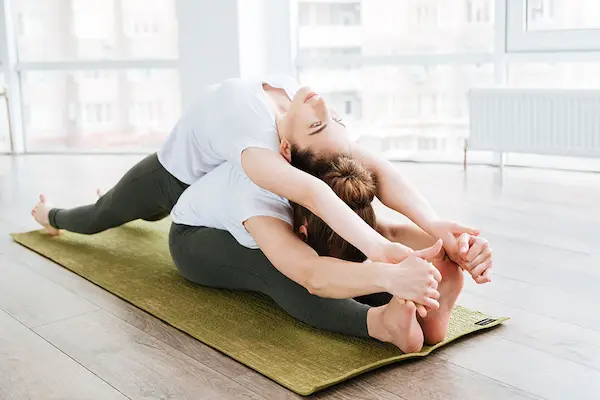
Sharing a stretch session can feel like a tiny vacation for your nervous system, especially when the goal is connection, comfort, and a few slow laughs instead of “getting results.”
Designed as a partner stretching routine for couples or close friends, this sequence keeps consent at the center, uses gentle assisted mobility, and invites you to do less whenever less feels better.
Partner stretching routine for couples: the vibe, the goal, and the golden rule
Rather than chasing bigger range, the purpose here is to relax together while exploring movement that feels safe, steady, and surprisingly calming.
Because bodies vary day to day, the best couple routine is the one where both people feel heard, respected, and free to stop without explaining themselves.
Consent is the golden rule, so every stretch comes with options, communication cues, and reminders to avoid forcing the other person’s range.
Playfulness is welcome, yet pressure is not, which means the mood can be light while the approach remains cautious and caring.
Consent-first basics that make partner assisted stretches actually safe
Clear consent sounds like an enthusiastic “yes” to a specific action, not a vague “sure” that hides hesitation.
Frequent check-ins matter because stretching sensations can change quickly, especially when an outside force is involved.
Mutual permission to stop at any moment keeps the routine relaxing, because the body softens faster when it knows it has an exit.
- Agree that either person can say “pause” without needing a reason, because safety is always more important than finishing a stretch.
- Choose a pressure scale from 1 to 10, because numbers make it easier to communicate without overthinking.
- Decide on a maximum intensity for today, because a shared ceiling prevents accidental escalation.
- Keep your hands open and soft when assisting, because gripping often turns gentle contact into unnecessary force.
- Ask before changing anything, because surprises can make a partner brace even in a perfectly safe position.
A simple “pressure dial” you can use in every position
Imagine your assistance as a dial rather than a switch, so you can increase pressure by one tiny click instead of jumping to a stronger pull.
For most people, a 3 to 5 out of 10 is plenty for partner assisted stretches, because mild intensity tends to relax muscles better than intensity that triggers bracing.
If the receiver starts holding their breath, tightening their face, or curling their toes, treat that as a gentle request to lower the dial immediately.
- Start at a 2 out of 10, then hold still for one full breath to see how the body responds.
- Increase to a 3 or 4 only if the receiver says “more is okay,” and only if their breathing stays smooth.
- Maintain the chosen level rather than pushing deeper, because stillness helps the nervous system settle.
- Back off by one level before switching sides, because ending softly teaches the body that stretching is safe.
Set up a cozy space for gentle assisted mobility
Comfort makes communication easier, and easy communication makes partner stretching feel more like bonding and less like a negotiation.
Low clutter is helpful, because stepping around obstacles can add awkwardness when you’re already focusing on balance and gentle contact.
Warmth matters, because cold muscles often resist stretching and can make the session feel tense even with perfect technique.
Props that make the routine calmer and more adaptable
- A firm pillow supports knees and hips during floor work, which can reduce joint pinching and help the pelvis relax.
- A folded blanket cushions kneeling positions, which keeps knees comfortable so the hips can soften more easily.
- A sturdy chair offers accessible options, which is ideal when one person prefers a seated hip routine or needs extra balance support.
- A strap, scarf, or belt creates distance, which can reduce tugging and help assistance feel smooth and controlled.
- A timer with a gentle sound reduces clock-checking, which helps your attention stay on breath and comfort cues.
A two-minute solo warm-up that prevents “cold-start” stiffness
Before you touch each other, take a moment to let your own body arrive, because rushing into partner work can make sensations feel sharper than they need to be.
- Stand or sit tall and take five slow breaths, allowing the shoulders to drop as the exhale lengthens naturally.
- Circle the wrists and ankles for twenty seconds each, keeping the motion smooth so joints feel “greased” rather than forced.
- Roll the shoulders back and down for six slow repetitions, letting the chest feel open without flaring the ribs.
- Do gentle hip circles for twenty seconds, staying small and steady so the pelvis feels more mobile.
Partner stretching routine for couples: communication scripts that feel natural
Communication can be playful without being vague, so short scripts help you stay clear while still keeping the mood light.
Helpful words reduce guesswork, because guessing can lead to accidental overpressure even with the best intentions.
Quick phrases the receiver can use without apology
- “That’s a 3 out of 10, and it feels good, so please hold exactly there for a few breaths.”
- “I feel a pinch near the joint, so let’s back off and try a smaller angle.”
- “The stretch is fine, but my knee feels weird, so I want the chair version instead.”
- “I’m sleepy today, so I only want two stretches and then the relaxation finish.”
- “Pause for a second, because I need to reset my breathing before we continue.”
Supportive phrases the helper can use to stay consent-focused
- “Would you like more pressure, less pressure, or the same pressure for the next three breaths?”
- “Tell me where you feel this, because I want muscle sensation, not joint pinching.”
- “I’m going to move my hand lower, so please say yes or no before I do it.”
- “If you say ‘stop,’ I stop immediately, and we can switch to a different stretch.”
- “Your range is perfect as it is, so we’re only aiming for comfort today.”
A playful consent ritual that takes ten seconds
- Ask, “Ready for gentle?” and wait for a clear yes, because that tiny pause prevents autopilot.
- Agree on a number cap, like “no higher than 4,” because shared limits keep assistance honest.
- Choose a safe word, like “yellow” for soften and “red” for stop, because colors are easy to remember when tired.
The sequence: partner assisted stretches in 10–15 minutes
This couple routine is built as a calm loop you can repeat, which means you can stop after five minutes or continue toward fifteen depending on energy.
Each stretch includes a “lighter” option, because gentle assisted mobility should adapt to the day you’re having rather than the plan you imagined.
Switch roles often, because receiving and assisting both require attention, and shared effort keeps things balanced and respectful.
How to use time without making it feel like homework
Hold each position for four to eight slow breaths, because breath-based timing feels soothing while keeping you present.
Longer holds can feel wonderful, yet longer is only better when relaxation increases, so end early if you feel restless or overstimulated.
- Choose the 10-minute version by doing steps 1 through 7 once.
- Choose the 15-minute version by adding a second round of your two favorite stretches.
- Choose the ultra-gentle version by doing only steps 1, 2, 6, and 10.
1) Back-to-back breathing to sync without effort
Sit cross-legged or on chairs with your backs lightly touching, then let your spines feel tall while your shoulders stay relaxed and heavy.
Allow the contact to be a soft reference point, not a push, so both bodies can settle rather than resist.
Breathe slowly for six to ten breaths, noticing how the breath naturally matches pace when you stop trying to control it.
- Hold time: 60 to 90 seconds.
- Consent cue: ask, “Is this pressure okay?” because even back contact should feel chosen.
- Support option: sit on a folded blanket to reduce hip strain and make posture easier.
2) Seated shoulder floss with a towel, side by side
Sit side by side and hold a towel or strap between you, then have both partners gently raise and lower arms in a small range that feels smooth.
Keep elbows soft and ribs calm, because rigid arms can turn a mobility drill into a strain on the neck and upper back.
Move for eight to twelve slow repetitions, letting the towel act as guidance rather than a lever.
- Time: 60 to 90 seconds.
- Consent cue: ask, “Can we lift a little higher, or should we stay here?” to keep control shared.
- Support option: do the motion seated in chairs if hips feel tight on the floor.
3) Partner chest opener, standing with gentle hand support
Stand facing each other, hold each other’s forearms or hands lightly, and step back just enough to feel the front of the chest open without yanking.
Let knees stay soft and shoulders stay down, because locked joints can make the stretch feel sharp instead of spacious.
Stay for five to seven breaths, and treat the stretch as a shared lean rather than a pull-and-resist game.
- Hold time: 40 to 60 seconds.
- Consent cue: the receiver says “steady” when the intensity is right, and the helper holds still without increasing.
- Beginner option: hold wrists lower and step less, because smaller angles can feel surprisingly effective.
4) Partner assisted side bend, standing with one hand on a wall
Stand side by side with the outside hand on a wall for balance, then have the inside partner place a gentle hand on the other’s upper arm or shoulder blade.
Lean away from the wall into a small side bend, allowing the assisting hand to guide rather than push, so the ribs open calmly.
Switch sides after four to six breaths, keeping the neck relaxed and the jaw unclenched.
- Hold time: 25 to 40 seconds per side.
- Consent cue: ask, “Do you want my hand there, or would you rather I not touch?” to respect sensory comfort.
- Support option: do the side bend seated, because seated versions reduce balance demand.
5) Seated hamstring hinge with partner “spotting,” not pulling
Sit facing each other with legs extended comfortably, then bend knees as much as needed so the stretch stays in the hamstrings instead of the lower back.
Hold each other’s forearms lightly, and let the receiver hinge forward on their own while the helper simply stabilizes the connection.
Pause at the first clear stretch and breathe, because hamstrings release more reliably when they feel safe and unforced.
- Hold time: 40 to 70 seconds.
- Consent cue: the receiver controls movement completely, while the helper asks, “Do you want steady hands or no hands?”
- Chair option: do this as a seated forward hinge in chairs, using hands on thighs for support.
6) Partner assisted figure-four, seated for hips and glutes
Sit on chairs facing each other, cross one ankle over the opposite thigh, and keep the crossed foot gently flexed so the knee feels protected.
Let the helper place a hand on the receiver’s upper back as a reminder to hinge from hips, while the receiver leans forward slowly under their own control.
Switch sides after five to eight breaths, and keep the sensation in the outer hip rather than in the knee joint.
- Hold time: 45 to 75 seconds per side.
- Consent cue: the helper asks, “Is my hand helpful, or would you prefer no touch?” because guidance should feel supportive.
- Beginner option: place the ankle lower on the shin if the full figure-four feels too intense.
7) Supported hip flexor stretch with a chair, one person at a time
Stand with one hand on a chair, step one foot back into a short stance, and gently tuck the pelvis so the front of the back hip opens without arching the lower back.
Have the partner stand nearby as a spotter, offering a forearm to hold if balance feels uncertain, while avoiding any pushing on the hips.
Stay for four to six breaths and switch sides, keeping the stance stable and the movement modest.
- Hold time: 25 to 45 seconds per side.
- Consent cue: the spotter asks, “Do you want my arm for balance, or are you good?” because support should be chosen.
- Knee-friendly option: shorten the stance and focus on posture, because hip flexors can release without deep lunges.
8) Calf stretch with partner balance support and zero pushing
Face a wall and step one foot back, then have the partner stand beside you so you can lightly rest fingertips on their forearm if you want extra steadiness.
Press the back heel down gently, keeping the sensation mild, because the goal is to relax muscles rather than prove how far the heel can drop.
Switch sides after four to six breaths, then repeat with a slightly bent back knee if you want a softer calf variation.
- Hold time: 25 to 40 seconds per side.
- Consent cue: the helper stays neutral and never pushes the heel, because calf stretching does not need external force.
- Beginner option: shorten the stance until balance feels calm and breathing stays easy.
9) Back-to-back seated twist with gentle “presence” contact
Sit back-to-back again, cross arms over the chest, and rotate gently to one side while keeping the movement small and comfortable.
Use the back contact as a reference rather than a lever, which means nobody forces the other person deeper into rotation.
Switch sides after four breaths, noticing how slow twists can feel like a quiet reset for the spine.
- Hold time: 20 to 35 seconds per side.
- Consent cue: ask, “Is this twist range okay?” because even small rotations can feel intense for some bodies.
- Chair option: do this in chairs with backs lightly touching if floor sitting is uncomfortable.
10) The “end with calm” finish: hand-on-heart breathing, side by side
Lie on your backs with a pillow under knees, or sit in chairs with feet flat, then place one hand on the chest and one hand on the belly.
Breathe slowly for one to two minutes, letting exhales lengthen naturally, because longer exhales often signal the body that it can rest.
Keep the room dim and the voices soft, because the finish sets the tone for what your nervous system remembers.
- Time: 60 to 120 seconds.
- Consent cue: ask, “Do you want to hold hands or keep your own space?” because closeness should be chosen, not assumed.
- Sleepy option: stop here even if you skipped earlier steps, because the calm finish is valuable on its own.
Extra partner assisted stretches you can rotate in, one at a time
Variety can keep a couple routine interesting, yet too many choices can feel like a project, so consider adding only one new stretch per week.
Rotation also protects sensitive joints, because repeating the same angle every day is not always the friendliest approach.
Option A: Supported neck release with zero pulling
Sit comfortably and let the receiver tilt one ear toward one shoulder, then have the helper place a warm hand on the top of the shoulder as a “softening reminder.”
Avoid pulling on the head entirely, because neck tissues are delicate and stretching should feel like a gentle invitation, not a lever.
- Hold time: 20 to 30 seconds per side.
- Consent cue: the helper asks, “Is my hand pressure comforting?” because touch preferences vary widely.
- Beginner option: keep the head nearly upright and focus on slow exhales.
Option B: Seated forward fold over a pillow, with partner spotting
Sit with a pillow on your thighs, hinge forward slowly, and let the belly and chest rest on the pillow so the back feels supported.
Have the partner sit nearby and place a hand on the mid-back lightly, offering steadiness without pushing you deeper.
- Hold time: 45 to 90 seconds.
- Consent cue: ask, “Do you want touch or just company?” because presence can be enough.
- Support option: bend knees and sit on a folded blanket to reduce strain.
Option C: Assisted shoulder blade glide for desk tension
Stand tall while the helper places two fingers on the outer edge of the shoulder blade area, then the receiver slowly rolls shoulders back and down like smoothing fabric.
Keep touch light and directional, because this is a sensory cue for movement rather than a deep tissue technique.
- Time: 45 to 60 seconds.
- Consent cue: the receiver chooses the touch location, because shoulders can be sensitive zones.
- Beginner option: do the same motion without touch if contact feels distracting.
Safety tips: how to avoid forcing range in partner stretching
Partner stretching feels great when assistance stays gentle, predictable, and fully controlled by the receiver’s comfort cues.
Risk increases when someone uses body weight, sudden pressure, or competitive energy, so the safest approach is slow guidance with constant permission.
Non-negotiable safety rules for partner assisted stretches
- Never bounce, because bouncing can trigger protective reflexes and increase strain risk.
- Never use sharp leverage on joints, because joints prefer stability and muscles prefer gradual lengthening.
- Never push past a “yellow,” because yellow means the nervous system is on alert and needs less intensity.
- Never stretch through numbness or tingling, because nerve symptoms deserve caution and professional guidance.
- Never assume yesterday’s range is today’s range, because sleep, stress, and fatigue change flexibility constantly.
Body signals that mean “back off right now”
- Breath becomes choppy or held, because breath-holding often signals threat rather than release.
- Face tightens or jaw clenches, because facial tension often mirrors full-body bracing.
- Toes curl or fists clench, because gripping is a common sign that intensity is too high.
- Pinching appears near a joint, because joint sensations should not be negotiated with pressure.
- Discomfort increases with each breath, because a good stretch usually feels steadier or softer over time.
When to consult a health professional before changing routines
Medical guidance is a smart step if either partner has recent injuries, chronic pain, joint instability, osteoporosis, dizziness issues, nerve symptoms, or any condition that makes exercise feel uncertain.
Professional advice is especially helpful when pain persists, because stretching should support your life rather than creating new problems.
Make this couple routine feel easy to repeat
Consistency grows when the routine feels like a treat, so keeping it short and pleasant is often more effective than trying to do everything.
Habit pairing works well here, because a shared cue reduces the mental load of deciding when to start.
Simple ways to fit gentle assisted mobility into real schedules
- Choose a consistent time, like after dinner or before a shower, because predictable timing reduces friction.
- Use a “two-stretch minimum,” because doing something small keeps the habit alive on busy days.
- Keep props visible, because hidden pillows and straps tend to disappear from memory.
- Agree that tired nights can be shorter, because flexibility includes adapting the plan without guilt.
A playful 2-week plan that builds trust and comfort
- During week one, do steps 1 through 4 only, because early success builds confidence and prevents soreness.
- On the weekend of week one, add step 6 for hips, because hips often respond well to slow, supported work.
- During week two, include steps 1 through 7 once, because that creates a complete flow without becoming long.
- On the weekend of week two, try one optional add-on, because small novelty keeps the practice fresh and fun.
Tracking consistency without turning it competitive
Tracking should feel like encouragement, not judgment, so keep it gentle and simple.
- Mark a calendar with a single symbol when you stretch together, because visual momentum can feel motivating.
- Write one shared note like “felt calmer” or “hips happier,” because emotional benefits matter as much as physical ones.
- Celebrate “showed up” rather than “went deeper,” because depth is not the goal in consent-first stretching.
Troubleshooting: common couple routine hiccups and easy fixes
Awkward moments are normal, especially when two bodies are learning shared pacing and shared communication.
Small adjustments often solve big problems, because most issues come from setup, speed, or unclear pressure signals.
If one partner is more flexible, and the other feels discouraged
- Choose positions controlled by the less flexible partner, because that keeps the experience safe and empowering.
- Focus on breath and relaxation rather than range, because relaxation is something you can share regardless of flexibility.
- Use chairs and pillows generously, because support makes sensations friendlier and reduces comparison.
If height differences make positions feel clumsy
- Switch to seated versions, because chairs neutralize height differences and make angles easier to manage.
- Use a strap instead of handholds, because distance creates smoother, more controllable assistance.
- Shorten stances in standing stretches, because smaller geometry often feels steadier and safer.
If someone feels ticklish or touch-sensitive
- Ask where touch feels okay, because consent includes sensory preference, not only movement preference.
- Use “spotting” contact on the upper back or forearm rather than ribs or sides, because some areas feel more vulnerable.
- Try no-touch versions where both partners mirror the same stretch, because shared movement can still feel connected.
If the session starts feeling competitive or goal-driven
- Return to back-to-back breathing, because shared breath often resets the tone quickly.
- Lower the intensity cap to a 3, because small intensity changes can shift the mood from effort to ease.
- End with the calm finish early, because stopping at a good moment builds trust in the ritual.
FAQ about partner stretching routine for couples
How often should we do partner assisted stretches?
Two to four times per week works well for many people, because it supports consistency without making stretching feel like a daily obligation.
Should we stretch before workouts or after workouts?
Gentle mobility can be great before workouts, while longer holds often feel best after activity when tissues are warm and ready to relax.
Is it okay if we only do three moves?
Doing fewer moves is completely fine, because consistency and comfort usually matter more than completing a long checklist.
What if one of us feels pain during a stretch?
Pain is a stop signal, so backing off immediately and choosing a different position or consulting a professional is the safest response.
Can we do this routine if we are beginners who feel stiff?
Beginners often benefit the most, because the routine is designed to stay gentle, use support options, and emphasize communication over depth.
Does stretching replace strength or general fitness?
Stretching supports comfort and body awareness, while strength and general movement support resilience, so the best plan usually includes a mix over time.
Important independence notice
Notice: this content is independent and does not have affiliation, sponsorship, or control by any institutions, platforms, or third parties mentioned.
Close the session like a soft landing
Ending with calm breath, a shared check-in, and the feeling that nobody was pushed creates a sleepy, safe memory that makes the next session feel easier to start.
With playful respect, clear consent, and gentle assisted mobility that stays well within comfort, this partner stretching routine for couples can become a favorite way to reconnect in a busy week.