
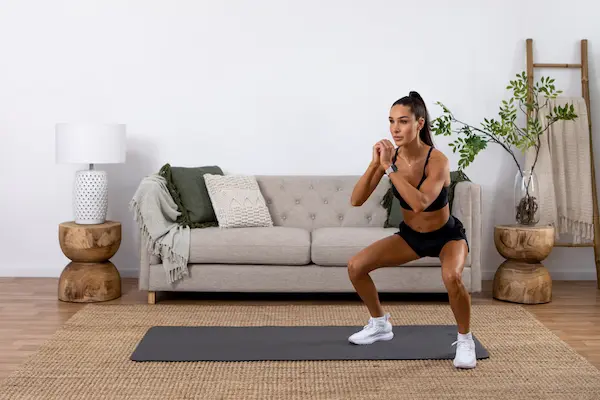
A quiet apartment workout for neighbors is absolutely possible, even in a building with thin walls and creaky floors, when you train with intention instead of impact.
Because time and space are real constraints, this guide gives creative silent workout ideas, no impact exercises, and an apartment friendly routine that respects the people living around you.
Quiet apartment workout for neighbors: why “noise” happens in the first place
Noise usually comes from sudden force meeting a hard surface, which is why jumping, running in place, and fast burpees can sound like a drumline downstairs even when you feel light on your feet.
Vibration is often louder than you think because floors transmit impact differently than air, meaning a small hop can travel through beams, pipes, and shared walls in a way that surprises everyone.
Rhythm can also be the culprit, since repetitive thuds at a consistent pace are easier to notice than occasional sounds like a water bottle set down gently.
Furniture and fixtures add their own soundtrack, so a chair scooting, a dumbbell rolling, or a door rattling can create sharp spikes that feel much louder than the movement itself.
Breathing, music, and verbal cues can become “noise” too, especially if the building is older and sound insulation is thin, which is why volume choices matter even when your workout is low impact.
A quick “sound audit” that takes two minutes and saves a week of stress
- Stand where you plan to train and do five slow steps, because you will quickly hear whether the floor creaks in certain spots.
- Perform one controlled squat and one gentle heel raise, because those movements reveal whether your shoes or floor create squeaks.
- Place a hand on a wall or countertop and do ten slow mountain climber steps, because the difference between “soft” and “thuddy” becomes obvious immediately.
- Shift your mat or rug slightly and repeat the same test, because one small relocation can turn a noisy corner into a quiet zone.
- Listen for rattles from vents, frames, or shelves, because fixing a loose item can reduce noise more than changing the workout.
The mindset that keeps your apartment friendly routine sustainable
Consideration works best when it feels like creativity rather than restriction, because a calm, respectful approach keeps you consistent without the guilt spiral of “I’m bothering everyone.”
Progress does not require impact, since strength, mobility, posture, and conditioning can all improve through controlled tension and thoughtful pacing.
Ownership helps, because when you choose quiet training on purpose you stop feeling like you are “missing out” and start feeling like you are building a skill.
Flexibility matters, because some days call for restorative movement and other days call for a more challenging circuit, yet both can still be a quiet apartment workout for neighbors.
Three principles that make almost any workout quieter
- Control the lowering phase, because slow descents reduce thuds and also build strength efficiently.
- Prefer contact over airtime, because keeping at least one foot or hand grounded turns many loud moves into no impact exercises.
- Use continuous tension instead of speed, because muscles can work hard while your body stays soft with the floor.
Floor protection tips that reduce vibration, not just sound
Soft surfaces help, yet the bigger win is vibration control, because vibrations travel through floors and show up as “mystery thumping” in someone else’s home.
Layering works better than a single thin mat, since a stack of materials can absorb force at different frequencies and reduce transmission.
Stability matters as much as softness, because a mat that slides creates abrupt foot corrections that can be noisier than the exercise.
Apartment-friendly floor setup options from simplest to most buffered
- A yoga mat on carpet can be enough for gentle movement, especially when you keep steps light and controlled.
- A yoga mat on a large rug adds comfort and grip, which often reduces squeaks and sudden shifts.
- A rug plus a rug pad under it absorbs more vibration, which is helpful if you have hard floors or downstairs neighbors.
- Interlocking foam tiles under a mat add noticeable cushioning, which can reduce the “sharpness” of foot contact.
- A thick exercise mat designed for floor work can be ideal for kneeling and core training, especially when paired with a non-slip base layer.
Five tiny adjustments that make a big difference in noise level
- Train away from shared bedroom walls when possible, because certain rooms amplify sound more than others.
- Place the training area where the floor feels most solid, because corners near support walls often creak less than the center of a room.
- Wear soft-soled shoes or grippy socks if safe for you, because hard soles can click and squeak on certain surfaces.
- Set equipment down like you are placing a sleeping cat, because “gentle placement” prevents spikes that feel startling to neighbors.
- Keep water bottles and accessories off bare floors, because rolling and bouncing create unexpected noise bursts.
Timing suggestions that keep peace without shrinking your life
Even the most considerate routine can feel loud at the wrong time, which is why timing can be as powerful as exercise selection.
Buildings often have unofficial rhythms, so learning when your neighbors tend to sleep, work, or relax can reduce friction without requiring formal rules.
Quiet hours vary by building, so checking posted policies, lease terms, or community guidelines can help you choose windows that feel respectful.
Quiet workout windows that often work well in shared buildings
- Late morning can be a sweet spot, because many people are awake and daily noise is already happening.
- Early evening can be manageable when you keep impact low, because many residents expect some activity before bedtime routines begin.
- Midday weekends can be ideal for longer sessions, because the building is usually in “awake mode” rather than “sleep mode.”
If your schedule is tight, try a “volume split” instead of one long session
- Do a 10-minute silent circuit in the morning, because short sessions reduce the risk of noisy fatigue and sloppy steps.
- Use a 10-minute mobility flow later in the day, because mobility feels restorative and rarely creates vibration.
- Add a 5-minute core finisher in the afternoon, because floor-based stability work is naturally apartment friendly.
Silent workout ideas that still feel like real training
Silent does not mean easy, because controlled tension can challenge muscles intensely while your body stays gentle with the floor.
Variety helps motivation, so rotating a few quiet modalities keeps boredom away without inviting noise.
Creativity matters, because the best apartment friendly routine is the one that feels satisfying enough that you actually repeat it.
Quiet strength ideas using tempo and pauses
- Slow squats with a three-second lower and a one-second pause, because the pause builds strength while keeping feet grounded.
- Split squats with a short range and a steady torso, because the movement is intense without requiring any jumping.
- Wall sits with relaxed breathing, because static holds are almost silent while still challenging thighs and posture.
- Glute bridges with slow lifts and slower lowers, because the hips work hard while the upper body stays supported.
- Push-ups on a wall, countertop, or sturdy surface, because the angle can be adjusted for strength without any impact.
- Isometric chest press with palms together, because steady pressure builds upper-body tension with zero foot noise.
- Calf raises done slowly with a gentle toe-to-floor return, because quiet foot control is part of the training.
Quiet core and stability ideas that protect neighbors and backs
- Dead bugs with slow, breath-led reaches, because the movement is controlled and floor contact is soft.
- Bird dogs with a two-second hold, because stability work trains coordination without any thumping.
- Side planks on knees with calm breathing, because lateral strength builds quietly and supports posture.
- Forearm planks with deliberate weight shifts, because the challenge comes from control rather than speed.
- Pallof press using a band anchored safely, because anti-rotation training can be silent when setup is stable.
Quiet cardio ideas that avoid impact but still raise heart rate
- Power marching with soft steps and strong arm drive, because arms can elevate intensity without loud feet.
- Low step-taps side to side with controlled rhythm, because lateral movement can feel athletic while staying grounded.
- Seated shadow boxing with a tall spine, because the upper body can work hard without floor vibration.
- Standing knee drives without hopping, because the “drive” can be powerful while the foot stays quiet.
- Bear crawl holds and slow bear steps on a mat, because quadruped positions reduce footfall and increase core demand.
No impact exercises: swaps for the usual loud moves
Swaps reduce frustration, because you get the training effect you want without the noisy version your building hates.
Skillful substitutions keep the workout feeling efficient, since you avoid the mental tug-of-war between “I should do more” and “I shouldn’t disturb anyone.”
Quick swap list for apartment living
- Swap jumping jacks for step jacks, because stepping keeps the pattern and drops the impact.
- Swap burpees for a squat-to-hinge plus an incline plank walkout, because you keep full-body work without slamming feet.
- Swap jump squats for slow squats with a pause, because time under tension replaces airtime.
- Swap high knees with hopping for high knees marching, because the intensity comes from arms and posture rather than impact.
- Swap running in place for silent fast-feet taps with micro-steps, because tiny steps reduce vibration while keeping cadence.
- Swap mountain climbers with bouncing hips for slow climbers or incline climbers, because control keeps the floor quiet.
- Swap skipping rope for invisible rope with no hops, because arm rhythm and calf tension can still create conditioning.
A simple rule for making almost any move quieter
- Remove the jump, because jumping is usually the loudest ingredient.
- Slow the descent, because lowering slowly prevents “drop sounds.”
- Add a pause, because pauses increase challenge without increasing noise.
- Keep one point grounded, because contact reduces vibration transmission.
Quiet apartment workout for neighbors: a complete 25-minute routine
This apartment friendly routine is built around controlled strength, low-impact conditioning, and quiet core work, so you finish feeling accomplished without leaving a soundtrack for the person below you.
Timers make busy life easier, yet reps work too, so you can choose whichever format keeps you calm and consistent.
What you need for this chair-free, no-equipment session
- A stable surface like a mat or rug, because comfort reduces fidgeting and fidgeting can create noise.
- A wall or countertop for incline options, because inclines support quiet strength progress.
- A timer if you like structure, because structure reduces the temptation to “rush loud” when you get tired.
Warm-up: 4 minutes of gentle movement
- March in place for 60 seconds with soft steps and active arms, because your heart rate rises without impact.
- Hip hinges for 45 seconds with slow tempo, because the backside wakes up and posture improves.
- Arm circles and reach-pulls for 45 seconds, because shoulders warm up and neck tension drops.
- Bodyweight squats for 60 seconds at an easy depth, because joints prepare while feet stay quiet.
- Incline plank hold for 30 seconds, because core engagement begins with calm breathing.
Main circuit: 3 rounds of 6 moves
Set a timer for 40 seconds of work and 20 seconds of rest, then complete all six exercises and repeat for three rounds.
- Slow squat with a two-second lower and a one-second pause, keeping foot contact soft and controlled.
- Incline push-up on a wall or countertop, keeping shoulders down and lowering quietly.
- Reverse lunge step-back without a stomp, using a small step and a tall torso for quiet control.
- Glute bridge on the floor with a three-second lower, keeping ribs relaxed and movement smooth.
- Power march with arm drive, focusing on silent feet and steady breathing.
- Dead bug or bird dog, choosing the version that keeps your low back comfortable and your neck relaxed.
Cool-down: 3 to 5 minutes to settle the system
- Walk slowly around the room for 60 seconds, because gradual downshifts keep dizziness away.
- Chest opener at the wall for 30 seconds, because shoulders often tighten during desk-heavy days.
- Hip flexor stretch with a gentle range for 30 seconds per side, because hips influence posture and low-back comfort.
- Slow breathing for 60 seconds with longer exhales, because calm breathing supports recovery and sleep.
Modification options for different noise levels and different bodies
Personalization keeps the routine inclusive, because comfort and safety matter more than matching someone else’s intensity.
Progress feels better when you can scale up or down without shame, since the building, your energy, and your joints all change day to day.
Extra-quiet mode for late evenings or sensitive floors
- Replace lunges with a wall sit, because isometrics are nearly silent and still challenging.
- Replace marching with seated shadow boxing, because you maintain cardio without foot contact changes.
- Replace squats with sit-to-stand from a chair done slowly, because the chair guides depth and reduces foot adjustments.
- Shorten work intervals to 30 seconds and lengthen rest to 30 seconds, because fatigue is when people start stomping accidentally.
Joint-friendly mode for knees, hips, or low backs that need kindness
- Use partial-range squats and focus on hip hinge mechanics, because comfortable range is still effective range.
- Choose incline push-ups higher on the wall, because a gentler angle reduces shoulder strain.
- Swap reverse lunges for step-backs with a tiny range, because balance improves without knee overload.
- Prioritize dead bugs over planks if wrists are sensitive, because core training does not require wrist extension.
“Make it harder without getting louder” progress ideas
- Add a pause at the hardest point, because pauses increase intensity without increasing impact.
- Slow the lowering phase even more, because time under tension is quiet and effective.
- Increase range of motion only when control is solid, because sloppy depth often creates noisy foot shifts.
- Add one extra round rather than adding jumps, because volume can progress without vibration.
Silent workout ideas for small spaces that feel mentally refreshing
Small apartments can feel repetitive, so adding variety through style rather than impact can keep motivation alive.
Creative movement keeps your brain engaged, which is helpful when the environment feels tight and you want your workout to feel like a reset.
Quiet “movement styles” to rotate through the week
- Pilates-inspired control sessions, because slow precision and breathing create a strong core stimulus with minimal noise.
- Mobility flows that emphasize hips and upper back, because smoother joints make all exercise feel easier.
- Isometric strength days, because holds build resilience while your body stays nearly still.
- Slow conditioning days, because steady pace training can raise heart rate without thumps.
- Balance and coordination practice, because skill work is naturally low impact and surprisingly challenging.
A quiet “core and posture” mini-session for stressful days
- Forearm plank on knees for 20 seconds, keeping breath smooth and shoulders away from ears.
- Side plank on knees for 15 seconds per side, focusing on long posture and gentle tension.
- Bird dog for 6 slow reps per side, holding each reach for a breath.
- Glute bridge hold for 20 seconds, keeping ribs soft and hips steady.
- Wall angels or wall slides for 8 slow reps, keeping neck relaxed and shoulders controlled.
How to keep workouts quiet when you get tired and form gets messy
Fatigue changes movement quality, and movement quality is what determines whether your session stays quiet or turns into accidental stomping.
Self-awareness is a neighbor-friendly superpower, because noticing the moment you start slapping your feet lets you adjust before anyone is annoyed.
Signals that your workout is getting louder than intended
- Foot contact starts sounding like “slap” instead of “soft,” which usually means your pace is outrunning your control.
- Breathing becomes sharp and frantic, which often leads to rushed transitions and heavier steps.
- Balance feels shaky, which can create sudden corrections that bang through the floor.
- Shoulders creep up, which can make upper-body exercises noisier as you brace too hard and move abruptly.
Quiet fixes you can use immediately without ending the workout
- Slow down by 10 to 15 percent, because small decreases in speed often produce large increases in control.
- Take 20 seconds of extra rest, because recovering briefly prevents sloppy, loud movement patterns.
- Switch to an isometric version, because holds keep muscles working while noise drops near zero.
- Reduce range of motion slightly, because smaller ranges can stay smooth when full ranges feel unstable.
- Move to the floor for core work, because floor-based stability is often the quietest training option available.
Communicating politely with neighbors without making it awkward
Most people appreciate consideration, and a respectful conversation can prevent misunderstandings before they start.
Simple communication is often easier than guessing, especially if you live below someone sensitive to sound or above someone who works nights.
Kindness can be proactive rather than apologetic, because you are not doing anything wrong by exercising at home while also trying to be thoughtful.
Low-pressure ways to open the conversation
- A brief hallway hello and a simple question can work, because friendliness reduces tension and makes future feedback easier.
- A short note left at the door can be useful if schedules never align, because it gives your neighbor a chance to respond without pressure.
- A building group chat message can work in some communities, because it normalizes coordination without calling anyone out.
Polite scripts you can copy and adapt
- “Hi, I’m starting a quiet home workout routine, and I’m trying to be considerate, so please let me know if there’s a time that works best for you.”
- “I live upstairs and I’m doing no-impact workouts, yet I know sound travels, so I’m happy to adjust timing if anything ever bothers you.”
- “I’m keeping things low-noise with mats and slow moves, and I’d appreciate a quick heads-up if you ever notice thumping so I can fix it.”
If you need to set boundaries while staying respectful
- “I can keep everything no-impact and avoid late-night sessions, and I’ll also need to move for my health, so I’ll aim for daytime workouts whenever possible.”
- “I can’t promise total silence in apartment living, yet I can promise I’m choosing quiet exercises and I’m open to reasonable timing tweaks.”
Quiet apartment workout for neighbors: building a weekly plan that stays peaceful
A plan reduces stress because you stop improvising at random hours, and your neighbors stop wondering when the next surprise thump will happen.
Predictability is a form of consideration, because regular timing helps people relax and stops small noises from feeling like constant disruption.
A simple weekly structure for silent consistency
- Two strength-focused days built around slow tempo and holds, because strength adapts well to controlled no impact exercises.
- Two mobility or posture days built around gentle movement, because flexibility and comfort improve without noise.
- One conditioning day using marching and step-taps, because cardio can be quiet when pace is controlled.
- One optional recovery day with light stretching and breathwork, because recovery supports progress and keeps intensity balanced.
Example schedule you can adjust to your building’s rhythm
- Monday: 25-minute apartment friendly routine at a moderate pace, focusing on quiet transitions.
- Tuesday: 15-minute mobility flow plus a short core sequence, keeping the entire session soft and calm.
- Wednesday: Strength holds and slow reps, choosing wall sits, glute bridges, and incline push-ups.
- Thursday: Rest or gentle movement, because joints and nervous system recovery support consistency.
- Friday: Quiet conditioning with marching intervals and seated boxing, keeping foot contact light.
- Weekend: One longer session during daytime hours, using extra floor protection and longer warm-up time.
Troubleshooting common apartment workout challenges
Real life is messy, so it helps to have calm solutions ready before frustration builds.
Small problems often have simple fixes, especially when the goal is a quiet apartment workout for neighbors rather than a high-impact home bootcamp.
If downstairs neighbors still hear you, even with no jumps
- Reduce foot speed and make steps smaller, because fast steps can create repetitive vibrations even without leaving the ground.
- Add more floor-based core work, because working on the mat usually reduces noise dramatically.
- Use isometrics for legs and upper body, because holds can be intense while almost silent.
- Layer your flooring setup, because vibration reduction often requires more than one thin mat.
- Adjust timing toward daytime hours, because the same noise feels louder at night when the building is quiet.
If your apartment is tiny and movement feels cramped
- Choose vertical moves like wall push-ups and wall sits, because they use minimal floor space.
- Use seated exercises as a fallback, because chair-based training can be effective and very quiet.
- Pick a “one-square-meter” circuit, because small-space constraints do not prevent conditioning and strength.
If dizziness or discomfort shows up during quiet workouts
- Pause immediately and sit or lie down, because safety is always the priority over finishing a timer.
- Take slow breaths with longer exhales, because calm breathing can help symptoms settle.
- Drink a small amount of water and wait, because mild lightheadedness often improves with rest and hydration.
- Resume only if you feel stable, choosing slower pace and smaller range, because gentle movement should feel supportive.
- Seek professional input if symptoms are recurring or concerning, because individualized guidance matters when your body sends persistent signals.
Reminders that keep the whole experience kind and realistic
Apartment living involves shared space, and shared space becomes easier when you treat quiet training as a respectful craft instead of a frustrating limitation.
Small sessions still count, because a consistent no-impact practice builds strength and stamina over time without requiring noise or equipment.
Confidence grows when you learn you can train well without disturbing anyone, because that sense of “I can do this here” makes consistency much more likely.
Notice: this content is independent and has no affiliation, sponsorship, or control over any buildings, landlords, platforms, products, or other third parties mentioned.