
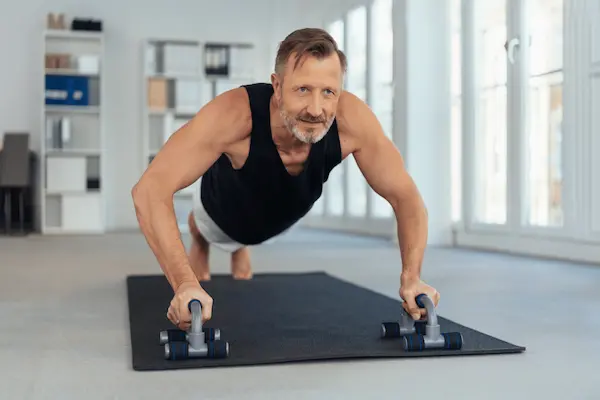
Returning to movement in your forties or beyond often brings a mix of hope and hesitation, because even though a part of you wants more energy, strength and comfort in your daily life, another part may quietly worry about joints, old injuries, busy schedules and whether it is still possible to start again safely after years of doing very little on purpose.
Instead of expecting your body to behave like it did in your twenties, this guide focuses on safe beginner workouts over 40 that respect the reality of midlife, offering gentle strength, joint friendly workouts and simple low impact cardio ideas that fit into real lives, not fantasy schedules.
As you read, you will find practical points to discuss with your doctor, examples of no jumping movements that most healthy beginners can usually try, suggestions on how to build short routines without overwhelming yourself and repeated reminders that listening to your body and progressing slowly are signs of wisdom, not weakness.
What Changes When You Exercise Over 40

Midlife brings experience, responsibilities and often a clearer sense of what really matters, yet your body may also feel different from how it did the last time you followed a regular workout routine, which is why safe beginner workouts over 40 need to be shaped around those changes instead of ignoring them.
Muscle mass, joint comfort, recovery speed and even confidence can shift over time, and acknowledging these shifts openly makes it easier to choose exercise over 40 that feels supportive rather than punishing.
Common Physical Changes to Keep in Mind
- Gradual loss of muscle and strength can appear after long periods of inactivity, especially if most days are spent sitting or doing light tasks.
- Joint stiffness or aches, particularly in knees, hips, lower back or shoulders, may show up more clearly in the morning or after long seated periods.
- Energy levels might fluctuate more during the week, especially when sleep, stress and work demands are pulling in many directions at once.
- Recovery from intense effort often takes longer than it did in earlier decades, which means rest and lighter days become more important.
- Balance and coordination can feel less automatic, making falls or missteps a bigger concern than before.
These realities do not mean you cannot enjoy midlife fitness, they simply mean your plan benefits from a gentler entry point, more patience and a stronger emphasis on joint friendly workouts that build your base gradually.
Mental and Lifestyle Factors in Midlife Fitness
- Work, caregiving, relationships and community responsibilities can all compete for your time and emotional energy.
- Past experiences with exercise, including negative memories from school sports or failed diet programs, may influence how safe and welcome you feel in fitness spaces.
- Motivation might rise and fall as life circumstances change, making consistency more challenging than sheer effort on any single day.
- Goals can shift from appearance focus toward independence, health, mobility and being able to enjoy life fully in the years ahead.
By honoring both physical and emotional realities, safe beginner workouts over 40 become a form of self support rather than another demanding obligation on your already full list.
Important Topics to Discuss with Your Doctor First
Before you begin any new midlife fitness plan, especially after many inactive years, speaking with a qualified health professional can give you a grounded sense of what is safe, what needs caution and what could be particularly beneficial for your specific situation.
Because every body over 40 carries its own story of past injuries, medications and conditions, this conversation is not a formality but a key part of designing joint friendly workouts that truly fit you.
Medical History Points Worth Mentioning
- Cardiovascular history
- Previous heart events, diagnosed heart disease or concerns about chest pain and breathlessness.
- Blood pressure readings, especially if you have been told it is high or unstable.
- Metabolic and hormonal conditions
- Diabetes, prediabetes, thyroid issues or other conditions that affect energy and blood sugar.
- Perimenopause or menopause symptoms that may influence sleep, mood and joint comfort.
- Joint and bone health
- Osteoarthritis, bursitis, chronic joint pain or any history of joint surgery.
- Osteopenia or osteoporosis, especially in the spine or hips.
- Medications and treatments
- Drugs affecting blood pressure, heart rate, blood thinning, pain perception or balance.
- Recent surgeries, injections, physical therapy programs or ongoing treatments.
- Past and current activity level
- How long it has been since you last exercised regularly.
- Types of activities you previously enjoyed and any that caused problems.
Sharing these details allows your doctor to suggest specific boundaries, such as heart rate limits, impact restrictions or movement patterns to avoid, which you can then respect while designing your safe beginner workouts over 40.
Questions You Can Ask Your Doctor
- Are there any types of exercise over 40 that I should avoid completely, given my current health and history.
- Which kinds of gentle strength or low impact cardio are likely to be safest and most useful for me right now.
- How many days per week would be a reasonable starting point for activity, and at what intensity.
- Are there warning signs specific to my conditions that should prompt me to stop and contact you.
- Would you recommend a referral to a physical therapist or exercise specialist who understands joint friendly workouts and midlife needs.
Going into your first session with answers to these questions often reduces anxiety, because you know that your plan has been shaped around professional guidance rather than random internet advice alone.
What Makes a Workout “Safe” for Beginners Over 40
A workout is not automatically safe just because it is labelled beginner level, especially for people returning to movement after years away, which is why understanding the practical features of safe beginner workouts over 40 helps you evaluate any routine before trying it.
Instead of focusing on trendy moves or extreme promises, you can look for simple, measurable qualities that support joint comfort, heart safety and realistic progression.
Key Features of Safe Beginner Workouts Over 40
- Low or no impact on joints
- Movements that keep at least one foot on the floor at all times reduce strain on knees, hips and spine.
- Exercises that avoid heavy pounding, fast twisting or deep, forced bends feel kinder to older joints.
- Gradual build of intensity
- Sessions that begin with very gentle warm ups and only modest effort at first are easier to tolerate.
- Workouts that leave you feeling pleasantly worked rather than exhausted lower injury risk and increase willingness to repeat.
- Manageable session length
- Short sessions around ten to twenty minutes are often better tolerated in the beginning than long, draining workouts.
- Routines that offer flexibility to stop early if needed without feeling like a failure are more sustainable.
- Clear options to modify
- Exercises that can be done with supports like walls or chairs give you ways to protect balance and joints.
- Programs that openly encourage reducing range of motion or skipping moves when needed feel more inclusive and safer.
- Built in rest and recovery
- Plans that schedule rest days and lighter movement days respect the slower recovery that can come with age.
- Guidance that normalises taking extra rest when life is stressful reduces pressure and guilt.
Using these markers as a checklist whenever you evaluate exercise over 40 can help you recognize which classes, videos or written routines align with safe beginner principles and which might be better saved for later.
Low Impact Cardio Ideas for Midlife Beginners
Gentle cardio raises your heart rate slightly, warms your body and helps your circulation without demanding heavy impact or high intensity, making it a central part of safe beginner workouts over 40 for many people.
When you choose low impact options, you protect your knees, hips and back while still supporting heart health, stamina and mood.
Simple Joint Friendly Cardio Options
- Relaxed walking
- Walking at a conversation pace on flat ground remains one of the most accessible forms of gentle cardio.
- Short sessions of ten to fifteen minutes can be scattered through the day if a single long walk feels overwhelming.
- Indoor marching in place
- Marching on the spot with a soft footfall works well if you live in an upstairs apartment and want minimal noise.
- Gentle arm swings and small knee lifts add a little extra challenge while staying joint friendly.
- Side step touches
- Stepping one foot out to the side and bringing the other in can create a smooth no jumping workout pattern.
- Adding light arm movements, such as reaching forward or overhead in a controlled way, increases the cardio effect gradually.
- Mini step ups with support
- Using a very low step or the bottom stair while holding a railing or chair lets you practice gentle climbing.
- Slowly stepping up and down with control works the legs and heart without pounding.
- Gentle stationary cycling
- If you have access to a stationary bike or a recumbent bike, easy pedalling provides a knee friendly cardio option.
- Short intervals with low resistance can feel possible even on days when standing exercise seems too much.
Whichever gentle cardio ideas you try, you can use a simple talk test as a guide, aiming for a level where you feel warmer and slightly more breathless but still able to talk in sentences without gasping.
Sample Low Impact Cardio Mini Sessions
- Ten minute indoor walk
- Two minutes of easy marching in place.
- Six minutes of walking around your home or hallway at a comfortable pace.
- Two minutes of slower walking and deep breathing to cool down.
- Fifteen minute side step and walk mix
- Three rounds of one minute side step touches followed by two minutes of relaxed walking.
- Finish with a few gentle stretches for calves and hips.
- Twelve minute low step routine
- Two minutes of easy marching.
- Five rounds of thirty seconds of slow step ups and forty five seconds of rest or marching.
- Two minutes of cool down walking and breathing.
Short, manageable sessions like these can form the cardio portion of your safe beginner workouts over 40, and you can repeat or slightly extend them as your stamina improves.
Gentle Strength Ideas for Adults Over 40
Building gentle strength helps you maintain independence, support your joints and handle daily tasks with more ease, and it does not require heavy weights or complicated equipment to be effective, particularly in the early stages.
Using simple, controlled movements that work multiple areas at once can give you a full body effect without long lists of exercises.
Joint Friendly Strength Moves with No or Light Equipment
- Sit to stand from a chair
- Strengthens thighs, hips and glutes while mimicking a daily life movement.
- Starting with two sets of six to ten repetitions at a comfortable speed often works well.
- Wall push ups
- Train chest, shoulders and arms without the strain of floor push ups.
- Two sets of six to ten repetitions, with your feet closer or farther from the wall to adjust the challenge.
- Hip hinge with support
- Teaches your body to bend from the hips, strengthening the back of the legs and protecting the spine.
- Two sets of eight controlled repetitions can be enough to start, holding a counter or chair for balance if needed.
- Supported heel raises
- Works the calves and improves lower leg strength important for walking and balance.
- Two or three sets of eight to twelve repetitions while holding a chair back or wall.
- Seated or supported rows
- Using a resistance band around a stable object or a pair of light dumbbells, you can strengthen your upper back.
- Two sets of eight to ten repetitions, focusing on squeezing the shoulder blades gently together.
- Wall or counter plank
- Strengthens the core with less strain than floor planks, especially useful for safe beginner workouts over 40.
- Two sets of fifteen to twenty seconds, gradually adding time as your control improves.
Every strength movement should feel smooth and controlled, with your focus on alignment and comfort rather than speed or chasing high numbers.
Using Light Dumbbells in a Safe Way
- Choose weights that feel light to moderate, allowing you to finish a set with effort but not strain.
- Hold dumbbells close to your body where possible, because this places less stress on shoulders and back.
- Begin with one set per exercise and increase to two sets only when your doctor and your body both seem comfortable with the load.
- Skip dumbbells entirely on days when your joints or energy feel particularly delicate, using body weight instead.
For many people, gentle strength built through bodyweight and very light loads offers a safer path than rushing to heavier weights, especially when midlife joints and tissues need more time to adapt.
How to Build a Short Safe Beginner Routine Over 40
Having a catalog of safe beginner moves is helpful, yet turning those moves into simple routines makes it much easier to follow through, because you can see exactly what to do instead of guessing each time.
When you are returning to exercise after years, the best routines are short, predictable and forgiving rather than intense, long and strict.
Step by Step: Creating a Gentle Session
- Choose your time window
- Decide whether you realistically have ten, fifteen or twenty minutes on a given day.
- Commit to filling only that window rather than promising yourself an hour you do not truly have.
- Pick two or three cardio moves
- Examples include walking, marching, side steps or mini step ups.
- Plan to perform each for one or two minutes at a comfortable pace.
- Select three to five strength moves
- Mix lower body, upper body and core, such as sit to stand, wall push ups, rows and planks.
- Use one or two sets of six to ten repetitions per strength move when you are starting.
- Add a short cool down
- Include two to three minutes of slower walking or gentle stretching.
- Focus on areas that feel tight, like calves, hips, chest and shoulders.
- Place rest where it feels right
- Insert small breaks between exercises, long enough for your breathing to settle.
- Extend rest or stop early if your body signals fatigue or discomfort.
This structure helps you create safe beginner workouts over 40 that feel organized but flexible, allowing you to adapt each session to your daily energy and any guidance from your healthcare provider.
Example Twenty Minute Routine for Adults Over 40
- Warm up
- Three minutes of easy marching in place and gentle arm circles.
- Cardio block
- One minute of side step touches.
- One minute of relaxed walking or marching.
- Repeat the two minute block once if you feel comfortable.
- Strength block
- Two sets of six to eight sit to stands from a chair.
- Two sets of six to eight wall push ups.
- Two sets of eight hip hinges with support.
- Two sets of ten supported heel raises.
- Two short wall planks of fifteen seconds each.
- Cool down
- Three minutes of gentle walking, followed by calf and chest stretches.
On days when this feels like too much, you can reduce the number of sets, shorten the cardio intervals or drop one strength exercise while still counting the session as meaningful progress.
Listening to Your Body and Respecting Recovery
One of the most powerful skills for midlife fitness is learning to notice how your body responds both during and after a workout, and then adjusting your plan based on those signals rather than ignoring them.
Safe beginner workouts over 40 work best when you view soreness, fatigue and mood changes as information that helps shape your next step.
Understanding Effort and Discomfort
- Gentle muscle warmth and a mild burning sensation near the end of a set can signal normal effort.
- Sharp, stabbing or sudden pain in a joint, especially if it makes you stop immediately, is a warning sign rather than a badge of honour.
- Short lived breathlessness during cardio that eases quickly with rest is usually acceptable, while persistent breathlessness or chest discomfort needs medical attention.
Recovery Practices for Midlife Bodies
- Plan rest days
- Include at least one full rest day between strength sessions that work similar muscles.
- Use these days for light, easy movement or simple stretching if that feels good.
- Prioritise sleep whenever possible
- Recovery happens largely during sleep, and even small improvements in sleep can influence how workouts feel.
- Avoid very late evening high energy sessions if they make it harder to wind down.
- Stay hydrated and nourished
- Drink water consistently throughout the day rather than only around workouts.
- Eat balanced meals with enough protein and colourful plant foods to support muscles and overall health.
- Monitor lingering soreness
- Notice if soreness fades within a day or two or if it hangs on strongly and affects daily tasks.
- Reduce intensity, sets or frequency if soreness clearly accumulates from session to session.
Honouring recovery in this way allows your safe beginner workouts over 40 to build you up instead of quietly wearing you down.
Progressing Slowly and Kindly Over Time
Once you have followed a gentle routine for a few weeks and your body feels more familiar with the movements, you may wish to progress gradually, yet even then the safest path involves small, thoughtful adjustments rather than sudden jumps.
Midlife fitness often rewards patience, because tissues and nervous systems thrive on gradual change.
Simple Progression Options
- Increase repetitions
- Add one or two repetitions to some strength exercises, such as moving from six to eight sit to stands.
- Stop increasing when you reach a point where technique begins to wobble.
- Extend time gently
- Add ten or fifteen seconds to cardio intervals or plank holds when they feel comfortably manageable.
- Maintain at the new duration for at least a week before changing again.
- Add another weekly session
- Move from two to three short sessions per week only when current workouts feel well tolerated.
- Keep at least one full rest day between sessions even with the extra day.
- Introduce slightly more challenging variations
- Shift wall push ups a little farther from the wall or use a sturdy counter instead.
- Try a slightly deeper sit to stand or hip hinge without forcing range.
If at any point the new level feels too much, stepping back to an earlier version is not failure, it simply means you are tuning your workout to match your real life capacity right now.
When to Pause, Modify or Seek Professional Support
Even with careful planning, there may be times when workouts bring up discomfort, fatigue or uncertainty, and recognising when to pause or ask for help is part of respecting your body and your age, not a sign that you are giving up.
Safe beginner workouts over 40 always include an option to change course.
Situations Where Modifying Makes Sense
- Joint discomfort appears consistently during a certain exercise, even at low intensity.
- Fatigue from life stress, illness or poor sleep leaves you feeling unusually drained before starting.
- Mood feels low or anxious, making a shorter or gentler session more appropriate than your original plan.
Signs You Should Seek Medical or Professional Advice
- Any new or worsening chest pain, breathlessness, dizziness or heart palpitations during or after exercise.
- Swelling, redness or warmth around a joint that does not improve with rest.
- Pain that persists strongly for several days or interferes with daily living activities.
- Unintentional weight change, extreme fatigue or other concerning symptoms that appear with increased activity.
In these situations, stopping your routine and consulting your doctor, and when helpful a physical therapist or qualified exercise professional, allows you to adjust your plan safely and confidently.
Final Encouragement, Disclaimer and Independence Notice
Choosing to explore safe beginner workouts over 40 is not about chasing youth or perfection, it is about giving your current and future self a kinder, stronger, more comfortable body to live in, using gentle strength, joint friendly workouts and low impact cardio ideas that respect where you are today.
Even small, imperfect sessions count, and each time you warm up, move with awareness and cool down again, you are proving to yourself that midlife fitness can belong to you in a way that feels inclusive, respectful and sustainable.
Before starting or significantly changing your exercise habits, particularly if you have medical conditions, previous injuries or worrisome symptoms, you should always consult a qualified health professional, because the information in this article is general in nature and does not replace personal medical advice, diagnosis or treatment tailored to your individual needs.
This content is independent and does not have any affiliation, sponsorship, endorsement or control from institutions, platforms, fitness brands, healthcare providers or any other third parties that may be mentioned in general examples, and any decisions you make about workouts, equipment or services remain entirely your responsibility, ideally made in partnership with trusted health and fitness professionals who know your situation.
As you continue your journey, you can let your safe beginner workouts over 40 evolve slowly alongside your life, adjusting intensity, frequency and exercises as your body adapts, while keeping compassion, safety and long term well being at the centre of every choice you make.