
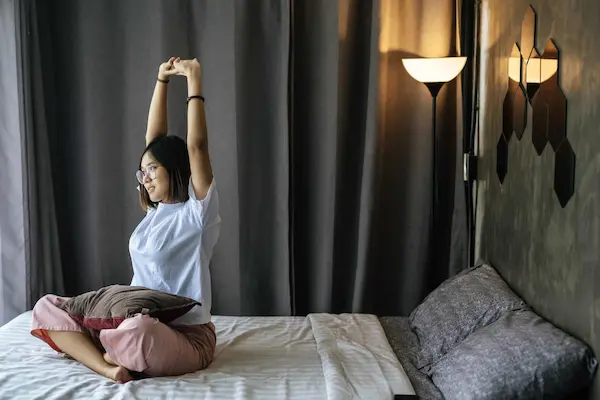
When your body feels tense the moment your head hits the pillow, a small ritual of quiet movement can turn “wired” into “settled” without effort or pressure.
Tonight’s plan is a stretching routine before bed sleep that stays gentle, stays slow, and stays flexible enough that doing fewer moves is always allowed.
Stretching routine before bed sleep: what it should feel like
Gentle pre sleep stretches should feel like permission rather than a challenge, because bedtime is not the time to chase intensity or prove anything to yourself.
Comfort is the goal, so aim for mild to moderate sensation that eases as you breathe instead of sharpness that makes you brace or grit your teeth.
Soft tissue stretching often feels broad and warm, while joint pinching tends to feel sharp and specific, so treat pinching as a clear cue to reduce range or change the position.
Steady breathing matters more than depth, because breath-holding is usually a sign that your nervous system feels threatened rather than soothed.
Safety stays in charge, so stop immediately if discomfort increases, if numbness or tingling appears, or if dizziness shows up during transitions.
Medical guidance is wise before starting or changing routines, especially if you have injuries, chronic pain, recent surgery, or any condition that affects balance, nerves, or joints.
A simple bedtime sensation scale you can trust
Using a 0 to 10 scale can keep things calm, because you can choose a range that supports sleep instead of overstimulation.
- Level 0 to 2 feels like light movement and mild opening, which often works well when you are very tired.
- Level 3 to 4 feels like a clear stretch that you can breathe through easily, which is a sweet spot for many people at night.
- Level 5 and above feels intense enough that you might tense, rush, or hold your breath, which usually works against relaxation.
How to move when sleepiness and stiffness mix together
Slow transitions reduce surprises for your body, so shifting positions like you are moving through warm water can prevent sudden guarding.
Extra support is not only allowed but encouraged, because pillows and blankets can turn a stressful stretch into a safe, sleepy shape.
Less range can create more release, because your nervous system often relaxes fastest when it feels fully in control.
Low-light setup ideas for a bedtime stretch routine
Low light helps the routine feel like a bridge into sleep, so a dim lamp, a warm bulb, or even moonlight can be enough.
Quiet matters, yet silence is optional, so choose whatever helps you feel calm rather than whatever seems “ideal.”
Warmth supports muscle release, so a light blanket nearby can prevent that chilly feeling that makes the body tighten again.
Floor space is helpful, though a sturdy bed or a firm rug can work if getting to the floor feels inconvenient tonight.
Small environment upgrades that relax muscles faster
- Dim the room enough that your eyes feel soft, because squinting and bright light can keep the nervous system alert.
- Choose a stable surface under you, because feeling wobbly or unsure can create tension in hips, jaw, and shoulders.
- Silence notifications or place the phone out of reach, because the goal is a non-screen wind-down that stays uninterrupted.
- Wear clothing that does not pinch your waist or shoulders, because tight fabric can quietly encourage shallow breathing.
- Set a gentle timer if you dislike counting, because tracking time can keep your mind from checking the clock repeatedly.
Simple props that make pre sleep stretches feel kinder
- A pillow under the knees can reduce lower-back tension during reclined positions.
- A folded blanket under the head can keep your neck neutral if your chin tips upward when lying down.
- A second pillow can support legs in twists so the stretch stays soft and not overly deep.
- A strap, scarf, or belt can help with hamstrings without pulling hard with your arms.
- A rolled towel can support the ankles or knees if certain angles feel sensitive.
Stretching routine before bed sleep: the 10–15 minute sequence
Each move in this bedtime stretch routine is designed to be slow, floor-friendly, and easy to exit, because the goal is to relax muscles rather than chase range.
Breathing cues are included because a longer exhale often helps your body downshift toward sleep without you needing to “try harder.”
Hold times are suggestions, so choosing the shorter end is a smart option when you are very sleepy or feeling tender.
How to follow the routine without overthinking it
- Pick a comfort level for the night, and keep every position within that range even if you feel flexible.
- Move into the stretch slowly, then pause and breathe before deciding whether you want a little more range.
- Notice whether your exhale naturally lengthens, because a longer exhale is often a sign that you are relaxing.
- End early if your body feels calm, because stopping while it feels good teaches your brain to crave the ritual again.
1) Supported rest breathing to signal “safe to sleep”
Lie on your back with knees bent and feet on the floor, then let the knees gently lean toward each other so the hips can rest.
Place one hand on the belly and one on the chest, then breathe slowly enough that the shoulders stay heavy and quiet.
Allow the exhale to be slightly longer than the inhale, because longer exhales often soften the ribcage and calm the mind.
- Hold time: 6 to 10 slow breaths, or about 60 to 90 seconds.
- Breathing cue: inhale softly through the nose, then exhale as if releasing steam without forcing.
- Support option: slide a pillow under the knees if the lower back feels tight or arched.
2) Ankle circles for a gentle “end of day” release
Keeping the knees bent, lift one foot slightly and draw slow circles with the ankle as if tracing a smooth coin-sized loop in the air.
Reverse direction after several circles, because switching directions often makes the movement feel more complete and less mechanical.
Repeat on the other side, letting the toes stay relaxed so you do not create new tension in the feet.
- Time: 20 to 30 seconds per ankle.
- Breathing cue: keep the breath easy and quiet, because this is meant to feel effortless.
- Support option: rest the heel on the floor and circle with a smaller range if hips or hamstrings feel cranky.
3) Knee-to-chest hug, one side at a time
Draw the right knee toward the chest while the left foot stays grounded, then hold behind the thigh or over the shin without squeezing the kneecap.
Let the grounded foot keep you stable, because stability often helps the hip and lower back relax more easily.
Switch sides slowly, noticing whether the second side feels different, because asymmetry is normal at the end of a long day.
- Hold time: 45 to 60 seconds per side.
- Breathing cue: exhale and imagine the back ribs spreading wider against the floor.
- Support option: keep both knees bent and hug both lightly if single-leg holds feel awkward.
4) Figure-four hip stretch to soften the outer hips
Cross the right ankle over the left thigh, gently flex the right foot, and hold behind the left thigh as you draw the legs toward you.
Stop at the first clear stretch in the glute and outer hip, because deeper is not better when your nervous system is preparing for sleep.
Switch sides with the same calm pace, allowing the hips to settle a little more on the second or third exhale.
- Hold time: 60 to 90 seconds per side.
- Breathing cue: inhale into the sides of the waist, then exhale and soften the back pocket area.
- Support option: keep the legs farther away if the knee feels pressured, or choose the chair figure-four version instead.
5) Supported hamstring stretch with a strap
Loop a strap around the ball of one foot and lift that leg toward the ceiling, keeping the opposite knee bent so the lower back stays comfortable.
A small bend in the lifted knee is completely fine, because hamstrings often release best when the stretch feels safe rather than intense.
Lower the leg slowly when you finish, because sudden exits can wake up the nervous system right when you want it to stay quiet.
- Hold time: 45 to 75 seconds per side.
- Breathing cue: exhale and let the back of the thigh feel heavy, as if gravity is doing the work.
- Support option: skip the strap and keep the foot on the floor if coordinating the strap feels too wakeful tonight.
6) Reclined butterfly with pillows for inner-thigh ease
Bring the soles of the feet together and let the knees open gently, then place pillows under the thighs if the stretch feels strong.
Allow the hips to soften toward the support, because supported shapes often relax muscles more than unsupported holding does.
Stay upright in the chest, letting the ribs expand gently as you inhale and quiet down as you exhale.
- Hold time: 60 to 120 seconds.
- Breathing cue: exhale and feel the pelvis settle heavier, as if sinking into a warm mattress.
- Support option: move the feet farther from the hips if you feel groin discomfort or pinching.
7) Supine twist to wring out the day without effort
With knees bent, let both knees drift to the right while the shoulders stay relaxed, then place a pillow between the knees for comfort.
Keep the twist mild, because bedtime twisting should feel like softening rather than pushing into a deeper rotation.
Switch sides after several breaths, letting the belly relax so the twist feels more like rest than work.
- Hold time: 60 to 90 seconds per side.
- Breathing cue: inhale into the back ribs, then exhale and let the knees sink a tiny bit lower if it feels good.
- Support option: keep the knees closer to center if a deeper twist feels too stimulating.
8) Child’s pose, with a bed-friendly alternative
Come to hands and knees, then sit the hips back toward the heels and fold forward, placing a pillow under the chest so the stretch feels supported.
Rest the forehead on something soft, because head support can calm neck tension that quietly interferes with sleep.
Choose an alternative by folding forward over a pillow on the bed if kneeling feels uncomfortable, because comfort matters more than the exact shape.
- Hold time: 60 to 120 seconds.
- Breathing cue: inhale into the lower ribs, then exhale and let the back widen like a gentle yawn.
- Support option: add a folded blanket behind the knees if the knees feel sensitive.
9) Thread-the-needle shoulder release for desk tension
From hands and knees, slide the right arm under the left and rest the right shoulder and the side of the head on the floor, keeping the hips stacked above the knees.
Let the left hand stay planted or reach forward, choosing the option that allows your breath to stay slow and your neck to stay comfortable.
Switch sides gently, noticing whether unclenching the jaw changes how the shoulders feel.
- Hold time: 45 to 60 seconds per side.
- Breathing cue: exhale and feel the shoulder blade sink toward the floor, as if it is becoming heavier.
- Support option: place a folded towel under the head if the neck feels compressed.
10) Legs supported up the wall, or on a pillow if walls feel inconvenient
Scoot your hips near a wall and lift the legs upward, then allow the arms to rest open so the chest feels unforced.
Choose a pillow alternative by placing the calves on the bed or a couch cushion if moving to the wall feels like too much effort.
Stay long enough that your breathing quiets, because calm stillness is often the most sleep-friendly part of the routine.
- Hold time: 60 to 180 seconds.
- Breathing cue: exhale slowly and feel the legs become supported rather than held up by muscle effort.
- Support option: bend the knees slightly if hamstrings pull, or move the hips farther from the wall for less intensity.
11) Final body scan to settle the nervous system
Return to your back with a pillow under the knees, then let the hands rest open and heavy so the arms stop “helping.”
Scan from forehead to feet, noticing where tension remains, and invite those areas to soften on the exhale without forcing them to change.
Finish when you feel a little calmer than you did at the start, because that calm feeling is the signal you want your brain to associate with bedtime.
- Time: 60 to 120 seconds.
- Breathing cue: let the exhale be the main event, as if you are slowly dimming the lights inside your body.
- Support option: cover your torso with a light blanket if cooling down makes you tense.
When you are very tired, doing fewer moves is a win
Exhaustion changes what your body can tolerate, so reducing the routine is often the most caring and most effective choice.
Permission to do less keeps the habit alive, because a smaller ritual repeated often can relax muscles more reliably than a big routine you avoid.
Flexibility at bedtime is not about discipline, so stopping early when you feel sleepy is a sign that the routine is working.
The 3-move emergency bedtime stretch routine
- Do supported rest breathing for 6 slow breaths, letting the shoulders and belly soften on every exhale.
- Hold a single figure-four hip stretch for 45 seconds per side, choosing the gentlest version that feels safe for the knees.
- Finish with a supported twist for 60 seconds per side, using a pillow so the body feels held rather than stretched.
The 5-move quick plan that still feels complete
- Start with supported rest breathing for 60 seconds so your nervous system gets the message first.
- Add knee-to-chest for 45 seconds per side to ease the lower back and hips.
- Include reclined butterfly with pillows for 60 seconds so the inner hips can let go gently.
- Move into thread-the-needle for 45 seconds per side to soften shoulder and upper-back tension.
- Close with legs supported up the wall or on a pillow for 90 seconds so stillness becomes the final cue.
Gentle rules for deciding what to skip
- Skip anything that feels complicated, because mental effort can keep you awake even when the stretch is gentle.
- Remove kneeling positions if knees feel sensitive, because discomfort anywhere can stop relaxation everywhere.
- Choose the most supported version when fatigue is high, because support reduces strain and encourages sleepiness.
- End the moment your eyes feel heavy, because drowsiness is the outcome you are practicing for.
Relax muscles without stretching harder
Relaxation usually comes from softening, not from pushing, so the most useful skill is learning how to release effort inside a stretch.
Body awareness can feel subtle, yet small changes in jaw, tongue, and hands often create surprising changes in hips, ribs, and shoulders.
Longer exhales often calm the body faster than deeper stretches, so focus on breath quality when you want sleep to arrive.
Five tiny relaxation cues that change everything
- Let the tongue rest heavy in the mouth, because tongue tension often mirrors overall bracing.
- Unclench the hands, because fist tension can travel into shoulders without you noticing.
- Soften the eyes, because staring can keep the brain in “alert mode” even in a dark room.
- Allow the belly to be neutral, because sucking in can activate the hip flexors and keep the ribs tense.
- Slow the exhale by one second, because that small change often invites the whole torso to settle.
Breathing patterns that suit pre sleep stretches
- Use a comfortable inhale and a slightly longer exhale, because gentle asymmetry often feels calming without forcing.
- Add a soft sigh once every few breaths, because sighing can release tension in the chest and throat.
- Pause for a brief moment after the exhale, because that quiet space can feel like a doorway into stillness.
Make the bedtime stretch routine feel like a ritual, not a task
Habits stick when the start is easy, so pairing this routine with something you already do can remove the need for motivation.
Consistency grows faster when the routine feels pleasant, so designing for comfort is a smarter strategy than designing for intensity.
Progress at night often looks like quicker settling rather than bigger stretches, so celebrate calmness as a real result.
Easy habit pairings that require almost no willpower
- Begin the routine after brushing your teeth, because the body already recognizes that moment as “getting ready for bed.”
- Start right after changing into sleepwear, because changing clothes can act as a simple, reliable cue.
- Do the 3-move version on the nights you feel resistant, because lowering the barrier keeps the chain unbroken.
- Place a pillow on the floor earlier in the evening, because a ready space quietly invites you later.
Tracking consistency without turning it into pressure
Tracking can be gentle, because a small record helps you notice patterns without making the routine feel competitive.
- Use a calendar checkmark for any version of the routine, because “something counts” keeps momentum alive.
- Write one sentence about how you felt afterward, because noticing “calmer” builds motivation grounded in real experience.
- Choose a weekly goal like four nights, because a flexible target allows life to happen without guilt.
A simple two-week plan that builds confidence
- During week one, do the 5-move quick plan on most nights so the routine feels familiar and easy.
- During week two, add one extra stretch on two nights, because small upgrades feel sustainable.
- On any night you feel exhausted, return to the 3-move plan, because consistency matters more than completeness.
Troubleshooting: when bedtime stretching does not feel calming
Some nights the body is restless, and that restlessness is not failure, because stress and fatigue can change how stretching feels.
Small adjustments can create big relief, so treat these fixes as options rather than rules.
If your mind keeps racing
- Count exhales instead of watching time, because counting gives attention a soft, steady anchor.
- Shorten the routine and repeat supported rest breathing, because repetition can be more soothing than variety.
- Choose positions that feel cozy, because comfort often quiets mental noise faster than “perfect technique.”
If cramps or twitchy muscles appear
- Reduce intensity immediately, because cramping often responds to less stretching rather than more stretching.
- Move gently instead of holding, because small motion can ease cramps without forcing length.
- Try a sip of water if dehydration is possible, because hydration can influence muscle comfort.
If the lower back feels tight in hip stretches
- Place a pillow under the knees in reclined positions, because support can reduce lumbar arching.
- Bend knees more in hamstring stretches, because straight legs are optional at bedtime.
- Use smaller ranges in twists, because gentle rotation often works better than deep rotation when the back is sensitive.
If shoulders feel stubborn from screens or driving
- Spend longer in thread-the-needle with head support, because neck comfort helps shoulders soften.
- Soften the hands and jaw on purpose, because tension often travels downward from the face.
- Keep the chest opener mild, because aggressive shoulder stretching can feel stimulating late at night.
Safety reminders for stretching routine before bed sleep
This article is general education, so consulting a qualified health professional before starting or changing routines is the safest approach for personal guidance.
Sharp pain is not a stretching signal, so stop if you feel pinching, shooting sensations, numbness, tingling, or anything that worsens as you breathe.
Slow transitions protect you, so rising from the floor gradually can prevent dizziness, especially if you are already tired.
Stop and seek professional guidance if any of these occur
- New or worsening nerve symptoms appear, because tingling and numbness deserve careful assessment.
- Dizziness or faintness happens repeatedly, because safety comes first during bedtime transitions.
- Sharp joint pain shows up during gentle positions, because joints should feel supported rather than compressed.
- Symptoms persist or escalate over days, because ongoing discomfort needs individualized attention.
FAQ about bedtime stretch routine and pre sleep stretches
Is it okay to stretch right before getting into bed?
Gentle stretching is usually fine right before sleep when intensity stays low, because calm movement and longer exhales tend to relax muscles rather than energize you.
How long should the routine be if I struggle to fall asleep?
Ten to fifteen minutes is enough for many people, while shorter routines can still work beautifully when fatigue is high or motivation is low.
Should I stretch every single night?
Nightly practice can be helpful, yet listening to your body matters, so lighter nights and fewer moves are smart choices when you feel tender.
What if stretching makes me feel more awake?
Overstimulation often means the stretches are too intense or too complicated, so reducing range, adding pillows, and focusing on breathing can shift the effect.
Do I need to feel a strong stretch to relax?
Strong stretching is not required, because mild positions paired with a long exhale often calm the nervous system more reliably.
Can I do this routine on the bed instead of the floor?
Bed-based versions can work well if the surface feels stable enough, because comfort and repeatability matter more than the exact location.
Important independence notice
Notice: this content is independent and does not have affiliation, sponsorship, or control by any institutions, platforms, or third parties mentioned.
Closing: let the routine feel like a gentle goodbye to the day
With low light, slow holds, and a forgiving mindset, your stretching routine before bed sleep can become a simple cue that tells your body it no longer has to hold everything up.
Over time, repeating even a shorter bedtime stretch routine can teach your system that softness is safe, which makes falling asleep feel less like a struggle and more like a natural landing.